Beyond Blue

How Do You Recover from Depression? My 12 Steps to Sanity

Friday August 21, 2009

Categories: Addiction/Recovery

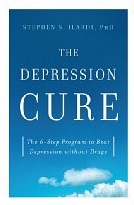
In discussion of Stephen Ilardi's book, "The Depression Cure," I wanted to offer my my 12 steps to beat depression, as well.

Many comments on the boards lately have asked this question: What did I do to get better, or what would I suggest a person do to get better? 


Well, I'm not sure. I spent much of my deep depression wandering aimlessly, completely lost, not knowing which voices to follow. I acted on everyone's suggestions. Some worked. Others didn't.

I compiled the exercises that made me feel better into a personally designed 12-step mental health program, related to but different from the 12-step program practiced by addicts and their kin. They are ways to boost my neurotransmitters into action--getting those lazy bones passing messages from one neuron to the next--and to inspire nerve generation and cell reproduction in the amydgala and hippocampus regions of the brain.

Step One: Find the Right Doctor

Some depressives are lucky enough to find a good psychiatrist in their first visit to a head doctor. I wasn't one of them. I went through six--and practically gave up on all traditional medicine--before I met the seventh, who was perfect for me: she was conservative with meds (she didn't try a new antipsychotic every week like doctor number two); well-informed on new developments of treatment; and, using her sharp intuition, treated me as a person (with unique personality traits and philosophies that had to be considered), not as a set of symptoms.

Step Two: Find the Right Cocktail

I wish I could report that my doctor waved her wand once to arrive at the magical prescription that cured me. No, a few different faces (six of them) had to wave the wand 23 times before I felt any magic, or found the right cocktail. But that's extreme. Most depressives have only had to try a few different medications before feeling huge relief.

Step Three: Exercise!

As a recovering addict, I love any buzz I can get. Working out--any exercise that gets my heart rate over 160 beats per minute (into the cardiovascular zone) does the job. And in a safe way, so I don't have to cheat on my sobriety. I'm probably as addicted to exercise as I was to booze, but this is one mood-altering activity that doesn't deteriorate my marriage and my other relationships (with my kids, with myself, and with God).

Some researchers say that exercise acts like antidepressants in increasing the activity of serotonin and/or norepinephrine in your brain; working out releases endorphins and other hormones that reduce pain, induce euphoria, have a calming effect, and combat stress.

Step Four: Eat Well

The more I investigate--both through research and nonscientific experiments with body--the more I realize how my diet affects my mood.

Here are the bad boys: nicotine (although I was only a social smoker, I had to give it up because smoking destroys practically every organ inside your body); caffeine (it's a drug, which is why I'm addicted to it), alcohol (it made me crazy); white flour and processed food (what you live on when you have preschoolers who won't touch tofu and spinach); and sugar (oh man, I'm trying, but oh man).

Here are the good guys: protein (eggs, milk, cheese, yogurt, meat, fish, chicken, seeds, nuts); complex starches (whole grains, beans, potatoes); vegetables (broccoli, spinach, squash); vitamins (vitamin B-complex, vitamins E and C, and a multivitamin); minerals (magnesium, calcium, and zinc); omega-3 fatty acids.

Step Five: Sleep!

When you give birth to two insomniacs, you have to work extra hard at getting well, because regular sleep is crucial to an effective treatment of depression, and a must for maintaining a stable mood. For a year and a half I've kept a mood/sleep journal to track how my zzzzs affects my thoughts. This is what I learned: if I slept less than seven hours, I was prone to mania, and if I slept over nine, I felt more depressed. Alterations in sleep affect circadian rhythms, our internal biological clocks, which govern fluctuations in body temperature and the secretion of several hormones.

Step Six: Light Up

Changes in the amounts of daylight a person gets also alters circadian rhythms, which is why light treatment is so effective, especially for those who suffer from SAD (seasonal affective disorder). If I can't get outside for at least a half hour a day, I try to sit under my mammoth HappyLite, a lamp with 10,000 lux.

Step Seven: Support and Friendships

I used to be a loyal support-group kind of girl. But since I've had kids, getting to meetings is much more difficult. So I've found my support in other ways--in phone calls and e-mails and visits to friends and relatives who also suffer from depression or bipolar disorder. That lifeline kept me alive during my suicidal days, and continues to empower me every single day.

During the darker days of my depression last year, I walked around with six phone numbers in my pocket. So to not wear out any one friend or relative, I'd call two people a day, and rotate the numbers. I spent hours on the phone and writing e-mails and visiting friends because I needed constant support.

Step Eight: Get Involved

Positive psychologists like University of Pennsylvania's Martin Seligman and Dan Baker, Ph.D., director of the Life Enhancement Program at Canyon Ranch, believe a sense of purpose--committing oneself to a noble mission--and acts of altruism are strong antidotes to depression. With two small children to feed and bath, I can only save the world at one very small step at a time. However, my ministry of the day--educating people on mental health--fulfills me in a way that combats some of the blues. Moreover, finding a way to creatively express myself--another piece of the happiness puzzle--has saved me from a meltdown on more than one occasion.

Step Nine: A Gratitude Journal

Based on her research findings, University of California psychologist Sonja Lyubomirsky believes that keeping a gratitude journal--taking the time to consciously count your blessings--is one of the most effective happiness boosters. According to psychologist Robert Emmons at the University of California at Davis, gratitude exercises improves physical health, as well--including raising energy levels and relieving pain.

Step Ten: Cognitive-Behavioral Therapy and Personal Therapy

In addition to seeing a shrink for personal therapy, I've benefited immensely from cognitive-behavioral work I do on my own. Especially helpful was "Ten Days to Self-Esteem" by David D. Burns, M.D. (even though it took me eleven days...plus a few more). He lists ten ways of distorted thinking, which I began to identify in my thoughts throughout the day, and fifteen techniques to untwist the distortions. For example, if I think, "I fail at everything," I can use the "Examine the Evidence" method to recall some things (like eating) at which I excel.

Step Eleven: Prayer and Meditation

Sometimes it's easier than other times. And I do it in many forms--as mantras ("Jesus, be with me!") during my run, or a quiet ten minutes in my walk-in bedroom closet with a lit candle and a Bible verse, or singing "Alleluia!" with a congregation of Catholics at church on Sunday, or meditating in lotus pose at a yoga class, or just as a vague consciousness of the divine presence as I'm folding the laundry.

Step Twelve: Time

When steps one through eleven have failed--and I've done everything I can think of but still want to be done with this life--then I simply wait, and let time do what it does best: heal.

To read more Beyond Blue, go to www.beliefnet.com/beyondblue, and to get to Group Beyond Blue, a support group at Beliefnet Community, click here.

Advertisement
Comments
Gypsy
August 25, 2009 7:42 PM

This insidious disease has been my constant companion for the past 30 years. I went undiagnosed for several years - for one reason, my mother believed that only adults get depressed and I was just a moody teenager - but was finally told by a doctor when I was 29 that I have severe, clinical depression. He put me on tricyclic antidepressants, which REALLY messed with my head and I quit taking a few months later.

I've never had proper medical attention to my depression and have never felt "cured." Relief has been brief but blessed. I have lost jobs due to depression and apparently am now unemployable. But that also means I have no money (I live on $85/week), no medical care, and no hope. I want to get better but I cannot see the way out by myself, nor can I find the help I need to put my life back together.

I recently lost my beloved 19-year-old daughter to physician error (she had lymphoma, was about to have a stem cell transplant, got an infection and the hospitalist made the wrong calls), which made things so, so much worse. I've been suicidal but my two sons and my husband try to keep me from following my baby girl the best they can. However, all three of them also suffer from varying le4vels of depression and anxiety, so...

Exercise? I can't even drag my butt out of bed some days, let alone engage in physical activity. A doc at the local free clinic prescribed Paxil but even at 40mg it doesn't help. (And if it does, omg, I hate to think what I'd be like without it... dead already, perhaps.) Therapy? Not an option for me as I have no health care options. I am more of a spiritual person than religious, and prayer only serves to make me feel as if no one is listening to my cries for help. Meditation puts me to sleep. (My husband thinks I might be narcoleptic on top of everything else!) My family and I live in poverty and I am SO tired of it, especially when I am a talented, intelligent, capable human; an artist and a writer... but I fail at everything, except for loving my family and friends.

I want to have a better, happier life. I want to start a music scholarship in my daughter's name as she was a flutist who believed in music access for everyone, regardless of income level. I want to LIVE again... but I am so lost, so deep in the black hole that depression is, that I don't even know where to begin.

KC
August 27, 2009 12:50 AM

It is so hard to deal with the constant depression and cycle of self sabatoging negative thoughts. Remember that spending too much time alone is the biggest mistake you can make. Figure out what simple things you enjoy and find beautiful about life. ie. the sun, the sound of water, a special smell, etc. incorporate them into your life as much as possible. Paint your house a cheerful color! Find someone to talk to that is "happy". Surround yourself with positive things and it starts a purpetual motion forward. If you are in toxic relationships it is time to put yourself first and distance yourself from them. We are not broken! We must have cognative therapy to retrain ourselves and to think rational and realistic thoughts. It is the distortions that get us into so much trouble.

I too have been depressed for 20+ years and saw three Psychiatrists and four different therapists before finding ones that complimented my personality and challenged my behaviors and thoughts rather than nod and say uh huh,uh huh. My meds are ok for now. I often think that I will always feel some sense of depression, but it is tolerable and I am happy with my progress over the last two years. I have improved my self image and am at about 90%. I am proud of myself. I am definately my own worst enemy if I dont keep busy and eat right.

Diet is huge because those of us that are depressed usually have lower levels of B vitamins and benefit for a healthy diet. I eat lots of fruits and veggies, and add omega3 and 6 (ground flax seed and nuts to everything), minimal dairy, no corn syrup, whole grains if at all possible. Chocolate makes me irritable.

Gardening has been my best friend this summer since I am unemployed right now. I can't believe how much it changes my mood of course the sun helps alot too.

I hope these suggestions and thoughts help someone out there.

findawayout
September 9, 2009 6:30 PM

I have just found this blog and so far all of the comments seem to be exactly what I have been experiencing. I wish some of you guys were my neighbors because we would have so much in common. It is so weird to be around people who have never experienced "the dark hole." One thing that really seems to help me is when I have a clear vision of helping someone who is more needy than myself. I looked after a senior citizen for 11 years and even though my contribution was minimal, it always made me feel good when I delivered a meal or shoveled his walk. In my job I help people throughout the day in little ways but wish that I had the education to make more valuable contributions. The only drawback is that when you are helping everyone but yourself, at the end of the day, you are alone with your thoughts again. So I am trying to find a job that incorporates being helpful in a more continous fashion and possibly in a less stressful atmosphere than I am in now. To "Poison:" Please don't give up. Don't make that final decision. My cousin just committed suicide because he couldn't find the help he needed. Our family is grieving for him even though we know he is not suffering anymore. But you would take away the possibility of ever falling in love, being a parent, or making a real difference in other people's lives. Please don't give up. Who knows? In another five years there might be a new therapy that works for you. I wish I felt better and could actually feel happy, too. I wish I didn't want to drown my sorrows in a glass of wine. I just have to lower my expectations, I guess. I have learned to laugh at jokes, but it is so fleeting. But if I can actually laugh, there is still hope that I could actually be happy for more than a minute at a time.

vitamin b
October 6, 2009 1:28 AM
http://www.vitabits.de/mineralien/

Really very useful article for the people who are suffering from depression.
This is not to say that depression is not a problem. Depressed people often have trouble performing everyday activities, they can’t concentrate on their work, they tend to socially isolate themselves, they are lethargic, and they often lose the ability to take pleasure from such activities such as eating and sex. Some can plunge into severe, lengthy, and even life-threatening bouts of depression.

So what could be so useful about depression? Depressed people often think intensely about their problems. These thoughts are called ruminations; they are persistent and depressed people have difficulty thinking about anything else. Numerous studies have also shown that this thinking style is often highly analytical.

depression
October 24, 2009 9:02 AM
http://www.vitabits.co.uk/disease_selector/Depression

I have read the full description regarding the concept of polypill.Polypill is not a new technique to overcome the situation.My doubts are totally clarified with the concepts of therapies and techniques.

Read All Comments

Post a Comment

By submitting these comments, I agree to the beliefnet.com terms of service, rules of conduct and privacy policy (the "agreements"). I understand and agree that any content I post is licensed to beliefnet.com and may be used by beliefnet.com in accordance with the agreements.


Please type the text you see in the box below to verify your post and help us prevent spam. You have a limited time to type - you may wish to compose your comment in a separate document and paste it here upon completion.

Type the characters you see in the picture above.

Advertisement

Search This Blog

feed icon Subscribe

RSS Feed

Receive updates from Beyond Blue

Beyond Blue: The Book!

Can't get enough of Therese’s wise, funny, uplifting journey through depression and anxiety?

Pre-order your copy of her upcoming book today!

Advertisement

Advertisement


About Beliefnet

Our mission is to help people like you find, and walk, a spiritual path that will bring comfort, hope, clarity, strength, and happiness. More about Beliefnet.

Legal

Copyright © Beliefnet, Inc. and/or its licensors. All rights reserved. Use of this site is subject to Terms of Service and to our Privacy Policy. Constructed by Beliefnet.

Advertisement

Report as Inappropriate

You are reporting this content because it violates the Terms of Service.

All reported content is logged for investigation.