The Bible and Culture

The Bible and Culture

‘We Have Seen his Glory’– The Nature of NT Worship

posted by Ben Witherington

weve.jpg

My latest book,  which comes out on Feb. 15th, and can be ordered now at Amazon deals with the issue of the sorry state of worship in the Protestant Church these days, with much of what passes for worship being little more than Christian entertainment or stand up spotlight monologues or anthropocentric ‘felt-needs’ based preaching.   In this new book I am attempting to call us towards a more theologically rich and Biblically centered practice of worship.  Below you will find a sample of it from the  Forward to the book. 

—————

One of the things that has
preoccupied my mind in recent years is the issue of worship.  I have been surprised to discover how very
little time NT scholars spend talking about it, or even about the texts in the
Bible that describe worship.  I have
looked in vain for good textbooks written by Biblical scholars on what the
Bible, or even just the NT, says about worship.[1]  As Shakespeare would say, this is ‘passing
strange’, especially since worship is something most of us are involved in
every single week.   Perhaps one reason
for this surprising silence comes to light when I report a recent discussion I
had with a NT colleague.    

I asked him where
he was going to church these days.   He
beat around the bush for a while, and then confessed that he had not yet come
upon a church that he and his wife really found ‘ministered to them’ and got
them excited about worshipping God, so they went to church sporadically and
tried different churches, never committing to one in particular. These were
revealing comments, and what they revealed is that my friend had gotten caught
up in the consumer approach to worship, the attitude that one goes to a church
because it ‘ministers to me’.  Not, mind
you, ‘I go to a church because that’s where I can best serve’ but rather ‘I go
to a church where I am best served’.  This
sort of anthropocentric or consumer oriented approach to worship is all too
common in our narcissistic culture, and it got me thinking about what the NT
actually says about worship, especially about the ultimate and final vision of
worship,  both heavenly and
eschatological worship as depicted, for example, in the book of Revelation.   Alas, worship as we experience it is
imperfect, always caught betwixt and between, but perhaps a clearer vision of
what worship can be will give us some guidance for better praxis of the art of
worshipping.

            My
thoughts on this subject have developed over time both while I have been an
academic for the last 30 years and also with the pasturing of six churches
along the way. Some urgency came into my thinking when I realized how little
theological reflection goes into the planning of a worship service these days.  Whether the service is some form of
‘traditional’ worship or a modern ‘praise’ service,  whether it is highly liturgical or just a
‘hymn sandwich’, worship as we practice it seems to dwell entirely too much on
the past, and too little on the finish line–Kingdom Come.  Suppose, however, we were to ‘pay it forward’
rather than replaying it backwards? 
Suppose we envisioned Christian worship in light of the eschaton rather
than in light of what has already gone before in the past, in light of Kingdom
come rather than in light of kingdoms gone?  
And trust me, in America
there are some ecclesiastical kingdoms which have come and gone, even though
some Christians are fervently praying that next year will be 1954. In this
little study I hope to explore the possibilities of a Kingdom come sort of
worship.  What would that look like, and
could we get excited about it and actually do it?   Isn’t it about time, here at the cusp of the
21rst century that we thought seriously and theologically about these matters?

            I
am convinced that one of the great problems to having a more reflective and
more Christian approach to worship is that even many of our ministers and worship
leaders have very little understanding of what the NT actually says about
worship, what it is meant to be, what it entails, and what we ought to do.   In this study I hope to remedy some of that
problem and tease some minds into active thought about what worship should look
like if we really believe that God’s kingdom is coming.  In so doing I hope to make clear that worship
should involve “an assurance of things hoped for, and a conviction about things
not yet seen” (Heb. 11.1), and so should be an act of forward looking faith,
hope, and love.   Hopefully, these opening remarks have peaked
your curiosity.  Its time for us to
explore a more Biblical and Kingdom-oriented vision of worship.[2]


[1] For
example, hardly a passing reference is made to a theology of worship in the
otherwise useful recent study Theological Interpretation of the New
Testament,
K.J. Vanhoozer Gen. Ed (Grand Rapids: Baker, 2005) and even  F. Matera’s full dress and very helpful study
New Testament Theology, (Lousiville: Westminster/J. Knox, 2007)  give scant attention to the subject.  The OT was covered long ago by H.H. Rowley,
but his study is very dated at this juncture. 

[2] Since I
have written three volumes on the sacraments (one on baptism, one on the Lord’s
Supper, one on the Word of God as sacramental) I do not intend to focus on
those aspects of worship in this particular study, not because I do not think
they are an important part of worship— I absolutely do. Rather, I want to
focus here more broadly on a proper theological understanding and orientation
to what Christian worship actually is and does.   Those books are Troubled Waters, Making a
Meal of It,
 and The Living Word
of God,
all published by Baylor U. Press in 2006 and 2007.


Previous Posts

This blog is no longer active
This blog is no longer being actively updated. Please feel free to browse the archives or: Read our most popular inspiration blog See our most popular inspirational video Take our most popular quiz

posted 10:36:03am Jan. 14, 2011 | read full post »

The John Wesley Fellows Meeting at Candler---- The Senior Fellows
The John Wesley Fellowship began in 1977, with Steve Harper and yours truly being two of the first John Wesley Fellows chosen.  I have told the story of Ed Robb and AFTE  this past Fall on the blog so I will not repeat it.   Here are some of the senior fellows attending the meeting.

posted 5:46:30am Jan. 11, 2011 | read full post »

Guns and Religion--- Enough is Quite Enough
I was sitting at the traffic light when a pickup pulled up next to me.  On the back of the cab window was a bumper sticker saying 'Guns and religion. Now more than ever.'   Then I found the picture you see above, and then this one below......   My response to this nonsense above

posted 7:05:08pm Jan. 10, 2011 | read full post »

Revival 2011--- At My Home Church in Charlotte

posted 9:58:02am Jan. 10, 2011 | read full post »

The John Wesley Fellows Meeting at Candler---- The Art of Theology
The John Wesley Fellows meeting this January was held in Atlanta at Candler School of Theology, and its Dean,  Dean Love is a collector of art for the seminary, with some 50 or so paintings now gracing the walls of their beautiful new seminary building.  The art of choice comes from a West

posted 5:30:50am Jan. 10, 2011 | read full post »

Advertisement
Comments read comments(16)
post a comment
Peter Henlein

posted January 31, 2010 at 1:40 pm


“Suppose we envisioned Christian worship in light of the eschaton rather than in light of what has already gone before in the past, in light of Kingdom come rather than in light of kingdoms gone?”
Suppose we did. Suppose we took to heart all we could discern of the way the first followers of Christ worshipped the God through Jesus. “Thy kingdom come,” they prayed, fully expecting the return of the Lord before many of them had fallen asleep. (I Thes. 4:17) Does it not matter that these first worshippers, these first Christian eschatologists, underestimated the time of the arrival of the kingdom by at least say 1980 years?
So today we are told we should “really believe that God’s kingdom is coming” and center our worship in that belief. Doesn’t history show that God has been to the Christian’s hope to see the kingdom what Lucy was to Charlie Brown’s hope to kick the football?


report abuse
 

Ben Witherington

posted January 31, 2010 at 7:13 pm


Hi Peter:
You seem to be confused. While there were certainly some Christians in the NT era that expected Christ to return in their lifetime, you will notice that in 2 Peter they are called false teachers, since at no point did Jesus or Paul or any other Christian leader predict when Christ would return. In fact Christ says explicitly no one knows the day and the hour. Early Christian worship that faces forward is based on the promise of his return, not the timing of it, which is irrelevant and unknowable. The Bible has always revealed enough about the future to give us hope, but no so much that we don’t have to trust God and live by faith each day. When we pray thy kingdom come on earth as in heaven, we are doing exactly what Jesus told us to do. Living with great expectations and no calculations. There is a difference.
Blessings
BW3


report abuse
 

Peter Henlein

posted January 31, 2010 at 11:48 pm


I take some comfort in knowing that my confusion is shared by the likes of Dale Allison, Paula Fredriksen, Geza Vermes, and E.P. Sanders. They are perhaps less impressed by II Peter than others because it’s the latest book to make it into the New Testament, written perhaps around 130. They’re more impressed, I take it, by the import, written forty or sixty or eighty years before Peter, of I Thessalonians as cited, and of Mark 1:15; 9:1; 10:37; 13:26,30, 14:25,62; Matthew 3:8,10,12; 5:3,10,12; 6:10,13; 7:21-23; 10:32-33; 11:22; 24:27,33-34,37,40,42; I Corinthians 7:26,29-31; 15:51; Romans 13:11, 12; and Philippians 1:6,10; 3:20-21.
For that matter, even Peter is writing against the “scoffers” who say “where is the promise of his coming? … All things continue as they were from the beginning of creation.” Against them, Peter insists that “the present heavens and earth have been reserved for fire.” “Things are to be dissolved.” “We wait for new heavens and a new earth.” “The Lord is not slow about his promise .. . but is patient with you.” We are, he says, waiting.
As in 130, so in 2010.


report abuse
 

Ben Witherington

posted February 1, 2010 at 7:45 am


Well Peter those folks you cite drank the Schweitzerian Koolaide, and Schweitzer has been shown to be wrong many times over. See for example the summary in my Jesus, Paul, and the End of the World, as one example of many. None of those texts you cite predict when Christ would come. What they do remind the audience is that since Christ will come like a thief in the night, we don’t know the time and so need to be always ready— it could be sooner, it could be later, but it would be well to remember that God is not on our clock, we are on his, and with God, 1,000 years is like a blink of the eye.
Blessings
BW3


report abuse
 

Peter Henlein

posted February 1, 2010 at 9:37 am


“None of those texts you cite predict when Christ would come.”
Why doesn’t “before all of us have died” count for when?


report abuse
 

Holly

posted February 1, 2010 at 11:36 am


I have been wondering….
Does the printing of so many books increase the size of one’s carbon footprint?
Does it make sense to tell Christians to not have children (because it is selfish….) and yet use up so much of the earth’s un-renewable fuel?
Don’t we need to weigh each action?


report abuse
 

Ben Witherington

posted February 1, 2010 at 12:12 pm


First of all Peter there are two unknowns in the equation Paul is talking about in 1 Thess. 4-5– the timing of the death of those who are still living, and the timing of Christ’s return. Since he considered it possible (but uncertain) that Christ could come before he died he could not possibly have said “but we who are dead before Christ returns”. The only category he could possibly place himself in with those two unknowns is the living— hence “but we who are living, who remain when Christ returns….” Couple this with the metaphor of the thief in the night, and it is clear enough Paul is not stating here that he or any of his contemporaries will definitely be alive when Christ returns… it is merely possible.
BW3


report abuse
 

Ben Witherington

posted February 1, 2010 at 12:15 pm


Hi Holly:
Actually the printing of so many books reduces my carbon footprint in two ways—- 1) its on Kindle; 2) it extends the ministry God wants me to do all over the place without having to burn up fossil fuels to drive, fly or boat there. :)
BW3


report abuse
 

Joe

posted February 1, 2010 at 1:34 pm


Who is telling potentially selfish Christians not to have children?
Since my “carbon footprint” is scientifically irrelevant, I’m looking forward to this book. I just embarked on the local pastor process in November, with an eye toward starting seminary in September. I find so much of our worship stale, banal and spiritless – and that goes for both some of the traditional services and a good many of the “contemporary” meetings I’ve sat through.
Fine topic for a book.


report abuse
 

Peter Henlein

posted February 1, 2010 at 5:00 pm


The Thessalonians are distressed that those who have already died will not be among those raised when the Lord returns. (13) Paul assures them that those who have died will be raised. (14) He continues, we who live to [eis] the Lord’s parousia won’t outstrip the dead. (15)
Now, a rough—crude—translation of 17, but I hope accurate:
“We the living, the surviving, will at the same time, together with the dead, be being snatched up to meet the Lord and thus be always together with him.”


report abuse
 

Peter Henlein

posted February 1, 2010 at 10:18 pm


Yes, Paul knew that he might die at any time–possibly before the parousia.
The question is whether he believed (a) the parousia might occur at any time, likely as not far in the future or (b) it would occur in the next few years–say, by 70 or 80. The question is whether the future pointed to by arpagesometha (will be caught up) should be taken to be “the next decade or two” or “any time.” Since Paul (17) includes himself among the “we” who are alive and are left and will be caught up, I infer that (b), the next decade or two or maybe three, is the correct answer to the question.


report abuse
 

caio

posted February 5, 2010 at 6:05 pm


I´m getting ready to prepare a paper on worship at the patriarchal period and found Rowley as a good resource, but as you said it is dated. Is there any other good source that I could look at? thank you.


report abuse
 

terry fry

posted February 10, 2010 at 3:10 pm


Just to let you know the book is now available on amazon. I ordered 3 days ago. Looking forward to read it.


report abuse
 

Joel Haas

posted February 17, 2010 at 7:38 pm


I know this is a little late in the discussion, and I hope that you actually read this, Ben.
For a recent study of the New Testament teaching on worship, what about:
David Peterson. Engaging With God: A Biblical Theology of Worship


report abuse
 

terry fry

posted February 27, 2010 at 9:40 am


Just finished this book. It really make’s one think about one’s own worship. The chapter on work and worship really hit me in a way that I have to make changes in my own attitude while working.
Thanks.
Since this is also meant to be used in a discussion group setting is there a leader’s guide available to use with it?


report abuse
 

jack wills wholesale

posted January 30, 2012 at 10:20 am


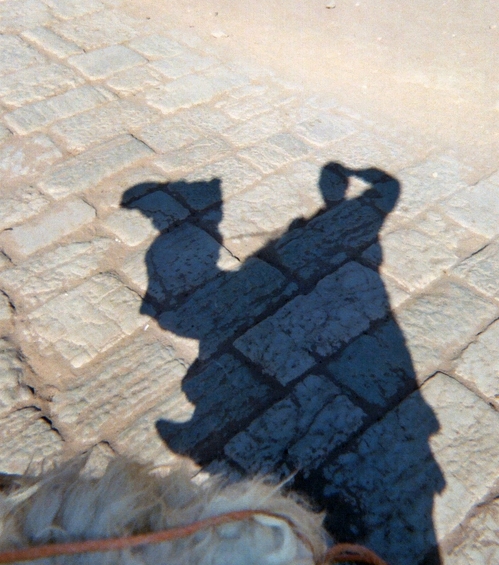
Rick, first of all that is me on the camel taking a picture of my shadow the last time I was riding through Petra in Jordan. Camels were ANE animals and they only showed up in places like Rome, to my knowledge for exotic reasons– like a Roman triumph or some sort


report abuse
 

Post a Comment

By submitting these comments, I agree to the beliefnet.com terms of service, rules of conduct and privacy policy (the "agreements"). I understand and agree that any content I post is licensed to beliefnet.com and may be used by beliefnet.com in accordance with the agreements.

Share this story


About Beliefnet

Our mission is to help people like you find, and walk, a spiritual path that will bring comfort, hope, clarity, strength, and happiness. More about Beliefnet.

Help

Media Kit

Subscribe

Legal

Copyright © Beliefnet, Inc. and/or its licensors. All rights reserved. Use of this site is subject to Terms of Service and to our Privacy Policy. Constructed by Beliefnet.

Advertisement

Report as Inappropriate

You are reporting this content because it violates the Terms of Service.

All reported content is logged for investigation.