Blogalogue

To Believe in God or Not?


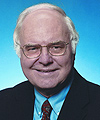
Michael Novak
Michael Novak
Heather MacDonald
Heather MacDonald

Do skeptics, agnostics and atheists have anything in common with people of faith? The recent popularity of books on both sides shows many opinions but not much evidence of similarities. Theologian Michael Novak, author of No One Sees God, argues that believers and nonbelievers often share experiences, including times of doubt. Does doubt lead to disbelief? Does faith always involve leaving reason behind? In this Beliefnet Blogalogue, skeptic and journalist Heather MacDonald, takes on Michael Novak in a lively discussion. Join this conversation about faith and doubt, belief and reason, and whether there is common ground for believers and nonbelievers.

Click here to see video of a debate between Michael Novak and Heather MacDonald at the Templeton Book Forum at the New York City Harvard Club in September.

Blogalogue

Monday November 17, 2008

How Do We Tell A True Act of God From A False One?

Dear Michael:

Thank you again for this exchange, Michael; I am grateful that you took the time to teach me with such patience and tolerance.

In all honesty, I can't follow your subtle discussion of the relationship between natural laws and Divine Providence. The fault is mine. I think you are saying that miracles and divine intervention are consistent with the laws of nature. In any case, I am perfectly happy to grant you miracles for the sake of argument. The question I have been trying to pursue is rather an epistemological one: How do we tell a true act of God from a false one? Do you, Michael, approach the claims of other faiths with the same expectation of plausibility as you would a non-religious claim?

Friday November 14, 2008

Do You Wonder About the Source of Meaning?

Dear Heather,

I really enjoy the way you conduct a path through our disagreements. You are tough, but open to differences. As we have agreed from the first, to achieve real disagreement is a long-term task; it takes a lot of brandies sipped slowly together (so to speak) to get past the misunderstandings that masquerade as disagreements, in order to find the deep place where the two parties (amicably) part ways.

Some atheists do invent a heroic image of themselves, but maybe that generation has passed. Bertrand Russell compared himself to Prometheus, Camus to Sisyphus, and Dylan Thomas raged, raged against the night. If I may say so, even you find distasteful the believing peasant's use of "amulets." Note, though, that there are village atheists, too. What do they have, those who are unlearned, to rebuke their belief in magic and superstition? I have noticed - have you? - that the more secular our universities have become over the last few decades, the larger have become the sections of bookstores devoted to witchcraft, Ouija boards, astrology, and pet rocks. Christian believers are told that such things are sinful, idol-worship, the deification of silly human fetishes.

You say (and I agree) that the world is awash with meaning.

Thursday November 13, 2008

What About Other Religions?

Dear Michael:

Thank you so much for your candid and probing response; it is most illuminating.

Before addressing your final question, I am going to risk characterizing your presentation of religious faith. Some of our readers, if not you yourself, may find this presumptuous; if so, I accept their criticism.

It seems to me that your version of religion is a highly intellectualized one--admirably reflecting your own passions. But those aspects of faith which you label "kitsch," Michael, are as central to many believers' experience of religion as a drive to ask questions. The Church itself has not discouraged--one might even say it has authorized--such manifestations of kitsch as relic worship, rosary counting, and saint idolatry (see, for example, the cult of the Virgin of Guadalupe). Papal Rome has even done its own brisk business in "buying and selling."

These manifestations of "peasant piety," as you call them, suggest to me that for many people, religion is as much about providing an amulet against misfortune and a shelter from fear and death as it is about intellectual inquiry.

Wednesday November 12, 2008

Faith Is Not Just Belief

Dear Heather:

There are many aspects of popular Catholic faith that have sometimes shocked me and turned me away. Yet I well remember visiting the great Catholic shrine at Czestechowa, in Poland, where once almost a million people turned out for Pope John Paul II when he first pierced the Iron Curtain to visit his homeland. On my visit, I was a little sickened by all the kitsch and the "buyers and sellers in the Temple ." And also by all the outer devotion of peasant piety, the jostling, the seeming lack of silence and reverence (Anglo Saxon ways are not those of all the parts of the church), the ostentatious fingering of rosaries and the sometimes loud praying. Then the thought hit me: These are the people who defeated Communism. These were the hard rocks of resistance.

Neither do I like the "pills" with written words in them. However, many petitions for canonization are received by Rome every month, and the process of declaring any one person a saint, as you can see from the case you cite, may take two or more centuries to complete.

Tuesday November 11, 2008

How are Reason and Faith Compatible?

Dear Michael,

It is an honor to discuss these profound matters with you again. I couldn't hope for a wiser or more generous interlocutor.

I would like to take up your invitation to locate the "exact areas of disagreement" between believers and unbelievers. While we could proceed at a fairly general level--debating, for example, whether the prevalence of a belief is a marker of its truth--I propose starting from the concrete. Nonbelievers find themselves surrounded every day not just by abstract statements about, say, the compatibility of reason and faith, but also by quite specific claims about God's attributes and effects in the world. I would appreciate learning how you would counsel a nonbeliever to approach such claims, since they are part of religious faith no less than metaphysics.

Perhaps, Michael, you share with me a certain despair at the gullibility of seemingly educated Westerners towards New Age quackery.

Monday November 10, 2008

Reason Leads to Belief in God

Dear Heather, I'm looking forward to this conversation. As you know, we have covered some of this ground in earlier talks, but just to bring our new friends up to date, I'd like to offer a bit of information on...

Wednesday November 5, 2008

Bio: Heather MacDonald

Heather Mac Donald is a contributing editor of City Journal and the John M. Olin Fellow at the Manhattan Institute. She also is a recipient of 2005 Bradley Prize for Outstanding Intellectual Achievement. Ms. Mac Donald is the author of...

Wednesday November 5, 2008

Bio: Michael Novak

Theologian, author, and former U.S. ambassador, Michael Novak currently holds the George Frederick Jewett Chair in Religion, Philosophy, and Public Policy at the American Enterprise Institute in Washington, D.C.  He is the 1994 recipient of the million-dollar Templeton Prize...

Advertisement

Search This Blog

About Blogalogue

There are always at least two sides to every belief. The Beliefnet Blogalogue pairs writers who differ on important questions about faith, and asks them to debate timely topics.

feed icon Subscribe

RSS Feed

Receive updates from Blogalogue

Advertisement

Advertisement


About Beliefnet

Our mission is to help people like you find, and walk, a spiritual path that will bring comfort, hope, clarity, strength, and happiness. More about Beliefnet.

Legal

Copyright © Beliefnet, Inc. and/or its licensors. All rights reserved. Use of this site is subject to Terms of Service and to our Privacy Policy. Constructed by Beliefnet.

Advertisement

Report as Inappropriate

You are reporting this content because it violates the Terms of Service.

All reported content is logged for investigation.