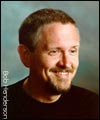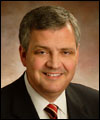
Dr. R. Albert Mohler, Jr. is president of the Southern Baptist Theological Seminary, the flagship school of the Southern Baptist Convention. He is also Professor of Christian Theology at Southern Seminary. His writings include work in "Hell Under Fire: Modern Scholarship Reinvents Eternal Punishment," "Here We Stand: A Call From Confessing Evangelicals," and "The Coming Evangelical Crisis."

Add to Newsvine
BSH I know it will not be me answering as a false witness. I am wondering however what you will do when you cannot find Joseph to give your secret word to.
I do not appreciate your disrespect, and arrogance in the least. You should not make promises that you are not in a postition to give.
Does that come from believing you are special, at all?
Everyone is special in God's eyes, but those that turn on Him, and lead others astray will have a lot to answer for. I am using Biblical verse and scripture. If I were to be judged, I doubt it would be harshly since I use His Word as my armour and trust His promises (such as his word will never change).
You ignore God's word for a man that was a gifted story teller. And you believe that somehow you have the power to be not only a god, but are the only ones authorized by God to baptize etc.
Yeah right.
Have you noticed that the majority of people stay away from Mormonism if they know anything about Christianity at all? Only people that know no different would be potential converts. And ones that leave the teachings of traditional Christianity are disillusioned by men, not Jesus. I cannot stress enough that listening to men or connecting Christianity with men is never going to work. It has to be a personal relationship with God. Not what someone else has laid out of the "way it really is". Joseph tried to tell everyone exactly who God was. To put him on the same line in a sentence with Jesus is blasphemous as far as I am concerned.
The best I can hope is that at least I planted a seed.
OCS: BSH I know it will not be me answering as a false witness. I am wondering however what you will do when you cannot find Joseph to give your secret word to.
Dennis: This is disrespectful and bordering on the sacred. By so saying it shows you have not changed your tune and wish more to fight then have a productive discussion.
OCS: I do not appreciate your disrespect, and arrogance in the least. You should not make promises that you are not in a postition to give.
Does that come from believing you are special, at all?
Dennis: He makes promises based on the word of God. You continue to fight against Him, not us!
OCS: Everyone is special in God's eyes, but those that turn on Him, and lead others astray will have a lot to answer for
Dennis: Then stop doing it! You cannot site one scripture withou injecting your own meaning into it instead of reading plainly what the scripture says.
OCS: I am using Biblical verse and scripture. If I were to be judged, I doubt it would be harshly since I use His Word as my armour and trust His promises (such as his word will never change).
Dennis: And what are we using, "Tom Sawyer"? The difference is that we take the scripture for what it says, while you must inject your own philosophy into it to make it say what you want it to say.
OCS: You ignore God's word for a man that was a gifted story teller. And you believe that somehow you have the power to be not only a god, but are the only ones authorized by God to baptize etc.
Yeah right.
Dennis: More disrespect from you! Accept it or not. Joseph was a prophet of God and restored His church to its fulness in this the dispensation of the fulness of times.
OCS: Have you noticed that the majority of people stay away from Mormonism if they know anything about Christianity at all?
Dennis: And this is why the Church continues to grow by 40% every ten years. Did you know the majority of those converts are coming from the evangelical community and most are very steeped in the Bible.
OCS: Only people that know no different would be potential converts. And ones that leave the teachings of traditional Christianity are disillusioned by men, not Jesus
Dennis: More of your opinion? This is the Church of Jesus Christ, not the church of Joseph Smith. This church teaches all the word of Christ and does not leave anything out like you have been wont to do.
OCS: I cannot stress enough that listening to men or connecting Christianity with men is never going to work
Dennis: And yet the whole foundation of your belief you can trace all the way back to 1520 and Martin Luther. Or before that to the Greek philosophers. Much of Traditional Orthodox Christianity is nothing more than Greek Philosophy. This is why Christ had to restore His church.
OCS: It has to be a personal relationship with God. Not what someone else has laid out of the "way it really is". Joseph tried to tell everyone exactly who God was. To put him on the same line in a sentence with Jesus is blasphemous as far as I am concerned.
The best I can hope is that at least I planted a seed.
Dennis: The only seeds I have seen from you are seeds of deception. You have attempted to define to knowledgeable Latter-day Saints their belief which has fallen far short and been filled with untruths and out of context quotes. Why should we believe anything that you have to say? Or why should anyone else for that matter after observing the tactics that you have employed? OCS, You know not God and you refuse to pray for knowledge from Him. So how is it that you are so wise? I will take God's word in the matter, thank you very much!
OCS,
I take exception to the idea that only ignorants are converts. I knew plenty about traditional Christianity. More than enough to know that no one had it all together. The reason why the average faithful member of other Christian-like denominations refuses to talk to our members and missionaries is that it is indoctrinated into them that we are of the Devil. Most other denominations are fine, but not the LDS. Don't believe it? My wife recounts of many Christian friends that went away to Bible camp and afterwards refused to talk to her because of her beliefs. I also have seen it. Talk about instilling fear which, where does that some from again.
BTW, I would like to use some of our dialogues for a future Sunday SChool lesson. I hope you are not offended.
OCS,
Ahhh...good to see you haven't abandoned this blog after all, but sad to see you're still hardened to the things of the Spirit.
You confuse my "promise for your accountability" with arrogance. You still know NOT your own bible. Perhaps you should go back and read Matthew 12:36. Here I'll make it easy for you..."But I say uto you, That every idle word that men shall speak, they shall give account thereof in the day of judgment." One of the damning deceptions of Satan, fully embraced by TOCs, is the concept of "once forgiven, always forgiven". Perhaps because of that false doctrine, you don't even believe you will have to account in a final judgement? But, I PROMISE you will.
Sorry if this disappoints you, but it's not too late to change...yet. :)
BSH
I think you've done a good job, Brother Mohler and Brother Card, at discussing and representing your beliefs. However, if I may suggest to the readers of this site a very authoritative source on Mormon Theology versus Protestant/Catholic Theology, here it is (Elder Jeffrey R. Holland, a descendant of the guy who started or helped start the Baptist organization):
Elder Jeffrey R. Holland
Of the Quorum of the Twelve Apostles
We declare it is self-evident from the scriptures that the Father, the Son, and the Holy Ghost are separate persons, three divine beings.
As Elder Ballard noted earlier in this session, various crosscurrents of our times have brought increasing public attention to The Church of Jesus Christ of Latter-day Saints. The Lord told the ancients this latter-day work would be “a marvellous work and a wonder,”1 and it is. But even as we invite one and all to examine closely the marvel of it, there is one thing we would not like anyone to wonder about—that is whether or not we are “Christians.”
By and large any controversy in this matter has swirled around two doctrinal issues—our view of the Godhead and our belief in the principle of continuing revelation leading to an open scriptural canon. In addressing this we do not need to be apologists for our faith, but we would like not to be misunderstood. So with a desire to increase understanding and unequivocally declare our Christianity, I speak today on the first of those two doctrinal issues just mentioned.
Our first and foremost article of faith in The Church of Jesus Christ of Latter-day Saints is “We believe in God, the Eternal Father, and in His Son, Jesus Christ, and in the Holy Ghost.”2 We believe these three divine persons constituting a single Godhead are united in purpose, in manner, in testimony, in mission. We believe Them to be filled with the same godly sense of mercy and love, justice and grace, patience, forgiveness, and redemption. I think it is accurate to say we believe They are one in every significant and eternal aspect imaginable except believing Them to be three persons combined in one substance, a Trinitarian notion never set forth in the scriptures because it is not true.
Indeed no less a source than the stalwart Harper’s Bible Dictionary records that “the formal doctrine of the Trinity as it was defined by the great church councils of the fourth and fifth centuries is not to be found in the [New Testament].”3
So any criticism that The Church of Jesus Christ of Latter-day Saints does not hold the contemporary Christian view of God, Jesus, and the Holy Ghost is not a comment about our commitment to Christ but rather a recognition (accurate, I might add) that our view of the Godhead breaks with post–New Testament Christian history and returns to the doctrine taught by Jesus Himself. Now, a word about that post–New Testament history might be helpful.
In the year A.D. 325 the Roman emperor Constantine convened the Council of Nicaea to address—among other things—the growing issue of God’s alleged “trinity in unity.” What emerged from the heated contentions of churchmen, philosophers, and ecclesiastical dignitaries came to be known (after another 125 years and three more major councils)4 as the Nicene Creed, with later reformulations such as the Athanasian Creed. These various evolutions and iterations of creeds—and others to come over the centuries—declared the Father, Son, and Holy Ghost to be abstract, absolute, transcendent, immanent, consubstantial, coeternal, and unknowable, without body, parts, or passions and dwelling outside space and time. In such creeds all three members are separate persons, but they are a single being, the oft-noted “mystery of the trinity.” They are three distinct persons, yet not three Gods but one. All three persons are incomprehensible, yet it is one God who is incomprehensible.
We agree with our critics on at least that point—that such a formulation for divinity is truly incomprehensible. With such a confusing definition of God being imposed upon the church, little wonder that a fourth-century monk cried out, “Woe is me! They have taken my God away from me, . . . and I know not whom to adore or to address.”5 How are we to trust, love, worship, to say nothing of strive to be like, One who is incomprehensible and unknowable? What of Jesus’s prayer to His Father in Heaven that “this is life eternal, that they might know thee the only true God, and Jesus Christ, whom thou hast sent”?6
It is not our purpose to demean any person’s belief nor the doctrine of any religion. We extend to all the same respect for their doctrine that we are asking for ours. (That, too, is an article of our faith.) But if one says we are not Christians because we do not hold a fourth- or fifth-century view of the Godhead, then what of those first Christian Saints, many of whom were eyewitnesses of the living Christ, who did not hold such a view either?7
We declare it is self-evident from the scriptures that the Father, the Son, and the Holy Ghost are separate persons, three divine beings, noting such unequivocal illustrations as the Savior’s great Intercessory Prayer just mentioned, His baptism at the hands of John, the experience on the Mount of Transfiguration, and the martyrdom of Stephen—to name just four.
With these New Testament sources and more8 ringing in our ears, it may be redundant to ask what Jesus meant when He said, “The Son can do nothing of himself, but what he seeth the Father do.”9 On another occasion He said, “I came down from heaven, not to do mine own will, but the will of him that sent me.”10 Of His antagonists He said, “[They have] . . . seen and hated both me and my Father.”11 And there is, of course, that always deferential subordination to His Father that had Jesus say, “Why callest thou me good? there is none good but one, that is, God.”12 “My father is greater than I.”13
To whom was Jesus pleading so fervently all those years, including in such anguished cries as “O my Father, if it be possible, let this cup pass from me”14 and “My God, my God, why hast thou forsaken me”?15 To acknowledge the scriptural evidence that otherwise perfectly united members of the Godhead are nevertheless separate and distinct beings is not to be guilty of polytheism; it is, rather, part of the great revelation Jesus came to deliver concerning the nature of divine beings. Perhaps the Apostle Paul said it best: “Christ Jesus . . . being in the form of God, thought it not robbery to be equal with God.”16
A related reason The Church of Jesus Christ of Latter-day Saints is excluded from the Christian category by some is because we believe, as did the ancient prophets and apostles, in an embodied—but certainly glorified—God.17 To those who criticize this scripturally based belief, I ask at least rhetorically: If the idea of an embodied God is repugnant, why are the central doctrines and singularly most distinguishing characteristics of all Christianity the Incarnation, the Atonement, and the physical Resurrection of the Lord Jesus Christ? If having a body is not only not needed but not desirable by Deity, why did the Redeemer of mankind redeem His body, redeeming it from the grasp of death and the grave, guaranteeing it would never again be separated from His spirit in time or eternity?18 Any who dismiss the concept of an embodied God dismiss both the mortal and the resurrected Christ. No one claiming to be a true Christian will want to do that.
Now, to anyone within the sound of my voice who has wondered regarding our Christianity, I bear this witness. I testify that Jesus Christ is the literal, living Son of our literal, living God. This Jesus is our Savior and Redeemer who, under the guidance of the Father, was the Creator of heaven and earth and all things that in them are. I bear witness that He was born of a virgin mother, that in His lifetime He performed mighty miracles observed by legions of His disciples and by His enemies as well. I testify that He had power over death because He was divine but that He willingly subjected Himself to death for our sake because for a period of time He was also mortal. I declare that in His willing submission to death He took upon Himself the sins of the world, paying an infinite price for every sorrow and sickness, every heartache and unhappiness from Adam to the end of the world. In doing so He conquered both the grave physically and hell spiritually and set the human family free. I bear witness that He was literally resurrected from the tomb and, after ascending to His Father to complete the process of that Resurrection, He appeared, repeatedly, to hundreds of disciples in the Old World and in the New. I know He is the Holy One of Israel, the Messiah who will one day come again in final glory, to reign on earth as Lord of lords and King of kings. I know that there is no other name given under heaven whereby a man can be saved and that only by relying wholly upon His merits, mercy, and everlasting grace19 can we gain eternal life.
My additional testimony regarding this resplendent doctrine is that in preparation for His millennial latter-day reign, Jesus has already come, more than once, in embodied majestic glory. In the spring of 1820, a 14-year-old boy, confused by many of these very doctrines that still confuse much of Christendom, went into a grove of trees to pray. In answer to that earnest prayer offered at such a tender age, the Father and the Son appeared as embodied, glorified beings to the boy prophet Joseph Smith. That day marked the beginning of the return of the true, New Testament gospel of the Lord Jesus Christ and the restoration of other prophetic truths offered from Adam down to the present day.
I testify that my witness of these things is true and that the heavens are open to all who seek the same confirmation. Through the Holy Spirit of Truth, may we all know “the only true God, and Jesus Christ, whom [He has] sent.”20 Then may we live Their teachings and be true Christians in deed, as well as in word, I pray in the name of Jesus Christ, amen.
NOTES
1. Isaiah 29:14.
2. Articles of Faith 1:1.
3. Paul F. Achtemeier, ed. (1985), 1099; emphasis added.
4. Constantinople, A.D. 381; Ephesus, A.D. 431; Chalcedon, A.D. 451.
5. Quoted in Owen Chadwick, Western Asceticism (1958), 235.
6. John 17:3; emphasis added.
7. For a thorough discussion of this issue, see Stephen E. Robinson, Are Mormons Christian? 71–89; see also Robert Millet, Getting at the Truth (2004), 106–22.
8. See, for example, John 12:27–30; John 14:26; Romans 8:34; Hebrews 1:1–3.
9. John 5:19; see also John 14:10.
10. John 6:38.
11. John 15:24.
12. Matthew 19:17.
13. John 14:28.
14. Matthew 26:39.
15. Matthew 27:46.
16. Philippians 2:5–6.
17. See David L. Paulsen, “Early Christian Belief in a Corporeal Deity: Origen and Augustine as Reluctant Witnesses,” Harvard Theological Review, vol. 83, no. 2 (1990): 105–16; David L. Paulsen, “The Doctrine of Divine Embodiment: Restoration, Judeo-Christian, and Philosophical Perspectives,” BYU Studies, vol. 35, no. 4 (1996): 7–94; James L. Kugel, The God of Old: Inside the Lost World of the Bible (2003), xi–xii, 5–6, 104–6, 134–35; Clark Pinnock, Most Moved Mover: A Theology of God’s Openness (2001), 33–34.
18. See Romans 6:9; Alma 11:45.
19. See 1 Nephi 10:6; 2 Nephi 2:8; 31:19; Moroni 6:4; Joseph Smith Translation, Romans 3:24.
20. John 17:3.
Elder Jeffrey R. Holland
Of the Quorum of the Twelve Apostles
We invite all to inquire into the wonder of what God has said since biblical times and is saying even now.
President Monson, may I claim a moment of personal privilege?
As the first of the Brethren invited to speak following your singular message to the Church this morning, may I say something on behalf of all your Brethren of the General Authorities and indeed on behalf of all the Church.
Of the many privileges we have had in this historic conference, including participation in a solemn assembly in which we were able to stand and sustain you as prophet, seer, and revelator, I cannot help but feel that the most important privilege we have all had has been to witness personally the settling of the sacred, prophetic mantle upon your shoulders, almost as it were by the very hands of angels themselves. Those in attendance at last night’s general priesthood meeting and all who were present in the worldwide broadcast of this morning’s session have been eyewitness to this event. For all the participants, I express our gratitude for such a moment. I say that with love to President Monson and especially love to our Father in Heaven for the wonderful opportunity it has been to be “eyewitnesses of his majesty” (2 Peter 1:16), as the Apostle Peter once said.
In general conference last October, I said there were two principal reasons The Church of Jesus Christ of Latter-day Saints is accused, erroneously, of not being Christian. At that time I addressed one of those doctrinal issues—our scripturally based view of the Godhead. Today I would like to address the other major doctrine which characterizes our faith but which causes concern to some, namely the bold assertion that God continues to speak His word and reveal His truth, revelations which mandate an open canon of scripture.
Some Christians, in large measure because of their genuine love for the Bible, have declared that there can be no more authorized scripture beyond the Bible. In thus pronouncing the canon of revelation closed, our friends in some other faiths shut the door on divine expression that we in The Church of Jesus Christ of Latter-day Saints hold dear: the Book of Mormon, the Doctrine and Covenants, the Pearl of Great Price, and the ongoing guidance received by God’s anointed prophets and apostles. Imputing no ill will to those who take such a position, nevertheless we respectfully but resolutely reject such an unscriptural characterization of true Christianity.
One of the arguments often used in any defense of a closed canon is the New Testament passage recorded in Revelation 22:18: “For I testify unto every man that heareth the words of . . . this book, If any man shall add unto these things, God shall add unto him the plagues that are written in this book.” However, there is now overwhelming consensus among virtually all biblical scholars that this verse applies only to the book of Revelation, not the whole Bible. Those scholars of our day acknowledge a number of New Testament “books” that were almost certainly written after John’s revelation on the Isle of Patmos was received. Included in this category are at least the books of Jude, the three Epistles of John, and probably the entire Gospel of John itself.1 Perhaps there are even more than these.
But there is a simpler answer as to why that passage in the final book of the current New Testament cannot apply to the whole Bible. That is because the whole Bible as we know it—one collection of texts bound in a single volume—did not exist when that verse was written. For centuries after John produced his writing, the individual books of the New Testament were in circulation singly or perhaps in combinations with a few other texts but almost never as a complete collection. Of the entire corpus of 5,366 known Greek New Testament manuscripts, only 35 contain the whole New Testament as we now know it, and 34 of those were compiled after A.D. 1000.2
The fact of the matter is that virtually every prophet of the Old and New Testament has added scripture to that received by his predecessors. If the Old Testament words of Moses were sufficient, as some could have mistakenly thought them to be,3 then why, for example, the subsequent prophecies of Isaiah or of Jeremiah, who follows him? To say nothing of Ezekiel and Daniel, of Joel, Amos, and all the rest. If one revelation to one prophet in one moment of time is sufficient for all time, what justifies these many others? What justifies them was made clear by Jehovah Himself when He said to Moses, “My works are without end, and . . . my words . . . never cease.”4
One Protestant scholar has inquired tellingly into the erroneous doctrine of a closed canon. He writes: “On what biblical or historical grounds has the inspiration of God been limited to the written documents that the church now calls its Bible? . . . If the Spirit inspired only the written documents of the first century, does that mean that the same Spirit does not speak today in the church about matters that are of significant concern?”5 We humbly ask those same questions.
Continuing revelation does not demean or discredit existing revelation. The Old Testament does not lose its value in our eyes when we are introduced to the New Testament, and the New Testament is only enhanced when we read the Book of Mormon: Another Testament of Jesus Christ. In considering the additional scripture accepted by Latter-day Saints, we might ask: Were those early Christians who for decades had access only to the primitive Gospel of Mark (generally considered the first of the New Testament Gospels to be written)—were they offended to receive the more detailed accounts set forth later by Matthew and Luke, to say nothing of the unprecedented passages and revelatory emphasis offered later yet by John? Surely they must have rejoiced that ever more convincing evidence of the divinity of Christ kept coming. And so do we rejoice.
Please do not misunderstand. We love and revere the Bible, as Elder M. Russell Ballard taught so clearly from this pulpit just one year ago.6 The Bible is the word of God. It is always identified first in our canon, our “standard works.” Indeed, it was a divinely ordained encounter with the fifth verse of the first chapter of the book of James that led Joseph Smith to his vision of the Father and the Son, which gave birth to the Restoration of the gospel of Jesus Christ in our time. But even then, Joseph knew the Bible alone could not be the answer to all the religious questions he and others like him had. As he said in his own words, the ministers of his community were contending—sometimes angrily—over their doctrines. “Priest [was] contending against priest, and convert [was contending] against convert . . . in a strife of words and a contest about opinions,” he said. About the only thing these contending religions had in common was, ironically, a belief in the Bible, but, as Joseph wrote, “the teachers of religion of the different sects understood the same passages of scripture so differently as to destroy all confidence in settling the question [regarding which church was true] by an appeal to the Bible.”7 Clearly the Bible, so frequently described at that time as “common ground,” was nothing of the kind—unfortunately it was a battleground.
Thus one of the great purposes of continuing revelation through living prophets is to declare to the world through additional witnesses that the Bible is true. “This is written,” an ancient prophet said, speaking of the Book of Mormon, “for the intent that ye may believe that,” speaking of the Bible.8 In one of the earliest revelations received by Joseph Smith, the Lord said, “Behold, I do not bring [the Book of Mormon forth] to destroy [the Bible] but to build it up.”9
One other point needs to be made. Since it is clear that there were Christians long before there was a New Testament or even an accumulation of the sayings of Jesus, it cannot therefore be maintained that the Bible is what makes one a Christian. In the words of esteemed New Testament scholar N. T. Wright, “The risen Jesus, at the end of Matthew’s Gospel, does not say, ‘All authority in heaven and on earth is given to the books you are all going to write,’ but [rather] ‘All authority in heaven and on earth is given to me.’ “10 In other words, “Scripture itself points . . . away from itself and to the fact that final and true authority belongs to God himself.”11 So the scriptures are not the ultimate source of knowledge for Latter-day Saints. They are manifestations of the ultimate source. The ultimate source of knowledge and authority for a Latter-day Saint is the living God. The communication of those gifts comes from God as living, vibrant, divine revelation.12
This doctrine lies at the very heart of The Church of Jesus Christ of Latter-day Saints and of our message to the world. It dramatizes the significance of a solemn assembly yesterday, in which we sustained Thomas S. Monson as a prophet, a seer, and a revelator. We believe in a God who is engaged in our lives, who is not silent, not absent, nor, as Elijah said of the god of the priests of Baal, is He “[on] a journey, or peradventure he sleepeth, and must be [awakened].”13 In this Church, even our young Primary children recite, “We believe all that God has revealed, all that He does now reveal, and we believe that He will yet reveal many great and important things pertaining to the Kingdom of God.”14
In declaring new scripture and continuing revelation, we pray we will never be arrogant or insensitive. But after a sacred vision in a now sacred grove answered in the affirmative the question “Does God exist?” what Joseph Smith and The Church of Jesus Christ of Latter-day Saints force us to face is the next interrogative, which necessarily follows: “Does He speak?” We bring the good news that He does and that He has. With a love and affection born of our Christianity, we invite all to inquire into the wonder of what God has said since biblical times and is saying even now.
In a sense Joseph Smith and his prophetic successors in this Church answer the challenge Ralph Waldo Emerson put to the students of the Harvard Divinity School 170 years ago this coming summer. To that group of the Protestant best and brightest, the great sage of Concord pled that they teach “that God is, not was; that He speaketh, not spake.”15
I testify that the heavens are open. I testify that Joseph Smith was and is a prophet of God, that the Book of Mormon is truly another testament of Jesus Christ. I testify that Thomas S. Monson is God’s prophet, a modern apostle with the keys of the kingdom in his hands, a man upon whom I personally have seen the mantle fall. I testify that the presence of such authorized, prophetic voices and ongoing canonized revelations have been at the heart of the Christian message whenever the authorized ministry of Christ has been on the earth. I testify that such a ministry is on the earth again, and it is found in this, The Church of Jesus Christ of Latter-day Saints.
In our heartfelt devotion to Jesus of Nazareth as the very Son of God, the Savior of the world, we invite all to examine what we have received of Him, to join with us, drinking deeply at the “well of water springing up into everlasting life,”16 these constantly flowing reminders that God lives, that He loves us, and that He speaks. I express the deepest personal thanks that His works never end and His “words . . . never cease.” I bear witness of such divine loving attention and the recording of it, in the sacred name of Jesus Christ, amen.
NOTES
1. See Stephen E. Robinson, Are Mormons Christians? (1991), 46. The issue of canon is discussed on pages 45–56. Canon is defined as “an authoritative list of books accepted as Holy Scripture” (Merriam Webster’s Collegiate Dictionary, 11th ed. [2003], “canon”).
2. See Bruce M. Metzger, Manuscripts of the Greek Bible: An Introduction to Greek Paleography (1981), 54–55; see also Are Mormons Christians? 46.
3. See Deuteronomy 4:2, for example.
4. Moses 1:4.
5. Lee M. McDonald, The Formation of the Christian Biblical Canon, rev. ed. (1995), 255–56.
6. See “The Miracle of the Holy Bible,” Liahona and Ensign, May 2007, 80–82.
7. Joseph Smith—History 1:6, 12.
8. Mormon 7:9; emphasis added.
9. D&C 10:52; see also D&C 20:11.
10. N. T. Wright, The Last Word: Beyond the Bible Wars to a New Understanding of the Authority of Scripture (2005), xi.
11. Wright, The Last Word, 24.
12. For a full essay on this subject, see Dallin H. Oaks, “Scripture Reading and Revelation,” Ensign, Jan. 1995, 6–9.
13. 1 Kings 18:27.
14. Articles of Faith 1:9.
15. “An Address,” The Complete Writings of Ralph Waldo Emerson (1929), 45.
16. John 4:14.
Post a Comment
Are you aware of our Rules of Conduct?