Everyday Ethics

Everyday Ethics

Good Neighbors: Respect Privacy, or Leap In to Lend a Hand?

posted by hfields | 4:48pm Tuesday June 9, 2009


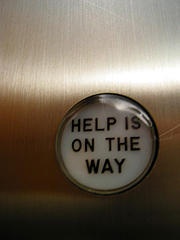
Elevator Help Button.jpg

My neighbor has OCD–a fact I just recently learned. For the
longest time I believed she simply hated me, or that she thought I was a
psycho, and here’s why: she wouldn’t get
on the elevator with me
. We’d wait together by the elevator bank, the
little indicator light glowing silently between us, and when the doors opened, she wouldn’t move to get on. (After a
few rounds of this, I’d even–discreetly–sniff my pits, but no, I hadn’t
neglected my deodorant.) Then I noticed that she would sometimes ride downstairs with me, but other times not. “Weird,”
I thought. “What is up with this
lady?”

Finally, I asked around, and learned about her OCD. I found
out she had a mental block about one particular
elevator (our building has two) and that her compulsions wouldn’t allow her to
ride the right one, though she could take the left. Since then, I’ve begun to
notice other behaviors my neighbor struggles with daily. She’s got a number of unfortunate, even disabling tics, and I can see it’s hard for her to get
around the neighborhood. She has to walk to the corner store a certain way, must perform certain
rituals when she’s opening or closing doors, can only wear certain clothes. I feel great sympathy when I see her.

But do I reach out? Not really.

I’m torn about my responsibility here. On the one hand, she seems extremely skittish, easily startled, riddled with anxiety. When I see her in the hallway, throwing out the garbage or heading to the laundry room or whatnot, I make an effort to move slowly, greet her gently but audibly (she’s got some vision and hearing problems). I want her to be aware of my presence so that she’s not afraid and can make whatever accommodations she needs to make for her comfort. When I see that she’s having a particularly bad day, caught in her rituals of button-pressing or pacing, my heart goes out to her, but the truth is, I don’t ask if I can help. Instead, I give her a wide berth at such times. I’ve even been known to take the service elevator or wait to leave my apartment in order to avoid her.

Why? Two reasons. One, I honestly don’t want to get involved. That’s the squeamish, selfish truth–or part of it, anyway. My other reason is less awful, and hopefully, more ethical: I respect her privacy. From what little I understand of the disease, Obsessive-Compulsive Disorder is all-consuming and frustrating, sometimes humiliating. It’s a massive struggle just to do little everyday things. I imagine that she doesn’t want attention called to her in such moments. I imagine that if I interrupted her counting rituals, she’d be stuck starting over, simply worsening her situation. And I take into account the fact that, any time I’ve been cautiously friendly, she’s reacted with a timidity that makes me think she’d rather be left alone.

But I don’t really know that.

I wonder the same thing about blind or disabled people I see on the street or on the bus or subway. Should I be offering assistance? Mostly I just make room for them, clear a path, but I say nothing, make no move to help. Would a word here or there be welcome? Or be considered insulting, interfering, or even an attack?

What’s the ethical thing to do in these situations? Anyone have a story they’d like to share?


If you’d like to learn more about OCD or other anxiety
disorders, take a look at these Beliefnet resources both in Health and on our blogs.


Photo by flickr user alykat


Previous Posts

Coding Ethics...
Internet activist and New York Times bestselling author of The Filter Bubble: What the Internet Is Hiding from You, Eli Pariser is concerned that information gatekeepers of the past (i.e. editors/reporters) have been replaced by algorithms that individually tailor information based upon a host of v

posted 2:49:15pm Jan. 22, 2012 | read full post »

Can Ethical Companies Do Business With Unethical Leaders?
Coca-cola has been accused of "propping up a notorious Swaziland dictator" whose human rights abuses and bilking of the national wealth has long been criticized by human rights activists. According to Guardian UK reporter David Smith**, Swaziland's King Mswati III is Africa's last absolute monarch w

posted 3:49:39pm Jan. 02, 2012 | read full post »

New Years Resolutions: Are We Lying to Ourselves?
I know it's become popular, but I've become suspect of using traditional goal-setting strategies and business process techniques to change personal habits and pursue a meaningful life. While I can admit that there's something invigorating--even exciting--about casting a new vision, writing that list

posted 10:51:42pm Jan. 01, 2012 | read full post »

Is Craigslist Who We Really Are?
Raise your hand if you're familiar with Craigslist.org.  Chances are, there's one that serves your community.  And it's extremely handy for job listings, housing, dating, selling your old crap or buying new old crap.Really, it's ingenious. But why's it also so darn discouraging?  

posted 9:15:55am Dec. 18, 2009 | read full post »

How Do You Complain - Gracefully?
So, I'm of the ethos that if you don't like your meal, you send it back. It's how I was raised, and I don't have any sense of shame about that. When you pay for something, you should get your money's worth. HOWEVER, I also believe there's a polite way to do it, and a wrong way.Sometimes I don't

posted 1:29:56pm Dec. 17, 2009 | read full post »

Advertisement
Comments read comments(2)
post a comment
undefined

posted June 12, 2009 at 12:11 pm


This is an excellent issue. We all have interactions with the invisible or visabled disabled. Some folks don’t show their problems others make it very obvious. And then we need to consider how we all of our own issues as well. As a post graduate social worker for twenty years and now a mental health consumer my best advice is to write a short note for those around you, such as I see you’ve been struggling please know I am willing to be help if need be. For others out of your community ask Do you need help? Most disabled people have been living with their disability for a life time or longer there used to it- they won’t be shocked or shouldn’t. What I try to teach my son is the responsibility of the disabled to break the ice say something like I have vision problems could you help me with this? This makes it okay to talk about. Mental Health consumers have a harder time I think. I can’t do this today
I’m too depressed is a harder sell- at least for me to do. The compassion and empathy expressed here is wonderful. Sometimes that leads the way since folks can feel this in their bones.


report abuse
 

Anonymous

posted June 12, 2009 at 12:20 pm


OCD is characterized by numerous traits, not the least of which is a pronounced sense of realizing one’s thoughts and/or actions are pathologically and embarrassingly unreasonable. I don’t know where your neighbor is in terms of getting treatment, or why others in the building are aware of her condition. (Did they hypothesize about it? Find an OCF newsletter misdelivered to their mailbox? Does she or a family member discuss her condition with others in the building?) Without knowing her, it is impossible to predict whether she would react by being grateful or humiliated if you intervened.
From a therapeutic point of view, if you wanted to get involved you could simply ask her if you could help her. She will probably decline, but if you wanted to persist, you could ask her again, saying that you can see she is a very lovely person and you genuinely would like to help. If you were replaying the elevator scenario and it is clear that her “bad” elevator is going to be the one opening next, maybe you could say something along the lines of, “I’ve noticed you don’t usually ride this elevator, but perhaps you would be willing to ride this one with me today? I would really like your companionship.” Again, she will probably decline. You can drop the matter or push a little by saying something unexpected and silly in an exaggerated stage whisper like, “I’m afraid the other neighbors will think I smell bad because I had fried skunk for dinner last night. Won’t you please ride with me?” This should at least get a smile, but if she turns you down a second time, back off. Even though it does not seem like progress, making someone with OCD confront the reality of not being able to do simple things can be useful.
Some of the biggest weapons that can be employed to help someone with OCD confront their fears are empathy (either demonstrating your sense of empathy, or appealing to hers to help you in some manner) and humor. Of course, prepare for the possibility that her OCD will force her to go out of her way to avoid encountering you after this conversation, at which point, the best thing you can do for her is to live your own life normally. Altering your routine out of a misguided sense of kindness is actually not helpful–it reinforces her fears (if you’re taking the service elevator, then maybe that elevator in the lobby actually is dangerous), it allows her abnormal behaviors to continue unabated, and it undermines her incentive to get treatment.
You certainly do not want to push her to face fears she is not ready to confront, but if she truly has OCD, she also knows deep down that her fears are neither normal nor logical. If she does agree to ride the elevator with you, but seems to be getting increasingly anxious during the ride, that is not unusual. The trick is to keep the anxiety from spiraling out of control so that she doesn’t spend an afternoon in her apartment, ritualizing away whatever she thinks she needs to undo. Sometimes this can be avoided by distraction (such as refocusing her mind with a conversation about a neutral subject in the hallway after getting out of the elevator). In a therapeutic situation, distraction is not desirable–the patient needs to habituate to the anxiety–but you are not a therapist, and progress with distraction is still usually better than no progress. The important thing is to be friendly and compassionate without being patronizing.


report abuse
 

Post a Comment

By submitting these comments, I agree to the beliefnet.com terms of service, rules of conduct and privacy policy (the "agreements"). I understand and agree that any content I post is licensed to beliefnet.com and may be used by beliefnet.com in accordance with the agreements.

Share this story


About Beliefnet

Our mission is to help people like you find, and walk, a spiritual path that will bring comfort, hope, clarity, strength, and happiness. More about Beliefnet.

Help

Media Kit

Subscribe

Legal

Copyright © Beliefnet, Inc. and/or its licensors. All rights reserved. Use of this site is subject to Terms of Service and to our Privacy Policy. Constructed by Beliefnet.

Advertisement

Report as Inappropriate

You are reporting this content because it violates the Terms of Service.

All reported content is logged for investigation.