Faithful Citizenship

Faithful Citizenship

Gratitude In a Strange Place

posted by Dr. Deal Hudson

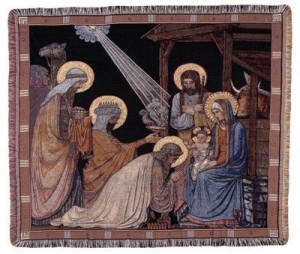
The Three Wise Men, or Kings, bow down before the child Jesus in gratitude.  For me, 2011 was a year for growth in gratitude — because I spent this past year fighting prostate cancer. I didn’t see it as a Job-like tragedy but what often befalls men of my age regardless of their “goodness,” or lack of it, in the eyes of God.

I was grateful, first, that my illness wasn’t going to kill me quickly, if ever. But, the news that my prostate had to be removed and that hormones and radiation were to follow was a thunder-clapping reminder that every day is a gift.

Later I was grateful when a kind of good humor unexpectedly arrived and buoyed my spirits for a while after the surgery. I found lots to laugh about and people to laugh with, given the travails of my body and spirit. Yet, I was not to remain the same man, no matter how good the jest or manly the bravado. If anything proves definitively that the human person represents the full union of the material and immaterial, the body and the intellect, it’s experienced in the impact of drastic, sudden changes in body chemistry.

My body had absorbed three consecutive shocks to its natural chemistry. I found myself actually feeling things differently, sometimes at a darker level than I had known before. There were times when none of my usual coping mechanisms worked — there was no music, no film, no round of golf, or time with family and friends that would release me from the darkness.

For a time I was overwhelmed, then something within urged me to get acquainted with this new me. I’ve accepted (almost) what those changes entail. Though the surgery, hormones, and radiation are over, the new me is still hanging around. There are even times I like the new me more than the one I left behind — I’m more creative, more compassionate, and more grateful to God for the gift of life.

Can’t Get Enough of Christmas Music

posted by Dr. Deal Hudson


I’m a Christmas music fanatic. A long row of Christmas music LPs still stands at dusty attention on my bookshelves. Names like Perry Como, Bing Crosby, the Kings College Choir, and Eugene Ormandy peek out from their spines. (My Christmas cassette collection was destroyed by a flooded basement), but CDs began replacing them long ago, the latest being a superb collection of new and traditional carols from conductor Simon Halsey, Rejoice! Christmas at Sage Gateshead. All the CDs have been “ripped” into downloads, and the only music presently loaded on my iPhone is about Christmas.

I had forgotten how superbly Glen Campbell sang “Little Altar Boy” — it doesn’t eclipse the memory of Karen Carpenter, but the same note of sincerity is there, and it’s touching.  But my favorite right now, among all my Christmas recordings, is the Mormon Tablernacle Choir singing, “When Is That Goodly Fragrance Flowing?

Some years ago — at a time that was not good for me –a week or so before Christmas I was flipping channels when I stumbled upon the Mormon Tabernacle Choir’s annual Christmas special. Kathleen Battle was the featured soloist, but it was this performance of the French carol ( Quelle est cette odeur agréable) “Whence Is That Goodly Fragrance” that both riveted my attention and lifted me out of the doldrums.

It’s one of most exquisite recordings of choral music I know, and if you ever have a chance to see it performed on TV, I urge you to watch it. It begins with the sopranos singing the first verse over an orchestral accompaniment. The second verse is sung almost pianissimo by the tenors, again with orchestral accompaniment. The third verse is shared by both women’s sections, but after the first few bars the orchestra suddenly goes silent, and the effect of the exposed voices in harmony is thrilling.

The experience of beauty in music, for me, is literally a “Sursum Corda,” a lifting of the heart toward the final happiness we are destined to share with God.  Music is unique among the arts for its ability to penetrate us, to take the mind and body on a journey, away from division and toward unity.  The beauty of music envelops us in its musical line, and through the impact of harmony and melody we find it easier to pray, to aspire to goodness, to believe in the underlying order of the world.

Religions provide guiding narratives for human existence — they address the question of origin and destination, the meaning of suffering, and the means to joy. Music, as no other art form, has a greater ability to help convince us that a paradise once existed and still does out of time, as it awaits us in the presence of God. Anyone who doubts what I say should listen to the “Dona Nobis Pacem” at the end of Bach’s Mass in B Minor (I would recommend Robert Shaw’s unsurpassed account on this little-known Christmas CD).

If the beauty of this breathtaking prayer for peace does not touch you, does not lift you out of the ordinary, then I would let Shakespeare issue you this warning:

“The man that hath no music in himself, nor is not moved with concord of sweet sounds, is fit for treasons, stratagems, and spoils. The motions of his spirit are dull as night, and his affections dark as Erebus. Let no such man be trusted” (The Merchant of Venice).

The Death of a Christian Man of Letters

posted by Dr. Deal Hudson


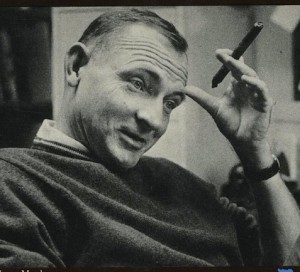
You may not have heard of him, but a Christian man of letters, one of our greatest, just passed away. A native of Georgia and educated at its University,  Marion Montgomery was a prolific writer. His works include three novels, short stories, poetry, literary and cultural criticism, a trilogy on Flannery O’Connor, Nathaniel Hawthorne, and Edgar Allan Poe, and a number of books that applied the Thomistic tradition to contemporary culture and the great works of American literature.

Montgomery’s earliest works bear the stamp of the “Fugitive-Agrarian Movement,” whose central figures, such as Donald Davidson, Robert Penn Warren, John Crowe Ransom, and Andrew Lytle became major figures in the literary world of the 40s and 50s. Marion Montgomery was a product of this movement’s second generation. But, when his fiction and poetry never received the attention it deserved — and still deserves — he turned his attention to the critical and interpretive works that earned him a national reputation and small but devoted group of admirers.

I was privileged to visit Marion and his wife Dot many times at their home in Crawford, GA before I moved to the East coast. We had a reunion of sorts when I devoted four of my “Church and Culture Today” shows on EWTN to interviewing Marion, and I hosted him several times as a speaker at meetings of the American Maritain Association.

I recall that late scholar Ralph McInerny from Notre Dame had great regard for Montgomery’s work, as did so many others who sought to bring the Thomistic tradition into contact with literature and culture. Montgomery may have been called a “Hillbilly Thomist” but his learning was broad and deep — it cut to the core of Western civilization, its metaphysical ailments and spiritual confusions.

If you’ve not discovered his books you have quite a treat, no, a treasure, waiting for you. I was privileged to know him and learn from him. One of the best places to start reading Montgomery is his “Possum and Other Receipts for the Recovery of “Southern’ Being.”

Requiescat in Pace, Marion Montgomery, 1925-2011.

“How to Be” at Thanksgiving

posted by Dr. Deal Hudson


Thanksgiving may be the most underrated day in our annual rota of holiday observances. Lost in the midst of stories about our country’s native Americans bringing food to the struggling British settlers is a more metaphysical and spiritual reality that makes a day of thanksgiving about far more than a remembrance of a single act of generosity from centuries ago.

Gratitude is the most fundamental response to life. As the novelist George Bernanos wrote in the last line of his masterpiece, The Dairy of a Country Priest, “All is grace” (Tout est grace). Even Albert Camus, another French novelist though not a believer, wrote that “we must imagine Sisyphus was happy” to roll his rock up the hill each day of his life.

Why? Because Sisyphus lives and each day he chooses not to die. (The reader may recall that Albert Camus thought suicide to be the only genuine philosophical question facing us!) As Camus insinuates, none of us, including Sisyphus or the tubercular priest of Bernanos’ novel, chose to exist. We are “thrown” into existence as the later existentialist, Heidegger, would put it. We arrive, as it were, in existence without buying a ticket, without even knowing existence is a possibility, we are just suddenly here.

What thought can follow from such a fact other than gratitude? Camus, rather perversely in my opinion, thought it raised the question of suicide. Nothing can be more natural than to celebrate and nurture what springs into existence, the way we gaze upon our newborns or the first flowers of spring. The choice should not be the Hamlet-like “to be or not to be” but rather “how to be.”

Each day is a gift — life, as we know it, can suddenly or slowly be taken from us, or from those we love, or from those who are strangers but for whom we feel sadness at their loss. I’m told by my doctors and nurses that I am now a “cancer survivor,” having been through surgery, hormone, and radiation treatments this past year. At first I chuckled at the suggestion that I was considered a “survivor” from the day I was diagnosed with prostate cancer. But as time passed I gradually understood the appellation — I was a survivor because I was alive in the face of something that could have taken my life without my first recognizing it, like being killed by a driver who doesn’t see a red light.

Thanksgiving is the day of the year on which we celebrate the most basic fact about our shared existence, that it is a gift, that it doesn’t belong to us, and it never will. “How to be” at Thanksgiving? Eat well, sing heartily, tell (not too) bawdy jokes, dance to the music you love, and be glad that you, once again, are at the Thanksgiving table.

Previous Posts

Gratitude In a Strange Place
The Three Wise Men, or Kings, bow down before the child Jesus in gratitude.  For me, 2011 was a year for growth in gratitude -- because I spent this past year fighting prostate cancer. I didn't see it as a Job-like tragedy but what often befalls men of my age regardless of their "goodness," or lack

posted 10:17:31pm Dec. 20, 2011 | read full post »

Can't Get Enough of Christmas Music
    I'm a Christmas music fanatic. A long row of Christmas music LPs still stands at dusty attention on my bookshelves. Names like Perry Como, Bing Crosby, the Kings College Choir, and Eugene Ormandy peek out from their spines. (My Christmas cassette collection was destroyed by a flo

posted 9:29:43pm Dec. 12, 2011 | read full post »

The Death of a Christian Man of Letters
    You may not have heard of him, but a Christian man of letters, one of our greatest, just passed away. A native of Georgia and educated at its University,  Marion Montgomery was a prolific writer. His works include three novels, short stories, poetry, literary and cultural critic

posted 7:15:35pm Nov. 23, 2011 | read full post »

"How to Be" at Thanksgiving
  Thanksgiving may be the most underrated day in our annual rota of holiday observances. Lost in the midst of stories about our country's native Americans bringing food to the struggling British settlers is a more metaphysical and spiritual reality that makes a day of thanksgiving about far

posted 10:57:44am Nov. 22, 2011 | read full post »

Attacks on Hagee and Perry Seek to Divide Christians
  It started when Lawrence O'Donnell posted on his MSNBC blog that Gov. Perry was "married" to the notion that Catholicism was a "cult."  His argument, if you can call it that, was based upon the presence of Pastor John Hagee at Perry's prayer service, "The Response" on August 6.  John McC

posted 10:28:31pm Aug. 10, 2011 | read full post »


About Beliefnet

Our mission is to help people like you find, and walk, a spiritual path that will bring comfort, hope, clarity, strength, and happiness. More about Beliefnet.

Help

Media Kit

Subscribe

Legal

Copyright © Beliefnet, Inc. and/or its licensors. All rights reserved. Use of this site is subject to Terms of Service and to our Privacy Policy. Constructed by Beliefnet.

Advertisement

Report as Inappropriate

You are reporting this content because it violates the Terms of Service.

All reported content is logged for investigation.