Inspiration
Faith & Prayer
Health &
Wellness
Entertainment
Love &
Family
Newsletters
Special Offers
Flunking Sainthood
Flunking Sainthood
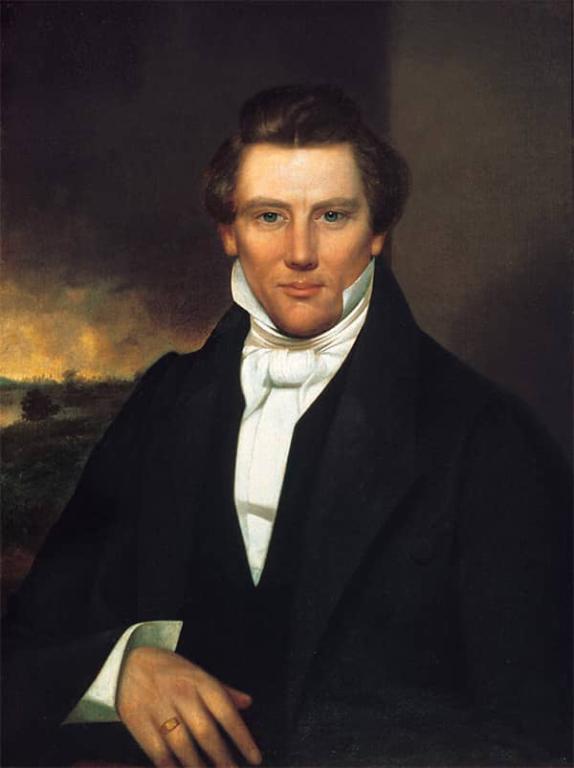
Mormon Founder Joseph Smith’s Photo Discovered by Descendant After Nearly 180 Years
By
Jana Riess
Wikimediaorg
Marooned in their homes, many Americans made the best of the early days of the pandemic by sorting through old boxes of family artifacts. One Saturday morning in March 2020, Dan Larsen and his wife were doing just that when they discovered the world’s only verified photographic image of Mormonism’s founder, Joseph Smith Jr. Larsen,…
NYC Conference on Mormonism & American Politics, February 3-4
By
Jana Riess
“First Mitt won Iowa, then he lost Iowa? That’s a classic Romney flip-flop.” –Stephen Colbert Working with the theory that there hasn’t been nearly enough attention to Mormonism and politics this year, what with it being in the news every single day and all, Randy Balmer and I are co-organizing a scholarly conference…
Writing Retreat
By
Jana Riess
Friends, I will be offline until January 23 for a writing retreat. I’m bringing my computer, but the place where I am going doesn’t have email access, which is one of the reasons I love it. So if you are of a praying mind, please pray that this week is both productive and restful. I…
Fun with the Book of Lamentations
By
Jana Riess
Actually, no. That title was just a teaser. There really aren’t any fun moments in the Book of Lamentations, which is why I had to make my own with the Twible. As you’ve probably guessed, Lamentations is a bit of a downer. Walter Brueggemann has described the book as Israel’s post 9/11 wrestling. Just like…
Washington Post on Faith: Is Romney Mormonism’s JFK?
By
Jana Riess
I have an article today in the Washington Post’s “On Faith” blog, tackling the question of Mitt Romney’s Mormonism and how it fits into American political history. Now that the Republicans seem to be holding their noses and voting for him instead of continuing their desperate search for a Romneydote, the question arises: If Romney…
Why Do We Do Spiritual Practices?
By
Jana Riess
I’ve been editing a superb book recently by Lynne Baab on spiritual practices. (Called Joy Together, it’ll be out in the fall.) After exploring what congregations and churches can do to grow with God together by trying contemplative prayer, Sabbath-keeping, fasting and the like, she poses an important question: why do we do spiritual practices…
Authors Behaving Badly
By
Jana Riess
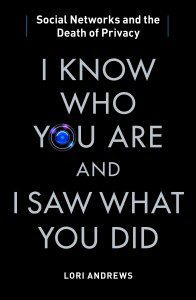
I caught an interesting episode of the Diane Rehm show today featuring Lori Andrews, author of I Know Who You Are and I Saw What You Did,a new book releasing today about social networks and the rapid erosion of privacy. Andrews and fellow guest Marc Rotenberg, the executive director of the Electronic Privacy Information Center…
“Flunking Sainthood” on NPR This Morning
By
Jana Riess
Just a quick note to say that I’ll be interviewed live today on Michel Martin’s NPR show “Tell Me More” at 11:20 a.m. This is all thanks to Kelly Hughes, the best book publicist ever. (She even flies around in an invisible jet, but I am not supposed to reveal its location.) We’ll be talking…
Print Book Sales Down by 9% in 2011 . . . But There’s Good News Too
By
Jana Riess
PW and Publishers Marketplace are both reporting that print book sales were down by about 9% in 2011, with the heaviest hits being in paperback fiction (-17.7%) and mass market paperbacks (23.4%). In almost every category, print sales were down in 2011 by about double the percentage they were down in 2010. Today’s Daily Lunch…
Mormons Who Can’t Help Cheering for Mitt Romney
By
Jana Riess
I have a confession to make: even though I knew I had to wake up at 4:30 this morning to catch a flight, I stayed up well into the night for the nail-biting final results of the Iowa caucuses. I wanted to see if Mitt would pull it off. “I don’t actually care about this,”…
1
2
3
4
5
archives
most recent
search
this
blog
More from Beliefnet and our partners
Close Ad