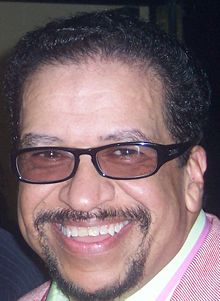
 GospelCity.com reports that Gospel singer Richard Smallwood has been “barred from the Bush Administration’s Black Music Month Celebration.” He spoke to the publication while he was in Denver to perform at the 45th Democratic Convention.
According to the website, back in June Smallwood was invited to the White House to perform during September’s Gospel Music Heritage Month, but was later uninvited, “because he had ministered at the retirement celebration of Rev. Dr. Jeremiah Wright in March of this year, [and] the White House thought it best that he not participate in the Black Music Month Celebration.”
He’s a logical choice to be included in a celebration of Gospel music. WIth more than a dozen albums to his credit, Smallwood has garnered numerous Grammy and Stellar Award nominations in his 25-year career (taking home four Stellar Awards) and was inducted into the Gospel Music Hall of Fame in 2006. His song, “I Love The Lord,” hit the big screen when Whitney Houston sang it in the film “The Preacher’s Wife” and his music has been recorded by artists like Destiny’s Child, Yolanda Adams and Karen Clark-Sheard.
But let’s be clear: Richard Smallwood wasn’t “barred” from the White House. He was uninvited. Not very polite, I’ll admit that. Someone in the Bush adminstration needs a lesson in manners from Emily Post.
But it’s a bit inflammatory, isn’t it, for Gospelcity to call it being “barred”? It’s not like he’s not beating the door down to get in. In fact, Smallwood has been invited to perform at the White House before, but he turned the invitation down, citing “atrocities of the Administration on the lives of African Americans, especially the middle and lower class.” And he tells the publication that he wouldn’t accept an invitation even if it was offered.
To be honest, I don’t know how peforming at a retirement party for the controversial Rev. Jeremiah Wright disqualifies Smallwood or any other artist from performing at the White House. I mean, he performed as a part of the White House Christmas celebration during the Reagan administration. Republicans, Democrats, it’s kind of an honor to play for the President, isn’t it?
Unless he was really uninvited because someone found out about his vocal opposition to the current White House administration. He kind of made it clear with that “atrocities of the Administration” comment that he wouldn’t want to hang with the President.
Anyway, I thought that it was interesting that Smallwood wasn’t included in the White House celebration of Gospel Music Heritage Month, given the discussion we’ve had lately about Christian music mixing with politics.
(And, just to clarify, September isn’t just “Black Music Month;” it’s Gospel Music Heritage Month. The month was designated to honor “a true American art form for its vast contributions to our culture, bringing a message of hope and inspiration to people of all racial, ethnic and religious backgrounds.” Black Gospel, of course, is an extremely important part of Christian music heritage, but the month also honors bluegrass, country, Southern Gospel, pop, rock and other forms of Christian music. I just wanted to point that out, because the current crop of Christian music has strong roots in so many different forms of music.)
RELATED POSTS
September is Gospel Music Heritage Month
Are you an average Christian radio listener?
Music promoter Rick Hendrix makes a run for Congress; do music and politics mix?
Diamond Rio meets presidential candidate John McCain
Future of Forestry cancels gig when event adds political speaker
 Read Previous Post