Jesus Creed

Jesus Creed

Tuesday August 31, 2010

We have moved!

 
We have moved the blog from here to a new site [beginning midnight Aug 31/Sept1], and we wish our blessings upon Beliefnet.

Here's our request: if you are a regular commenter, please drop a comment now at the Patheos link below so we can get your name approved before Wednesday. (Each commenter must be approved only once in order to become an approved commenter.) We anticipate Wednesday's and Thursday's posts could generate plenty of conversation and the sooner we get names approved the better.

YOUR COMMENT WILL APPEAR WHEN YOU ARE APPROVED.

Patheos is working out the kinks as the archives of my posts are uploaded to Patheos. Thanks for your patience.

Please point your link toward the new address at Patheos, which you can visit now: 

http://www.patheos.com/community/jesuscreed/

And the new RSS feed address is: 

http://feeds.feedburner.com/PatheosJesusCreed

Tuesday August 31, 2010

Categories: Psalms

Our Common Prayerbook 30 - 3

 
Psalm 30 thanks God (vv. 1-3, 11-12) and exhorts others to thank God (vv. 4-5). Both emerge from the concrete reality of David's own experience. Here is what that experience looks like:

Step one: David was set on high and was flourishing at the hand of God's bounty (v. 7a).
Step two: David became too self-confident (v. 6).
Step three: The Lord disciplined David for his pride (v. 7b).
Step four: David cried to the Lord and turned his heart away from pride (vv. 8-10).
Step five: The Lord answered David's request and pleadings (vv. 11-12, back to vv 1-3).

The story is a common story; it is our story; it is Israel's story; it is the story of Israel during the time of the judges; during the time of the kings and prophets; during the Exile and after the return; it is the story of the church in Acts. 

Humans beings can experience the blessing of God and flourish and will always face the temptation of self-confidence and pride; and God often reminds us of our pride and summons us to become faithful and trusting and we see all over again that we are creatures and God alone is God.

Tuesday August 31, 2010

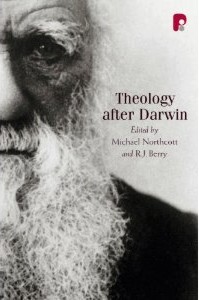
Theology After Darwin 1 (RJS)


One of the more important and more difficult pieces of the puzzle as we feel our way forward at the interface of science and faith is the theological implications of discoveries in modern science. A comment on my post Evolution in the Key of D: Deity or Deism noted:

...this reminds me of why I get annoyed so much by those who write on theology and evolution. It's usually just deism and fluff, to be frank.

I've enjoyed reading through the comments and seeing some of the ideas shared by others. I firmly believe that this discussion on deism vs/compared to theism in natural theology should be given much more attention. Some of the scientist-theologians (Barbour, Polkinghorne come to mind) speak of a "theology of nature" instead of a natural theology, but in my mind, they haven't really given us a good framework for how God acts in and through nature. It's important to note that while natural theology is only one component of theology, it's clearly a vital one today.

Justin developed these thoughts a bit more on his own blog A Biologists View of Science  & Religion.

I think that this is an extremely important issue that should receive more attention by theologians (especially those that have training or a fairly deep understanding of evolutionary biology).  The scientists like me or those at BioLogos have got to admit that our theology of evolution is weak.  You cannot persuade Christians that evolution is not the enemy (and literal Creationism is bunk) if you don't provide them with a meaningful and understandable natural theology alongside the scientific evidence. 

What kind of discussion do you think we need to develop a workable theological understanding of evolution? What is the most significant issue?

Tuesday August 31, 2010

Categories: Youth Ministry

Almost Christian 4

 
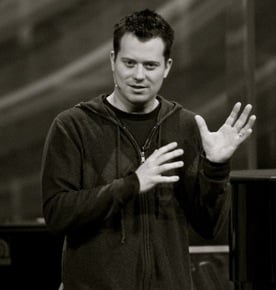
KendaDean.jpgWho does well when it comes to passing on the faith to the youth? Studies show two groups do really well: conservative Protestants and Mormons; two groups that don't do well are mainline Protestants and Roman Catholics. 

Kenda Dean's new book is called Almost Christian: What the Faith of Our Teenagers is Telling the American Church , and in her next chp she examines what makes the Mormons so effective -- and she calls the chp "Mormon Envy."

What can we learn from the Mormons about passing on the faith?

She opens with something I've not known about: high school Mormons begin the day at "seminary" where they are taught the scriptures and theology of Mormonism. All this before school -- four years, five days a week during the school year. Parents are the teachers. It involves journaling and pragmatics as well.

Her big point is that Mormons top the charts when it comes to integrating their faith as teenagers. 73% hold faith similar to their parents; 43% attend services weekly; 80% talk about religion once a week with parents. Thus: "Mormon youth participate in more religious practices of all kinds, and are much more articulate about church teachings" (51). 

And her thesis is that four components, yea five, are involved in their "intense religious socialization": 

Monday August 30, 2010

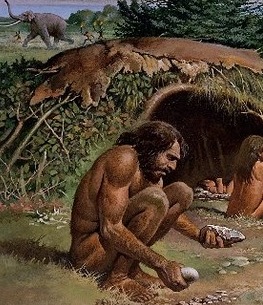
Let's Get Neanderthal!

 
NeanderthalStones.jpgThe Cave Man Diet, or Paleo Diet, is getting attention. (Nothing is said about Culver's at all.) The big omission, I have to admit, is that those folks were hunters -- using spears or smacking some rabbit upside the conk or grabbing a fish or two with their hands ... but that's what makes this diet so fun: you gotta go the whole way and hunt your own food. Running and chasing and throwing and grabbing and stuff like that. Going to the grocery store for the Paleo diet creates ambivalence for me.

What are your suggestions for Paleo dieters?

Our Stone Age ancestors lived in an uncomfortable world, spending their 30-year life spans hunting and gathering without air conditioning or heat. But some say the cave men ate better than we do.

That's the premise behind the Paleo diet, a health and weight-loss trend that encourages people to eat modern-day versions of Paleolithic food.

Several weeks ago, one group of health-conscious Californians took on the Paleo diet and planned to spend nine weeks eating like cave men. That means consuming only animals, vegetables, fruits, nuts, seeds and mushrooms, said Rick Larson, co-owner of CrossFit West Sacramento, the gym running the challenge....

Out is anything that humans began eating after the agriculture and animal husbandry revolutions, meaning no dairy, beans, grains or starches and absolutely nothing processed.

"If you can't eat it raw, then you shouldn't consume it," Larson said. (Although, since our Paleolithic ancestors did have fire, cooking food is permissible.)

Monday August 30, 2010

Categories: Psalms

Our Common Prayerbook 30 - 2

 
Psalm 30 is the story of the ups and downs of life, and David is frank and clear. He was in a flourishing spot, he became proud, the Lord was with him but disciplined him, and then the Lord lifted...

Monday August 30, 2010

Categories: Women and Ministry

Women Preachers, A Story Often Neglected

 
Telling the truth of the Church's Story means telling the whole story. In the Church's Story are the stories of women who did mighty things. But these stories are not being told. What can we do to include these stories...

Monday August 30, 2010

Categories: Paul

Paul for the Perplexed 2

 
If you've ever taught Paul's letters you know the challenge: How does one put Paul together? Or the teacher asks, Where can I begin that makes the whole become clear? Where do I tap to make this diamond fall out?...

Sunday August 29, 2010

Help us in the move to Patheos

 
We will be moving the blog Wednesday to Patheos. Here's our request: if you are a regular commenter, please drop a comment now at the Patheos link below so we can get your name approved before Wednesday. (Each commenter must be...

Sunday August 29, 2010

Two Theologians No Longer with Us -- Yet Still Speaking to Us

 
What did you like most about these theologians? Clark Pinnock, by Doug Koop Clark H. Pinnock's life journey is over. The influential and often controversial evangelical theologian died unexpectedly August 15 of a heart attack. He was 73. In March, the long-time...

Advertisement

Search This Blog

About Jesus Creed

Scot McKnight is a widely-recognized authority on the New Testament, early Christianity, and the historical Jesus. He is the Karl A. Olsson Professor in Religious Studies at North Park University (Chicago, Illinois). A popular and witty speaker, Dr. McKnight has given interviews on radios across the nation, has appeared on television, and is regularly asked to speak in local churches and educational events. Dr. McKnight obtained his Ph.D. at the University of Nottingham (1986). Click to continue reading Scot McKnight's Bio...

View Scot's Speaking Schedule

Contact Scot at Facebook

feed icon Subscribe

RSS Feed

Receive updates from Jesus Creed


Add to Technorati Favorites

Blogroll

Daily Prayers:

Emerging Movement:

Other sites I frequent:

Recommended Online Readings:

Scholarly Books I've written:

Scholarship Online:

Stuff online:

Advertisement

Advertisement


About Beliefnet

Our mission is to help people like you find, and walk, a spiritual path that will bring comfort, hope, clarity, strength, and happiness. More about Beliefnet.

Legal

Copyright © Beliefnet, Inc. and/or its licensors. All rights reserved. Use of this site is subject to Terms of Service and to our Privacy Policy. Constructed by Beliefnet.

Advertisement

Report as Inappropriate

You are reporting this content because it violates the Terms of Service.

All reported content is logged for investigation.