Jesus Creed

Who are the NeoReformed?

Monday February 16, 2009

Categories: Evangelicalism
I have been using the term "NeoReformed" now for a year or two and a few of my friends have asked me what I mean and why I don't just calls such folks "Reformed". This post will sketch who they are and why I call them "Neo" Reformed. I begin with a confession: I'm not a Calvinist; I'm an anabaptist. But, I have never had any problems with the variety of theologies at work in the big tent of evangelicalism. Calvinists are not only among us, they have important elements to bring to the table. I've sat on the essence of this post for months, but I think it is time for us to make it public. I do so with a certain degree of sadness, but feel compelled to call us to a unity that is presently threatened.
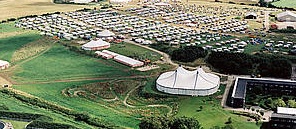
BigTent.jpgThe evangelical tent is big enough to welcome to the table Calvinists and Arminians, anabaptists and charismatics, and I love it when Catholics and the Orthodox join us. This is not a personal battle for me with Calvinists; it's a particular kind of divisive Calvinist that I have in view.

Formerly the disagreements with Calvinists or the ones they had with others didn't stop us from gathering inside the big tent. But in the last decade something happened, and I call it the rise of the NeoReformed. Here we go but first a question or two:

Are you seeing a rise of reformed folks? Do you see some militancy -- whatever their strengths? What are your thoughts? Why do you think some youth are attracted to this new form of Reformed theology?
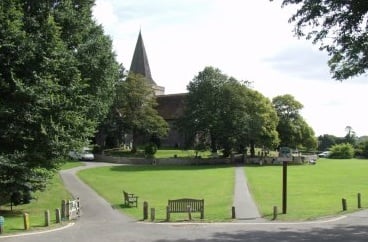
VillGrn.jpgOne of my favorite Reformed theologians is Michael Horton. We don't agree on theology but I like this guy and I like to read his stuff. Michael recently wrote a piece that uses a different image than the big tent image above. He says evangelicalism is like the village green of early American communities. It was where folks, all folks, gathered to chat and share commonalities. He says evangelicalism is the village green but evangelicalism is not the church. Churches have confessions, and his confession is Reformed. He says we need to worship in our churches and that the village green is not enough; it is where we join with Christians most like us. The key point I make here is the distinction between being evangelical and being Reformed. Michael Horton, I am assuming, thinks the best form of evangelicalism is Reformed; and he probably thinks Arminians and Anabaptists are wrong at some important points. Fine. (I think the same of Reformed, and I think they are sometimes wrong at central points.) But Michael Horton knows that a local church (or denomination) is not the village green. I agree with him 100%.

But ... and here's our problem...

The NeoReformed, for a variety of reasons, some of them good, don't recognize that evangelicalism as a village green. Instead, they want to build a gate at the gate-less village green and require Reformed confessions and credentials to enter onto the village green. Put differently, they think the only legitimate and the only faithful evangelicals are Reformed. Really Reformed. In other words, they are "confessing" evangelicals. The only true evangelical is a Reformed evangelical. They are more than happy to call into question the legitimacy and fidelity of any evangelical who doesn't believe in classic Reformed doctrines, like double predestination. The palpable observation here is that many of us think the NeoReformed are as attached to Tradition (read Westminster etc) as they are to sola scriptura.

In effect, the NeoReformed are a new form of Fundamentalism, so one might describe them accurately as the NeoFundamentalists. Which means they seem to need a trend or an opponent upon whom they can vent their frustrations (see Rene Girard). This results in two clear traits: the exaltation of some peripheral doctrine to central status and the demonization of a person. The goal in such cases seems to be to win at all costs. 

I close with this: 

I recently wrote to a friend of mine, a Reformed theologian, and described what is the essence of this post and this is what he wrote back:

The problem, as I see it is these, whom you are calling neoreformed, are to me simply the old fundamentalists in nicer clothes with better vocabularies.  They are just as mean-spirited, just as graceless, and just as exclusive.  I believe that the fundamentalism of my youth was harmful to the gospel. I believe that anyone who refuses to come out of his "room" (confessional church) and into the hall of "mere Christianity", to use Lewis's term, is doomed to a narrow and problematic exegesis of the text.  Who is going to tell us that we are wrong if we only stay in our room and speak to people who agree with us all the time?
Well said. We'll continue Wednesday morning.
Advertisement
Comments
Koffijah
February 22, 2009 5:24 AM
http://koffihouse.blogspot.com

I myself feel that what we call creeds and confessions arise from systematic theology--our attempts to organize and summarize the message of scripture. The problem with systematic theology is the assumption that we know enough (that God has revealed enough) to put it all together. But what if God just told us what we needed to know without explaining it all to us? Does it mean that we are somehow compromising the truth because we refuse to be dogmatic (not refuse to discuss and consider different possibilities) about our systematic theological constructs?

We are in a ship navigating a sea and we can see the continents and avoid the islands as we travel to our destination. But is it necessary to know all the landscape of the bottom of the ocean in order to get to our destination? Is it God's will for us to arrive at our destination or to know all the mysteries of the deep? Even so, I still think it is good to explore those mysteries... just don't be dogmatic about them.

What God wants us to know the most is the clearest in scripture. Yes, I know it isn't that sophisticated and I truly believe that sometimes our goal is theological sophistication. We would do better to give up our theological pride and live with simple faith, fighting temptations in our life and serving others.

I studied science at the University. In physics there are a number of theories that we can't really prove. But we still use them. One is the model of the atom. We are most familar with the common Bohr model of the atom. But it is not complete and doesn't answer all the questions. A better model is the quantum model. But they are all models. Gravity is another one. We don't know for sure what it is. We have Einstien's General Theory of Relativity that proposes curvature in the space-time continuum. It is a model. Perhaps one day we can prove it; but not yet. The Big Bang, anti-matter, the density of the universe and the particle nature of light can be described, but we are still seeking a so-called Grand Unified Theory. The GUT would tie it all together.

So far the GUT eludes us. However, that doesn't mean that are universe doesn't work or add up. Physicists are confident that it does all add up... we just don't know how yet. Does it matter how it all adds up? Absolutely. Does it matter that we KNOW how it all adds up? No, not really. But it is interesting.

Rob Mitchell
February 22, 2009 8:51 PM
http://nakedchurch.wordpress.com

Your critique is well taken. More often than I would like to confess, I'm almost afraid to wear the moniker "Reformed," even though that is the tradition I'm in. I'm very well aware of a couple of camps in the Reformed community who are ultra-polemical and tend to elevate certain cherished theological shibboleths above the historic doctrines held by all Christians in all places at all times during the history of the church.

The problem is that we have these people who are orthodox in every point of their theology but may be worshiping Reformed Theology instead of the Triune God, affirming the doctrine of substitutionary atonement but actually embracing salvation by confessional subscription.

Nearly three hundred years ago a New Light Presbyterian parson named Gilbert Tennent ran into the same problem - confessional subscription devoid of spiritual life, and preached about it in his famous "The Danger of an Unconverted Ministry". Only a few decades later, Søren Kierkegaard lamented the same phenomenon in the state Lutheran church of his native Denmark.

I'm inclined to think the problem isn't limited to the neoReformed - the spiritual pride that underlies it can surely occur in any stream of Christianity. And let us also take note that it's just as easy to take spiritual pride in our tolerance, our hipness, even our winsomeness.

Thanks for your even-handed treatment of the issue - the Reformed tradition has much to offer, but I am with you in appreciating the contributions of other streams, like your tradition (Anabaptist) and many others.

Peace.

Josh Walker
February 25, 2009 8:01 PM
http://www.bringthebooks.org

I briefly commented on McKnight's endorsement of Wright's new book on justification here.

Rob
February 25, 2009 11:31 PM
http://www.dscomic.com

"Who is going to tell us that we are wrong if we only stay in our room and speak to people who agree with us all the time?" There's a lot of wisdom to that comment, beyond simply the reformed vs. arminian viewpoint.

Meeka Pullan
February 26, 2009 12:02 PM

Disunity of doctrine and fellowship is a serious threat to non-Catholic christianity, and the Neo-Reformed know it. Specifically, they know that two or more opposing positions on core doctrines can't both be true. One position is true, and the rest are lies.

The root of protestant disunity is weak ecclesiology and the grave error that final authority rests in scripture *alone*. Since no two people read the bible alike, and since the bible isn't a mere listing of doctrines, the bible can't bring any unity of opinion on topics or doctrines. That is why "orthodox teaching" has always been developed via the Church councils, not by everyone reading the bible together to arrive at correct doctrine. (Plus, illiteracy rates and the lack of a printing press would have made individual bible reading an impossibility for most of Christian history.)

So long as protestants reject the historic Church and its councils, they will be unable to maintain unity of doctrine, unity of fellowship, and unity of leadership. This protestant "unity crisis" was known even to the first Reformers. Concerning early Protestantism, Luther said: "There are almost as many sects and beliefs as there are heads; this one will not admit Baptism; that one rejects the Sacrament of the altar; another places another world between the present one and the day of judgment; some teach that Jesus Christ is not God. There is not an individual, however clownish he may be, who does not claim to be inspired by the Holy Ghost, and who does not put forth as prophecies his ravings and dreams."

And Theodore Beza likewise said: "Our people are carried away by every wind of doctrine. If you know what their religion is today, you cannot tell what it may be tomorrow. In what single point are those churches, which declared war against the Pope, united among themselves? There is not one point which is not held by some of them as an article of the faith and by others is rejected as an impiety."


Read All Comments

Advertisement

Search This Blog

About Jesus Creed

Scot McKnight is a widely-recognized authority on the New Testament, early Christianity, and the historical Jesus. He is the Karl A. Olsson Professor in Religious Studies at North Park University (Chicago, Illinois). A popular and witty speaker, Dr. McKnight has given interviews on radios across the nation, has appeared on television, and is regularly asked to speak in local churches and educational events. Dr. McKnight obtained his Ph.D. at the University of Nottingham (1986). Click to continue reading Scot McKnight's Bio...

View Scot's Speaking Schedule

Contact Scot at Facebook

feed icon Subscribe

RSS Feed

Receive updates from Jesus Creed

Calendar


Add to Technorati Favorites

Blogroll

Daily Prayers:

Emerging Movement:

Other sites I frequent:

Recommended Online Readings:

Scholarly Books I've written:

Scholarship Online:

Stuff online:

Advertisement

Advertisement


About Beliefnet

Our mission is to help people like you find, and walk, a spiritual path that will bring comfort, hope, clarity, strength, and happiness. More about Beliefnet.

Legal

Copyright © Beliefnet, Inc. and/or its licensors. All rights reserved. Use of this site is subject to Terms of Service and to our Privacy Policy. Constructed by Beliefnet.

Advertisement

Report as Inappropriate

You are reporting this content because it violates the Terms of Service.

All reported content is logged for investigation.