Jesus Creed

Jesus Creed

Our Collective Faith and Heresies 1

posted by Scot McKnight | 2:17pm Tuesday March 17, 2009

Heresies.jpgThe word “heresy” appears on this blog every now and then, and I have long wanted to do a series on heresy and heresies and have now found a perfect reason: B. Quash and M. Ward, Heresies and How to Avoid Them: Why It Matters What Christians Believe
. I want to get this conversation started today. I begin with a set of questions:

How do you define “heresy”? Who defines “heresy”? What have you heard — profound and absurd — that was called heretical? Do you think it is important to point out heresy? What are the dangers in pointing out heresy?

This book is an edited collection of readable, brief, and incisive chps on various heresies: Arianism, Docetism, Nestorianism, Eutychianism, Adoptionism, Theopaschitism, Marcionism, Donatism, Pelagianism, Gnosticism, Free Spirit, and the book closes with a study of Bibical Trinitarianism and the purpose of being orthodox.

Hauerwas writes the Foreword and makes the following (always provocative) statements:


“Given the diminished state of the Church some Christians might even believe that if we could gain more members by being heretical so much the worse for orthodoxy.”  But, if orthodoxy “is used as a hammer to beat into submission those we think heterodox” it “betrays itself.” So instead of a hammer, “orthodoxy is displayed as an act of love that takes the form of careful speech.” There are limits, and not all stick to the limits: “orthodoxy is the hard discipline of learning to say what needs to be said and no more.” And this one: “Orthodoxy shows why what we believe cannot be explained but can only be prayed.” So Hauerwas.

One of the editors of this fine book is Ben Quash, an Anglican priest, a professor at King’s in London, and the canon theologian at Coventry. The other editor is Michael Ward, an Anglican priest and writer and former chaplain at the coolest college in Cambridge: Peterhouse. Quash wrote the Prologue.

He opens with a definition: “A heretic is is a baptized person who obstinately denies or doubts a truth which the Church teaches must be believed because it is part of the one, divinely revealed, and catholic (that is, universally valid) Christian faith” (1).

Why does this matter? Because our collective faith has “said that neither your race, nor your sex, nor your social class, nor your age could be a bar to full membership of Christ’s body, the Church.” How? “The answer was: your faith — what you believed in, as embodied in your practices and confessed with your lips” (1).

Thus: “The Church’s identity and integrity were expressed in orthodoxy: the confession (and enactment) of a collective belief” (1). Heresy thus threatens the glue that holds the Church together.
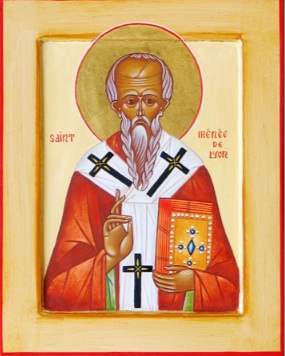
Irenaeus.jpgHe observes that Irenaeus shows that it is not just their hostility but they way they assimilate themselves to Christian orthodoxy. There is always an air of probability, he says, about heresy. They use Scripture and they tend to be one-doctrine problematizers. Theology is interrelated.

“The key task for orthodoxy, it seems, is to keep a sense of what the larger shape of Christian belief is — a shapw which, if contemplated patiently and sensitively and with a concern to find its maximum integrity, will unlock its inner persuasive power, and display its glory” (5). I totally agree.

He doesn’t trust the individual; he believes the community must make these decisions. Orthodoxy doesn’t create unity; it deepens the unity that is ours through the Holy Spirit.

Heresy is often the easier option.


Previous Posts

This blog is no longer active
This blog is no longer being actively updated. Please feel free to browse the archives or: Read our most popular inspiration blog See our most popular inspirational video Take our most popular quiz

posted 3:10:39pm Aug. 31, 2010 | read full post »

Our Common Prayerbook 30 - 3
Psalm 30 thanks God (vv. 1-3, 11-12) and exhorts others to thank God (vv. 4-5). Both emerge from the concrete reality of David's own experience. Here is what that experience looks like:Step one: David was set on high and was flourishing at the hand of God's bounty (v. 7a).Step two: David became too

posted 12:15:30pm Aug. 31, 2010 | read full post »

Theology After Darwin 1 (RJS)
One of the more important and more difficult pieces of the puzzle as we feel our way forward at the interface of science and faith is the theological implications of discoveries in modern science. A comment on my post Evolution in the Key of D: Deity or Deism noted: ...this reminds me of why I get a

posted 6:01:52am Aug. 31, 2010 | read full post »

Almost Christian 4
Who does well when it comes to passing on the faith to the youth? Studies show two groups do really well: conservative Protestants and Mormons; two groups that don't do well are mainline Protestants and Roman Catholics. Kenda Dean's new book is called Almost Christian: What the Faith of Ou

posted 12:01:53am Aug. 31, 2010 | read full post »

Let's Get Neanderthal!
The Cave Man Diet, or Paleo Diet, is getting attention. (Nothing is said about Culver's at all.) The big omission, I have to admit, is that those folks were hunters -- using spears or smacking some rabbit upside the conk or grabbing a fish or two with their hands ... but that's what makes this diet

posted 2:05:48pm Aug. 30, 2010 | read full post »

Advertisement
Comments read comments(22)
post a comment
Virgil Vaduva

posted March 17, 2009 at 2:42 pm


This is a potential nuclear bomb because “the community” can also have the potential to be in great error, i.e. Wikipedia being a great example of communal errors perpetrated on the world. So while the community could express orthodoxy, we cannot turn that into a rule of thumb.
What scares me is the presumptuous title of the book…I won’t even go there.


report abuse
 

Joey

posted March 17, 2009 at 2:52 pm


I grew up in a “heterodox” faith. The teachings given to me were very deceptive. I was taught to deny the trinity, and the deity of Christ as a result. As I grew in my faith towards Christ I came to reject these prior embedded beliefs. Orthodoxy, and therefore heresy, is a deeply important issue to me.
Having said that, I’ve been more and more saddened by many of my peers who have taken to calling anything that is not-reformed, heresy. It is all too common to hear a pastor call something heresy without the support of the larger ecumenical body. I believe Mark Driscoll did this at the SBC in 2007 when he caricatured the beliefs of McClaren, Bell, and Pagitt and I have seen it done time and time again before and since that very public occasion.
My question is one about ecumenicalism, though. How can we be ecumenical today? How do we stand together as the Church? Under what authority are we united? Do we appeal to the creeds? If so, which ones? Roman Catholics definitely have an edge over us protestants with this issue. How can the Church today stand united under truths and how do we decide what those truths are when we’ve got thousands of different faith expressions under the umbrella of orthodox Christianity?


report abuse
 

dopderbeck

posted March 17, 2009 at 3:59 pm


Excellent! Glad you’re staring this and I need to buy this book.
Ok, here’s my question: why “creedal” orthodoxy and not “confessional” orthodoxy. You and RJS and me, Scot, are “heterodox” or maybe even “heretical” in the eyes of some strong Westminster Confession types because we “deny” inerrancy (as they state it). Yet we would call ourselves creedally or historically orthodox (I’m supposing). I’m not sure why the council of Nicea is the last word rather than the Westminster Assembly (or the Council of Trent, or Vatican II….)?


report abuse
 

Scott M

posted March 17, 2009 at 4:03 pm


I would say that within Christianity, heresy is that which tries to lead people to know and worship a God of a different nature — a different person — than the tri-personal God the church has always worshipped. Heresy leads people to worship a God of their own imagination rather the God who is actually there. That’s true even though they tend to use the same names and terms, but in ways that alter them. Heretics tend to offer another reading of Scripture and the best (I think here of Arius) can offer a better or at least as good a scriptural argument as the orthodox. Heresy then is not distinguished by being necessarily ‘unscriptural’. Rather it is counter to the traditional reading of scripture about God by the church.


report abuse
 

Pat

posted March 17, 2009 at 4:03 pm


“…if orthodoxy “is used as a hammer to beat into submission those we think heterodox” it “betrays itself.” “A heretic is is a baptized person who obstinately denies or doubts a truth which the Church teaches must be believed because it is part of the one, divinely revealed, and catholic (that is, universally valid) Christian faith” (1).
I think part of the problem with really identifying true heresy is just how much we fall into the first quote (beating people with hammers) or we don’t really know the truth of the Church. I would say that we know is tradition, but not the truths of the one, divinely, revealed, and catholic Christian faith.” You must know those first before you are able to accurately identify heresy. Down through the ages many people have been labled heretics who were later accepted as orthodox. One of the dangers with identifying heresy is one can easily fall into judgmentalism if not careful.


report abuse
 

jeremy bouma

posted March 17, 2009 at 4:15 pm


I’ve started a Master of Theology in Historical Theology and in the middle of an early church class. So I am wading through a lot of heresies! Though my little postmodern ears burn every time I hear that word thrown around today, I’ve begun to wonder the significance of resurrecting that word for our 21st century ecclesial context.
Here is my running definition: “Belief and teaching about God, Jesus Christ, and salvation that threatens to distort the gospel and its message so severely that it could become an ‘other gospel’ or another Rule of Faith all together…not the one passed and taught by the apostles.”
thoughts?
-jeremy


report abuse
 

Scott M

posted March 17, 2009 at 4:41 pm


I’ve been thinking recently of St. Maximus the Confessor, an appropriate figure for the discussion here. He is the one known for standing against the heresy of monothelitism. For those unfamiliar with the heresy, it was the teaching that Jesus, though he had two natures, had only one will – a divine will. In a way it was an attempt to resolve the divide produced by Chalcedon. St. Maximus was particularly noteworthy because he stood against the pronouncements of many bishops at the time, including the Patriarch of Constantinople. (St. Martin of Rome, the last Pope to be martyred, also stood against this heresy.) Eventually, his tongue was cut out to silence him and his hand was cut off so he could not write. But his writings, appealing to the tradition of the church (especially such statements as ‘that which has not been assumed has not been healed’) were already so widely read that they ultimately led to the sixth ecumenical council in which this heresy was formally renounced and denied.
While the phrase ‘Athanasius against the world’ is often heard for his stance against Arianism (which was endorsed by Constantine’s son), Maximus truly must have felt like he was the only one holding to the faith at times.
It’s not as simple as what the majority of the church holds or what the hierarchy of the church holds. Sometimes it has been the hierarchs holding fast against external forces. Other times it has been the first order of the priesthood, the priesthood of the baptized and anointed, standing against their own hierarchs. Very often the orthodox perspective was a minority view.
The consistent and recurring theme and question has always been: Is this the God the church has always known and taught?


report abuse
 

Eric

posted March 17, 2009 at 4:47 pm


Jeremy (# 6) — you define heresy as “Belief and teaching about God, Jesus Christ, and salvation that threatens to distort the gospel and its message so severely that it could become an ‘other gospel’ or another Rule of Faith all together…not the one passed and taught by the apostles.”)
and Scott M (#4) — you say “heresy is that which tries to lead people to know and worship a God of a different nature — a different person — than the tri-personal God the church has always worshipped.”
These definitions concern me, because they are very subjective, and I have repeatedly seen similar definitions used by people to label as heretics anyone who doesn’t agree with their particular readings on contested points. Although Piper doesn’t use the “H” word in his book on N.T. Wright, for example, he uses this sort of thinking to strongly imply that Wright is leading people to eternal damnation. Which to me is very wrong for Piper to suggest. I could give other examples, but this is a recent one that comes to mind.
I’m in favor of using the ancient creeds to define heresy. Why *add* to what they said, just because some groups hundreds of years later have come up with some doctrines they have now determined are essential, which weren’t essential for the early church, and on which there is reasonable disagreement? Why not define ourselves based on the ancient creeds and our mission?


report abuse
 

Scott M

posted March 17, 2009 at 5:24 pm


I would tend to say that Piper is much, much closer to making outright heretical statements about God than N.T. Wright has ever been. My examples and discussions have been about the process and development of those ‘ancient creeds’. Their development was hardly simple or easy.
It’s also not enough to simply recite them. If you mean something different when you say them than what those who constructed them meant them to say, the creeds are rendered useless. I would say much the same thing of the scriptures when you interpret it to say things that are vastly different or disconnected from the way the church has interpreted them.
You can’t distill Christianity to any set of ‘essentials’. Christianity is about getting to know and become one with a personal God through the grace and power of the incarnation, death, and resurrection of Jesus of Nazareth. Father, Son, and Holy Spirit are actual persons. You are rightly worshipping that God or your efforts are at best less than fruitful. Heresy so distorts our understanding, our mental picture, of the God we are trying to know that it makes it difficult to know God. We can understand this to some extent by considering the way we related to other people. The greater my mental image of a person diverges from the actual reality of a person, the more difficult I will find it to actually relate to that person. What I think I know about them is wrong and it interferes with my ability to truly know them.
That’s the danger Christian heresy poses.


report abuse
 

MattR

posted March 17, 2009 at 5:56 pm


I like to think of heresy as an overemphasis on one thing, at the expense of the larger Christian story… or another way of saying it; trying to logically resolve the paradoxes at the heart of Christian faith.
For example, trinity… God is three in one. Some have tried to explain it by emphasizing the ‘One-ness’ of God at the expense of the triune nature… heresy. Others have emphasized the ‘Three-ness’ and have left the unity behind… again heresy.
Instead, we need to live into the beautiful tension.
You can do this with a lot of the core convictions of Christianity: Jesus, Bible, Salvation, etc.
I love Dwight Friesen’s thought on this. For example, see “Orthoparadoxy: Emerging Hope for Embracing Otherness” in the book ‘An Emergent Manifesto of Hope.’


report abuse
 

Dave Leigh

posted March 17, 2009 at 6:38 pm


Scott M @ 9 – Same as Scot McKnight? One T v. two?
Anyway, I am wondering if this book, when addressing the Trinity, addresses the recent subordinationist tendencies among Evangelicals like Piper, Grudem, and other “complementarians”?


report abuse
 

Scot McKnight

posted March 17, 2009 at 7:59 pm


Friends,
I’ve not been able to get to the posts and comments today — teaching, grading, chatting with colleagues. But, I have to say that I see no need for us to “name names” here. “What” in my question is much different than “who” or “whom”.
John Piper, regardless of how much I differ with him on Calvinism etc., is not a heretic or close. He’s an orthodox, Reformed, Baptist, Edwardsian Calvinist. That’s all within the parameters of everything I know as orthodox and not close to Calvinism. (Unless you want to lump all of us Protestants into the heresy camp.)
Tom Wright, too, is orthodox, etc and all that.
One of the things I am proud about when it comes to this blog is civility, even when we have to disagree. So, I’m asking not to name names. I’m quite happy to hear “what” some have heard as heresy.
Orthodoxy is connected to doctrines inherent to the gospel that our Triune God makes manifest in the saving gospel of Jesus Christ. Heresy is that which denies those inherent doctrines and threatens the gospel.


report abuse
 

Rich Goulette

posted March 17, 2009 at 8:14 pm


Spencer Burke in his “heretic’s guide to eternity” talks about his moving toward Panentheism.
Greg Boyd disdains the idea of “via negativa” because it talks about a transcendent God, and that wouldn’t do for the open view.
McLaren states it’s almost heresy to try to describe God (because we’re so limited in our understanding)
I’m beginning to wonder if there’s really such a thing as heresy in this postmodern world of ours.
If derrida is right, and there’s nothing outside the text, who’s to say what is heterodox except within our own little story?
Thus the conundrum, and NT’s critique of postmodernism in “Evil and the Justice of God” as nihilistic ultimately.


report abuse
 

Mike M

posted March 17, 2009 at 8:39 pm


Reading these posts, I’m not sure what the purpose of such a book is. Even within this blog, there is a circular reasoning (somewhat of a tautology) that goes something like this:
1. Only a true (in most cases here, an “orthodox”) Christian can define what a heresy is.
2. Heretics are, by definition then, not true Christians.
3. Therefore, heretics cannot define what a Christian is.
If behind this “reasoning” is an attempt to rediscover our common bonds as Christians, I’m all for it. If it’s an attempt to establish oneself as The True Christian, I’m with Virgil (#1): it’s scary.


report abuse
 

Eric

posted March 17, 2009 at 9:50 pm


Scot,
Is your comment (#12) directed at me (#8)? I would not call either Piper or Wright a heretic — I think both are orthodox; I suggested in my post that we should use the ancient creeds as a test, and I understand that both of them would agree with those creeds.
In responding to the queston about how I would define heresy, I said I prefer to not use subjective tests like some of the ones outlined above, because I’ve seen them lead to unfair criticism. In that context, I used Piper book’s criticism of Wright as an example of what I view as unfair use of such a test. Is that off limits?


report abuse
 

Scott M

posted March 17, 2009 at 10:18 pm


I wasn’t calling either of them a heretic. As a protestant, I don’t think we actually have any viable standard against which we can judge heresy. I will point out that the God which N.T. Wright describes and talks about doesn’t even sound like the same God Piper talks about. I’ve listened to and read Wright at great length. And I’ve listened to Piper at some length and read rather less. Enough to know that I long to get to know, to understand, to follow, and to become like the God Bishop Tom describes while I find the God Piper describes repellent and want absolutely nothing to do with that God. If Piper’s God were the only choice I had heard, I wouldn’t be Christian. I’m absolutely certain of that.
When you have an ‘orthodoxy’ that encompasses the pretty different narrative and character and persons of the God they each describe, ‘orthodoxy’ doesn’t really mean much of anything. Or rather, it means almost anything you want it to mean.


report abuse
 

Doug Allen

posted March 19, 2009 at 1:49 pm


Looking from the outside in!
It seems that many here have way too much emotional and status (job, etc.) investment to be objective. Therefore, judgment here is suspect. Hence, orthodoxy is highly valued, even though little in the way of agreed upon definition is offered. The alternative of fuzzy orthodoxy is even worse. How many in the history of Christianity have been put under house arrest (and much, much worse) for heresy who later were declared orthodox.
The horns of the delemma are these: call those whose theology (and Gods, according to Scott M, above) are substantially different, heretics and you loose influence and stature among those you criticize (and others) and quite possibly will be called the H-word by them. Luckily, none will be burned at the stake.
OR, include within orthodoxy all those self-declared Christians whose approval you need and whom you want to influence with your point of view, and you have a less judgmental (and fuzzy) orthodoxy, but one that includes perspectives that are very judgmental, not to mention, substantially different from one another.
Doug


report abuse
 

davidw

posted March 20, 2009 at 10:27 am


#10 Matt
This!
Our trying to untangle and iron out the paradoxes is a side of heresy that I don’t hear enough about. It is so humbling. I don’t believe that there are heretics and non-heretics. We are all heretical sometimes by necessity, sometimes by enthusiasm, and sometimes by sin. maybe the heretic label should cease being applied to the other and we should first apply it to ourselves.


report abuse
 

Dan Martin

posted March 20, 2009 at 12:16 pm


Scot, I’m troubled and confused by your comments:
From #4:”Heresy then is not distinguished by being necessarily ‘unscriptural’. Rather it is counter to the traditional reading of scripture about God by the church.”
While this may be historically true, I hope you are not endorsing that definition. I buy very little of classical reformed doctrine, but they were onto something with “sola scriptura” whether they got their “scriptura” right or not. I hear in this comment an elevation of church (and historical) authority I would not expect from an Anabaptist. . .
From #7:”It’s not as simple as what the majority of the church holds or what the hierarchy of the church holds. . . Very often the orthodox perspective was a minority view.”
I absolutely agree with this statement, but aren’t you contradicting yourself in #4?
From #16:”As a protestant, I don’t think we actually have any viable standard against which we can judge heresy.”
If you really believe this, then what’s the point? I would submit that studying the scriptural texts in community and humility DOES allow for a determination of heresy, though the word, the concept, and the accusation should be used infrequently and with the utmost care. We remain responsible to “rightly divide the word of truth” and to test teaching against the standard of scripture.
But if I try to harmonize these three comments of yours I wind up completely confused as to where you’re heading. Can you clarify?


report abuse
 

Scot McKnight

posted March 20, 2009 at 12:26 pm


Dan,
I’ve asked Scott M a few times to use a different name for this reason. The comments you are referring to are not my (Scot McKnight’s — I’ve got only one “t” in my name) comments but his.


report abuse
 

Richard W. Wilson

posted March 22, 2009 at 2:19 am


OK, after a day and a half of no more comments I’m probably too late to get a response from anyone, but for what its worth:
Scott M should definitely change his log in name. I spent about an hour trying to figure out why Scot McKnight was writing such contradictory things (and preparing my own response) and then got to the end where Scot McKnight points out that someone is responding to Scott M rather than himself. Oh. Now I’d have to spend another hour unraveling what I would say if I knew all those posts were not THE Scott(-t) M(cKnight). Oh, well, my rants aren’t likely to impact “the orthodox” anyway.
Richard W. Wilson; extreme biblicist (ie. heretic), body of Christ, middle America.


report abuse
 

tramadol treats withdrawal symptoms

posted August 3, 2009 at 9:50 am


I bookmarked this link. Thank you for good job!


report abuse
 

Post a Comment

By submitting these comments, I agree to the beliefnet.com terms of service, rules of conduct and privacy policy (the "agreements"). I understand and agree that any content I post is licensed to beliefnet.com and may be used by beliefnet.com in accordance with the agreements.

Share this story


About Beliefnet

Our mission is to help people like you find, and walk, a spiritual path that will bring comfort, hope, clarity, strength, and happiness. More about Beliefnet.

Help

Media Kit

Subscribe

Legal

Copyright © Beliefnet, Inc. and/or its licensors. All rights reserved. Use of this site is subject to Terms of Service and to our Privacy Policy. Constructed by Beliefnet.

Advertisement

Report as Inappropriate

You are reporting this content because it violates the Terms of Service.

All reported content is logged for investigation.