Jesus Creed

Jesus Creed

Obamacare: The Co-op Proposal

posted by Scot McKnight | 3:28pm Wednesday August 19, 2009

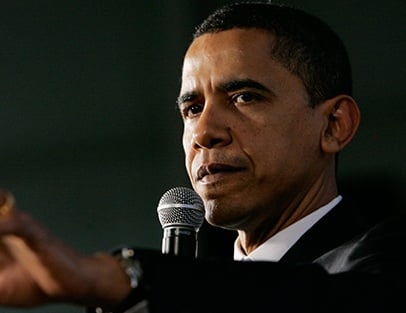
ObamaGrav.jpgLet’s say the analysis is accurate: that insurance premiums are too high, that drug prices are too high, that medical expenses in general are too high. Let’s also agree that these costs are hurting our country’s health care plans and the availability of medical care to some 45 million. Let’s agree that this approaches the biggest problems we are facing.

Now let’s agree on one more: that competition with those insurance and drug companies could and would make a difference. 

Is the co-op the best competitive alternative?

Here are a few paragraphs from Timothy Egan in a piece I read today on the Co-op alternative:

But if you get sick in that land of deep lakes and ponderosa pines,
a consumer-governed, nonprofit health care provider — Group Health
Cooperative of Puget Sound — offers extensive coverage at some of the
lowest premiums in the nation. And if you need advice on bailing twine
or baby chicks, the Co-op Country Store, now in its 75th year, can
provide service that the nearby Home Depot cannot.

I mention these successful member-owned businesses in a deeply red
state because as the public health care option gets hammered by a
campaign of disinformation, the co-op model deserves a fair hearing.

Plus, co-ops are built around something that’s been missing thus far
in a debate dominated by ill-informed shouters: the consumer.

The West is the native ground of co-ops. It’s in our collective DNA. People buy their tents, sleeping bags and bikes from the nation’s largest consumer co-op, REI, founded in Seattle in 1938, now with 3.5 million active members. It’s consistently rated one of the best places to work in the United States.

Here in Seattle, a city known for a certain kind of caffeinated
capitalism, Group Health is a major market player, and a big reason why
our health care premiums are cheaper than those in most cities. We also
have public power, giving us some of the lowest electrical rates
anywhere, and a chain of co-op grocery stores, which I find a bit too
granola-crunchy for my tastes, but which others swear by.

But if there’s any doubt a health care co-op can work, ask the people
who own one, including more than 11,000 consumers in the sparsely
populated, deeply Republican north of Idaho.


Previous Posts

This blog is no longer active
This blog is no longer being actively updated. Please feel free to browse the archives or: Read our most popular inspiration blog See our most popular inspirational video Take our most popular quiz

posted 3:10:39pm Aug. 31, 2010 | read full post »

Our Common Prayerbook 30 - 3
Psalm 30 thanks God (vv. 1-3, 11-12) and exhorts others to thank God (vv. 4-5). Both emerge from the concrete reality of David's own experience. Here is what that experience looks like:Step one: David was set on high and was flourishing at the hand of God's bounty (v. 7a).Step two: David became too

posted 12:15:30pm Aug. 31, 2010 | read full post »

Theology After Darwin 1 (RJS)
One of the more important and more difficult pieces of the puzzle as we feel our way forward at the interface of science and faith is the theological implications of discoveries in modern science. A comment on my post Evolution in the Key of D: Deity or Deism noted: ...this reminds me of why I get a

posted 6:01:52am Aug. 31, 2010 | read full post »

Almost Christian 4
Who does well when it comes to passing on the faith to the youth? Studies show two groups do really well: conservative Protestants and Mormons; two groups that don't do well are mainline Protestants and Roman Catholics. Kenda Dean's new book is called Almost Christian: What the Faith of Ou

posted 12:01:53am Aug. 31, 2010 | read full post »

Let's Get Neanderthal!
The Cave Man Diet, or Paleo Diet, is getting attention. (Nothing is said about Culver's at all.) The big omission, I have to admit, is that those folks were hunters -- using spears or smacking some rabbit upside the conk or grabbing a fish or two with their hands ... but that's what makes this diet

posted 2:05:48pm Aug. 30, 2010 | read full post »

Advertisement
Comments read comments(11)
post a comment
ChrisB

posted August 19, 2009 at 4:50 pm


I think a real co-op with no government assistance (that’s not saying govt can’t pay premiums for the poor) and no govt protections that has to survive in the market by itself is a good idea. (Otherwise it’s just another name for the public option.)
But it’s not enough. A big part of why health care costs are so high is that they are invisible to most consumers. That is a fundamental flaw in the employer-based health insurance model. And so far Congress seems unwilling to make room for structural changes in that.
Some companies (e.g., Whole Foods) have apparently worked out a system that makes their employees more aware of costs, but they’re in the minority, and many great possibilities are, again, illegal. Congress could do a lot just by getting out of the way, making more option legal.


report abuse
 

Jjoe

posted August 19, 2009 at 6:03 pm


There are a lot of dissenting voices on that blog. People should go read them.
In my econ 101 analysis, there are three fundamental roadblocks to the success of any co-op.
1. The operational efficiencies of the established firms means they have lower cost structures than a new co-op. Co-ops will have higher expenses, at least for a time.
2. The external presence of the established firms means they have more sales and marketing savvy, and a stronger influence on legislation (duh!), than any new co-op. More revenues, in other words.
3. The idea behind a coop is that the money saved by members (revenues – costs) is rebated back to them. In practice, this doesn’t happen. Those funds are retained to provide financial security for the coop in the event of a rainy day.
At the end of the day, we need a “game changer.” What we get with a co-op is a weak, uncompetitive organization.
Sure, if you can use a coop to control the supply of something, like Ocean Spray cranberries or a rural electric coop, they can be successful. But in the insurance biz, it would be like throwing a puppy into a shark tank.


report abuse
 

Timmy C.

posted August 19, 2009 at 6:03 pm


A form of co-op with real bargaining power might be able to provide a s shadow of what the public option could do and do so in ways that don’t provoke conservative ideologies….
I think the President has been long open to Co-ops as a possible alternative but would need to see that they would really be structured so as to compete on price, and keep pushing overall health care prices down.
The main question is could they reach the same scale and negotiating heft that something like the public option would have (as it would be able to leverage Medicare negotiations) to really bring down costs.
I’ve not yet seen a plan for Health Insurance co-ops that makes a good case that they can provide that cost competition, but would love to.
But the GOP has already signaled early that Co-ops are a Government Takeover of Health care too… http://www.gop.com/News/NewsRead.aspx?Guid=72edae22-984e-4019-872c-1438fcc5452f


report abuse
 

Kenny Johnson

posted August 19, 2009 at 6:15 pm


I have no problem with Co-ops being an alternative to private insurance, but I still would like the ability to buy into the public option as well.


report abuse
 

Nathan

posted August 19, 2009 at 10:08 pm


In my mind, a government-established co-op is one step away from a Fannie Mae-type takeover by the gov’t, thus establishing the public option so soundly rejected by critics.


report abuse
 

Timmy C.

posted August 19, 2009 at 10:39 pm


Nathan:
How is a private co-op, (which after seed money is a stand alone non-profit receiving no government subsidy) anything like Fannie Mae?
Fannie Mae is a GSE…
http://www.investopedia.com/terms/g/gse.asp
…and Co-ops as their key advocate on the Dem side aren’t like that at all.
Co-ops — should they exist — would be privately held non-profits, not state or Federally run.
http://conrad.senate.gov/issues/statements/healthcare/090813_coop_QA.cfm


report abuse
 

Nitika

posted August 20, 2009 at 2:39 am


Medical sharing plans already exist, and their participants are counted as “uninsured”.


report abuse
 

Doug Allen

posted August 20, 2009 at 10:21 am


ChrisB,
Since it’s very unlikely that we will get a single payer system (H. Clinton supported it and Obama never did), the “game changer” Jjoe mentions, and which I strongly support, perhaps co-ops and clinic based systems like the Cleveland Clinic, etc. are the best alternative politically possible. Unfortuately, it appears the Republicans are against co-ops, too. Chris, please flesh out what you mean by health care costs being invisible to most consumers so that we can apply that idea to the various proposals. Probably co-ops can not be formed without initial government assistance and succeed to bring down costs without hundreds of thousands of members see
http://www.reuters.com/article/GCA-HealthcareReform/idUSTRE57G40G20090817
Doug


report abuse
 

James

posted August 20, 2009 at 11:58 am


“Since it’s very unlikely that we will get a single payer system (H. Clinton supported it and Obama never did), ”
I’m someone to whom facts and truth matter. So this matters. Obama in his own words:
http://www.breitbart.tv/obama-in-03-id-like-to-see-a-single-payer-health-care-plan/
I think #1ChrisB nails the big “if” when he said, “I think a real co-op with no government assistance…” The problem with that, is that if the government is starting the co-op, rather than it being an organic grassroots type of thing, it AUTOMATICALLY is government funded and subsidized.
Co-op is just a new incarnation of “public option”. Both really mean “government option” and a trojan horse to single payer.


report abuse
 

ChrisB

posted August 20, 2009 at 12:04 pm


Doug,
Obama has clearly stated his preference for single-payer systems and his various surrogates have clearly stated that it is a goal toward which current offerings are designed to move. I’ve linked to the video in the previous health care post.
“please flesh out what you mean by health care costs being invisible”
People who have employer-based health insurance or are on any government program, have little to no awareness of what their health insurance costs (premiums) and pay little to no attention to how much individual procedures cost.
For instance, when we had our first child, every OB visit, numerous ultrasounds, and the delivery cost us a grand total of $200 dollars. We could prod the doctor for more ultrasounds, and the cost would have been no different to us.
If we had to pay more for each of those things, we would be less inclined to ask for unnecessary ultrasounds. If we had to pay, or at least interacted with, our premiums, we would be more aware of the things that we can do to affect those premiums.
The conservative calls to move the tax exemption for health insurance from the employer to the employee is intended to accomplish some of that. Giving people more control over their insurer, combined with HSAs, is intended to do that more.
But anything that gets people to think about cost in connection with their health care has the potential to create a downward pressure on prices and on demand. It’s like your car insurance; you don’t make unnecessary claims and might even pay for some things it will cover to keep your premiums down.
We don’t want people to not go to the doctor when they need to, but we do want them to not go to the doctor when they don’t need to (e.g., for a cold/flu for which the doctor can prescribe nothing but rest and fluids).


report abuse
 

JanSimpson

posted August 25, 2009 at 8:39 am


My problem is – Government run anything – so stop pushing a reform that only has a chance of reforming and taking away our core Freedom -


report abuse
 

Post a Comment

By submitting these comments, I agree to the beliefnet.com terms of service, rules of conduct and privacy policy (the "agreements"). I understand and agree that any content I post is licensed to beliefnet.com and may be used by beliefnet.com in accordance with the agreements.

Share this story


About Beliefnet

Our mission is to help people like you find, and walk, a spiritual path that will bring comfort, hope, clarity, strength, and happiness. More about Beliefnet.

Help

Media Kit

Subscribe

Legal

Copyright © Beliefnet, Inc. and/or its licensors. All rights reserved. Use of this site is subject to Terms of Service and to our Privacy Policy. Constructed by Beliefnet.

Advertisement

Report as Inappropriate

You are reporting this content because it violates the Terms of Service.

All reported content is logged for investigation.