Jesus Creed

Jesus Creed

Whatever happened to Liturgy?

posted by Scot McKnight | 2:23pm Sunday September 6, 2009

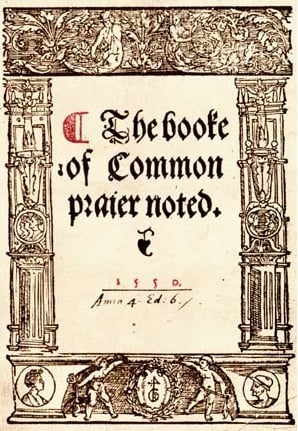
BCP.jpgIn this brief Sunday afternoon post I’m using the word “liturgy” for the planned and calendar-based order in a Sunday worship service for Christians. Something happened, and we have to wonder if it is good for us. The complete obliteration of the traditional liturgy for Sunday services was not something the Reformers did — Luther had one; Calvin had one; Westminster had one. So also Rome has always had one; the Orthodox have always had one, too. 

By examining low church evangelicalism today, one has to wonder “What happened?” 
Where did we lose it?
What did we gain?
What did we lose?
There is a brand new book that is truly exceptional on this topic. Bryan Chapell, in Christ-Centered Worship: Letting the Gospel Shape Our Practice
, examines the liturgy of the Church. That liturgy always was shaped by the gospel itself, and he is urging for more churches to let the gospel shape our practice — our Sunday morning worship times.
Alongside his brief survey of the history of liturgy, accompanied by some magnificent charts, Chapell provides worship resources for those who want to dip Sunday services more into the liturgical practices of the Church.


Previous Posts

This blog is no longer active
This blog is no longer being actively updated. Please feel free to browse the archives or: Read our most popular inspiration blog See our most popular inspirational video Take our most popular quiz

posted 3:10:39pm Aug. 31, 2010 | read full post »

Our Common Prayerbook 30 - 3
Psalm 30 thanks God (vv. 1-3, 11-12) and exhorts others to thank God (vv. 4-5). Both emerge from the concrete reality of David's own experience. Here is what that experience looks like:Step one: David was set on high and was flourishing at the hand of God's bounty (v. 7a).Step two: David became too

posted 12:15:30pm Aug. 31, 2010 | read full post »

Theology After Darwin 1 (RJS)
One of the more important and more difficult pieces of the puzzle as we feel our way forward at the interface of science and faith is the theological implications of discoveries in modern science. A comment on my post Evolution in the Key of D: Deity or Deism noted: ...this reminds me of why I get a

posted 6:01:52am Aug. 31, 2010 | read full post »

Almost Christian 4
Who does well when it comes to passing on the faith to the youth? Studies show two groups do really well: conservative Protestants and Mormons; two groups that don't do well are mainline Protestants and Roman Catholics. Kenda Dean's new book is called Almost Christian: What the Faith of Ou

posted 12:01:53am Aug. 31, 2010 | read full post »

Let's Get Neanderthal!
The Cave Man Diet, or Paleo Diet, is getting attention. (Nothing is said about Culver's at all.) The big omission, I have to admit, is that those folks were hunters -- using spears or smacking some rabbit upside the conk or grabbing a fish or two with their hands ... but that's what makes this diet

posted 2:05:48pm Aug. 30, 2010 | read full post »

Advertisement
Comments read comments(24)
post a comment
Brian in NZ

posted September 6, 2009 at 3:32 pm


I wonder if it came about because of the pastor branding that has become so normal these days. By that I mean the way churches are focused on the style of preaching of the senior pastor.
I have been a member of a liturgical church and at other times various non-liturgical churches. Both have differing strengths. A vicar on the Anglican church I attended made the comment that following a liturgy, put the preaching focus on the Bible (because it moved through the whole Bible in the course of a year), instead of allowing the preacher to promote his/her favourite subjects while skipping parts of the Bible that were uncomfortable, deemed irrelevant, controversial or simply difficult to understand.


report abuse
 

Patrick

posted September 6, 2009 at 3:48 pm


I suspect the ‘why’ question has more than a few strands to it. One might be Protestantism’s stress on the need for authentic personal faith in Christ and direct access to God through his Word. The accompanying fear that liturgy ‘gets in the way’ of this personal access may have played a part in its gradual eclipse in popular evangelicalism. What have we lost? Friends who worship at evangelical churches but were Catholic often say to me how they miss liturgy and its accompanying sense of being part of the bigger story of the church. I sense many evangelicals have little connection with the early church and its creeds and this seems to me to be a great loss.


report abuse
 

Mark Traphagen

posted September 6, 2009 at 4:07 pm


Like the commentor above, I suspect it has much to do with evangelicalism’s fixation on the individual, which has its roots in 19th century revivalism. Liturgy forces one to give up self-expression (though not entirely) in favor of submitting to something bigger and more ancient than oneself. There is also the curious Western notion that anything planned or written can’t be “from the heart.”
There are some evangelical churches using liturgy well. One is City Church PCA in Philadelphia.


report abuse
 

Frank Emanuel

posted September 6, 2009 at 4:57 pm


I fear we are doing the same thing with the word liturgy. I’m convinced we didn’t lose it but we pretend we don’t have liturgy because it makes us sound too much like the traditional churches. The so-called non-liturgical churches often have some of the tightest liturgies of all. Just try moving the announcements and see if it isn’t true. Or not have a mother’s day service. What we’ve lost is a connection with a historic Christian calendar – which is lamentable and we’ve also lost a way of understanding corporate worship. You just have to slip up and mention liturgy and you have lost some evangelical hearers.
I’m not sure what we have gained though.


report abuse
 

Anthony

posted September 6, 2009 at 5:35 pm


Wow, in the four comments above basically the things that initially came to mind regarding the why question have already been identified: revivalism,individualism, conversionism, and reactions against stale tradition, or fear of formalism. Formulating a general hypothesis, I would say that all of these emerge from a moderately shallow understanding of both human nature and the nature of salvation.


report abuse
 

Anthony

posted September 6, 2009 at 5:44 pm


What did we gain? Perhaps the ability to mobilize and be more responsive to culture and cultures. What did we lose? At risk of hyperbole, perhaps something of our collective soul.


report abuse
 

Carson Weber

posted September 6, 2009 at 6:03 pm


I’m reading a book right now by Alex Jones titled “No Price Too High” (Ignatius, 2006), wherein he recounts how he discovered liturgy as a Black Pentecostal Preacher, and it changed his life.


report abuse
 

paul

posted September 6, 2009 at 7:13 pm


as a person who worships with anglicans every Sunday, I can say that we haven’t lost anything.
as for what is gained by dropping liturgy? liturgy is heavy on symbolism and meaning…but that meaning only fully comes to those who have been taught. for those who do not understand the meaning, it can seem that worship is very formulated and difficult…it can make God feel very distant i think. also, liturgy can at times become like the law was for those in Israel/Judah. Without the heart behind liturgy, it can be worthless.
as for what is lost by those who abandon liturgy? the meaning and symbolism of liturgy is so amazing and helps guide many into worship that is truly about God. in liturgical services, there is rarely a focus on “meeting my needs” because so much of the service is about me participating in something that is much larger than myself. this comes both from the focus on God, and the idea that millions throughout the world are worshiping alongside you in the same way on Sunday. besides, my “needs” become met as I “sit at God’s feet, learn from his word, and eat from his table”…or so the saying goes at the end of the service.


report abuse
 

Pat

posted September 6, 2009 at 7:50 pm


I wonder if there’s a connection to the casualness of our society? It seems that most, if not all, formality has gone out of our culture and I believe that has crept into the Church. How do we communicate to people that all form is not bad? How did we even get to the place that we associate formality with something bad. Maybe it’s because we came to worship the form rather than the object of the form. However, we can make a god out of anything. Seems to be the answer is in the title of the book: Christ-centered. Once we get back to that, our worship–high, low and in-between–will be transformed. The answer does not lie in our instruments, form of dress, song styles, etc.


report abuse
 

Michael Spencer Harmon

posted September 6, 2009 at 9:03 pm


Check our Mike’s ongoing series about this; I think we have one, we just don’t recognize and thus harness it like we should.


report abuse
 

Scot McKnight

posted September 6, 2009 at 9:11 pm


Wow, Michael, it appears the iMonk and I are listening to the whispers of the same angels.


report abuse
 

Patrick O

posted September 6, 2009 at 9:11 pm


Where did we lose it?
Pretty early on. Innovation in liturgy began when Jewish synagogue services and prayers weren’t followed. I was at a Messianic congregation yesterday where everyone recited the Shema. That felt more ancient than when I’ve gone to Orthodox services. What was lost, I think, was the assumption that even older liturgies weren’t inherently the God-given pattern.
It helped that the late 20th century brought with it a break down of denominations in which contextual creativity could again be pursued.
But, then again, maybe it’s not lost but more thoroughly embraced. Looking at the ‘liturgy’ of Tertullian’s Apology ch. 39, written around 200, sure feels like emerging/missional churches have rediscovered an ancient pattern.
What did we gain?
Creativity and responsiveness to the Spirit. I think one of the biggest mistakes of the historical church was making the congregation passive, not contributing hardly any of their personal gifts to the gathering of the community together before God. And while it’s commonly said that liturgy invites participation and response—a computer can read back text so no personality is needed. And so people filled with the Spirit increasingly lacked expression of this within the gathered community. Non-liturgical churches certainly don’t address this as much as they should, but it does allow for the increased flexibility that some congregations, notably Pentecostals, do find.
What did we lose?
I think the biggest loss is the reminding of the basic beliefs of the faith. Repeating the core creeds, key prayers, foundational theology are ways of worshipping, reminding us of who we are and what we believe. On the other hand, as various denominations show, the recitation of liturgy by no means guarantees good Christian theology or behavior.


report abuse
 

Ken

posted September 6, 2009 at 9:43 pm


My hunch is that we started losing a common Liturgy with the rise of the free church movement and revivalism. It would seem that a traditional liturgy, to some, was/is in direct conflict with the “flow of the Spirit”.
What was gained by this loss of structure and freedom to respond to the Spirit was a dynamic movement in which people felt empowered by the Spirit to live more faithfully in the steps of their Savior. Much like the early Liberal movement, feelings/emotions (not meant in a pejorative manner) became the driving force in the life of the church; God could be experienced! No longer were followers of Christ tied to mechanical recitations that seemingly lacked significance or meaning; they could experience “true” worship. Just as the Enlightenment seemed to favor the individual, so too does the experience of the Spirit. Coincidence? I don’t think so.
What was lost was a mooring to our collective history and practices that have sustained the church for centuries. Many free church Evangelicals threw out the baby with the bath water and abandoned any historical roots beyond their personal (“I once was lost, but now I’m found”…emphasis on the “I”), church, or denominational history. We also adopted a significant aspect of nationalism as part of their identity (e.g. God and Country celebrations as part of worship; Christians identify themselves more readily with a political party than the Kingdom of God). In doing so, we have adopted theologies and practices that run antithetical to the Kingdom of God, which may explain why so many churches are more concerned with being culturally relevant than faithful and obedient to the call of Christ. Another unfortunate outcome is that we lack the practices or resources to recognize how far off course we are.
As one of my coaches was prone to say, “If we practice like we play, then we will play like we practice” A good start for the church, as has been a clarion call for the past 10 years, is a return to Liturgy. Not for the sake of Liturgy, but to recapture practices that have sustained the church, and hopefully be able to live those practices faithfully. In doing so, we become the salt and light Christ has called us to be and truly proclaim his Kingdom through our lives.


report abuse
 

Charlie

posted September 7, 2009 at 12:08 am


As a former Catholic turned Evangelical (30 years ago) I can tell you that the liturgy is the thing I miss the most. IMO doing away with the liturgy has been a very unfortunate thing in the evangelical church and has opened wide the door to pastor personality cults, pointless “worship”, over-emphasis on music, and basically a do-your-own-thing mentality. It seems that the influx of evangelicals back into mainline churches is driven in large part by this.


report abuse
 

Ted M. Gossard

posted September 7, 2009 at 2:55 am


It’s to our impoverishment that we don’t have liturgy in our churches. But most evangelicals, including myself just a few years back, don’t know what we’re missing.


report abuse
 

David B. Johnson

posted September 7, 2009 at 11:17 am


Scot,
How exactly do you attend Willow Creek (WC), when you feel this way about Liturgy? I’d be interested to hear about your WC experience and how you feel the gospel could better shape the WC Liturgy.
BTW, at our non-denominational church we have made a significant shift toward a more formal liturgy (Gathering, The Word, The Table, Sending, prayers of the people, corporate reading, etc.). I didn’t realize how much it now means to me until I recently attended a bigger evangelical church while I was on vacation. Even though I dearly love my brothers and sisters who were leading, everything felt so
contemporary and over-simplified that all feeling of transcendence and connection to the past had been eliminated. The “sanctuary” had zero religious symbols, which gave the impression we were attending a business seminar. I left with very little awareness that I had communed with Christ and his Body, which I believe is the purpose of the Gathering of the Body.
Do you feel “impoverished” at WC? How do you deal with it?


report abuse
 

Michael Barber

posted September 7, 2009 at 2:54 pm


Scot,
Thanks so much for starting this discussion thread. This has been a fascinating discussion for this Catholic to watch from the sidelines. If you’ll permit me to make a few observations as an outsider:
First, liturgy need not completely replace more spontaneous forms of worship. At our school we have both the celebration of the liturgy and other forms of spontaneous worship services. I think it would be wrong to think one must choose to have one over the other.
Second, liturgy is in fact in keeping with Jewish worship. I think this is often overlooked. Yes, there are dangers associated with liturgy–it can become a lifeless ritual. Certainly we Catholics have been guilty of falling into them at times. But let’s recall that sacred vestments, a liturgical calendar, etc., are not only TOLERATED by the OT, they are PRESCRIBED. I think that the Protestant reaction to the bad liturgy often neglects this important point. Let’s not throw out that baby with the bathwater!
Third, while liturgy can become little more than routine, it should be kept in mind that ANY form of worship CAN become corrupted. Actually, liturgy done right has fewer pitfalls than other forms of worship in my opinion. To use Aristotle’s language, form and matter are both important in this regard–the content of the liturgy must be rich and the way it is celebrated must also be correct (i.e., it must involve an interior participation, not simply external recitation).
Thanks for letting me participate.


report abuse
 

Ken

posted September 7, 2009 at 3:28 pm


Michael,
Not that you need affirmation (particularly mine), but…yes, yes, and YES!!! I, for one, thank you for participating!


report abuse
 

Dave

posted September 8, 2009 at 12:44 am


Form follows function. It is the mission that should shape practice.


report abuse
 

Jeff

posted September 8, 2009 at 12:56 am


I wonder how much the increased literacy of western culture led to the demise of liturgy. One of the central purposes of the earliest churches reading texts aloud was, I assume, to enable the illiterate to meditate upon, memorize and draw from the power of the written text. In an age where it was extremely uncommon for an individual to own his or her own copy of Scripture, public worship was where people had access to it. So, the re-telling of the gospel story, the reading of Old and New Testaments, and the rhythm of the liturgical year must have served an irreplaceable purpose in many lives.
But, now, since each of us can purchase our own copy of Scripture to read, or read it online, or on our blackberry (!), some of the value of liturgy may be lessened – or at least, maybe the power of it. Personal Bible reading is certainly something of an innovation, in the overall story of the church. And, though it was probably not the intention of those (like Wycliffe and Tyndale) who promoted it, perhaps it has marginalized the liturgy for many “Evangelical-types” who don’t see the urgency of such “scripted” contributions.


report abuse
 

Steve S

posted September 8, 2009 at 7:58 am


…not necessarily trying to say that we should ignore liturgy as an important topic for discussion, but…
It does seem to add to our misguided understanding of ‘Church as event’ instead of ‘Church as God’s means to accomplish His mission.’


report abuse
 

Mark

posted September 8, 2009 at 8:06 am


I attribute the decline of liturgy in evangelicalism to the reductionist worldview therein. Evangelicals are every bit as modern as their secular counterparts. The purpose of symbolism is no longer well-understood. The idea of communication through means other than (written) language has become foreign. Biblical doctrine has become something to be read, understood, and applied like a set of instructions. The church is understood to be just a congregation of like-minded individuals. Spirituality has become rigidly dualist.
The next step beyond the loss of liturgy is indifference towards Sunday worship altogether. Why attend an hour-long service in an auditorium somewhere when I can just fellowship with my nearby Christian friends, listen to sermons and praise music on my iPod, and volunteer at some local charity?


report abuse
 

Travis Greene

posted September 8, 2009 at 4:02 pm


Mark @ 22, “Why attend an hour-long service in an auditorium somewhere when I can just fellowship with my nearby Christian friends, listen to sermons and praise music on my iPod, and volunteer at some local charity?”
To play devil’s advocate here…well, why indeed?


report abuse
 

Mike M

posted September 9, 2009 at 12:27 am


I don’t get it. “Liturgy” pretty much means “boredom” to me and my family. Remember the Puritans who used to physically abuse congregants who fell asleep during the service? That’s based on God’s commandment “Thou shalt not dis my priests.” Maybe there’s something inherently God-receptive in liturgy that I’m missing out on, like the “Fourth Way” of the spiritual discliplines: somes get it; somes don’t. I don’t and no one has convinced me yet that cryptic repetition (as some others here have pointed out) is a virtuous endeavor. As an experiment, say out loud to a group of Roman Catholics: “In the name of the Father, Son, and Holy Ghost” and watch the fingers fly. Did that bring them closer to God?


report abuse
 

Post a Comment

By submitting these comments, I agree to the beliefnet.com terms of service, rules of conduct and privacy policy (the "agreements"). I understand and agree that any content I post is licensed to beliefnet.com and may be used by beliefnet.com in accordance with the agreements.

Share this story


About Beliefnet

Our mission is to help people like you find, and walk, a spiritual path that will bring comfort, hope, clarity, strength, and happiness. More about Beliefnet.

Help

Media Kit

Subscribe

Legal

Copyright © Beliefnet, Inc. and/or its licensors. All rights reserved. Use of this site is subject to Terms of Service and to our Privacy Policy. Constructed by Beliefnet.

Advertisement

Report as Inappropriate

You are reporting this content because it violates the Terms of Service.

All reported content is logged for investigation.