Jesus Creed

Are Women Human? 3 (RJS)

Thursday October 22, 2009

Here is the question for today - Do you read books by or about women? Intentionally?
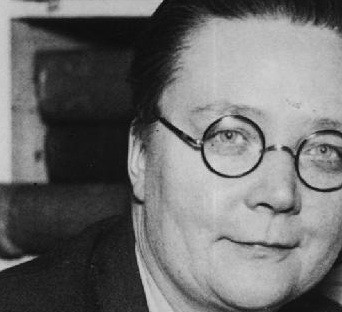
Sayers.jpg

This is the third and last in a series of posts centered around a short volume Are Women Human? containing two essays by Dorothy Sayers.  Today I am going to give a couple of quotes from Sayers' essays, make an observation, a suggestion, and open a conversation.

From the essay "The Human-Not-Quite-Human" (page numbers from the 1981 printing of "Are Women Human?")

The first task, when undertaking the study of any phenomenon, is to observe its most obvious feature; and it is here that most students fail. It is here that most students of "The Woman Question" have failed, and the Church more lamentably than most, and with less excuse. That is why it is necessary, from time to time, to speak plainly, and perhaps even brutally, to the Church.

The first thing that strikes the careless observer is that women are unlike men. ... But the fundamental thing is that women are more like men than anything else in the world. They are human beings. Vir is male and Femina is female: but Homo is male and female.

This is the equality that is claimed and the fact that is persistently evaded and denied. No matter what arguments are used, the discussion is vitiated from the start, because Man is always dealt with as both Homo and Vir, but woman as only Femina. (p. 37)

Here is another quote from the essay "Are Women Human?"

A man once asked me - it is true that it was at the end of a very good dinner, and the compliment conveyed may have been due to that circumstance - how I managed in my books to write such natural conversation between men when they were by themselves. Was I, by any chance, a member of a large mixed family with a lot of male friends? I replied that, on the contrary, I was an only child and had practically never seen or spoken to any children of my own age until I was about twenty-five. "Well," said the man, "I shouldn't have expected a woman [meaning me] to have been able to make it so convincing." I replied that I had coped with this difficulty by making my men talk, as far as possible, like ordinary human beings. This seemed to surprise the other speaker; he said no more, but took it away to chew it over. One of these days it may quite likely occur to him that women, as well as men, when left to themselves, talk very much like human beings also. (p. 35)

These two quotes combine to make a point that I would like to consider today. I think that there is a bit more to the situation than Sayers admitted in the above quote - while she did not interact much with men, she was well educated - and education leads to a knowledge of how humans talk. We live in a time and culture where it is impossible for an educated woman to avoid "putting her head" in a man's point of view.  The vast majority of literature, both fiction and non-fiction is written by men from a (supposedly) male perspective. A man, on the other hand, can avoid "putting his head" in a woman's point of view. And this is especially true of boys. Girls will often read Tom Sawyer and The Great Brain, boys will less often read Anne of Green Gables and Little House on the Praire.  One of the consequences of this is that women (consciously or not) will realize that we are human then male and female - while men quite often do not.

If male - how often do you read a book with a woman as protagonist, or a memoir by a woman? If you don't read such material - why not?

If female - how often do you read a book by/about a man or boy? What percentage? If you don't why not?

Consider an example.  I read Donald Miller's Blue Like Jazz last week.  I put my head into his - so far as he allowed in the memoir.  It is obvious in this book that there are aspects to his experience that are male (less than he likely thinks), aspects that are human, aspects that are generational, and aspects that are a consequence of his unique blend of individual human characteristics and experiences.  I found his reflections fascinating - all of them, not just those that gelled with my experience.

Now a question, a suggestion and a question. How many pastors think that part of their role as pastor requires learning how to "put their head" into the context of others (including, but not limited to, women)?  I will suggest that part of the preparation for a good pastor is to learn how to do this and to do it intentionally. A good approach is to read widely, especially good fiction, but also memoirs. Intentionally make your reading diverse. Don't judge, just enter in. Another approach is to simply talk with a broad range of people of both genders and many different life experiences. But I don't think that this latter option is quite as effective, as it doesn't lead to the same level of immersion into the experience of another.  It is only when we intentionally put our heads into the context of others that we really realize how true it is that we are human first - and how similar and diverse the human experience actually is.

We can broaden the question I asked above beyond gender to other life situations as well.

How much of your reading or life experience requires you to "put your head" in the mind of another - one substantially different from you? Is this good or bad?  What consequence does it have for the church?

If you wish to contact me directly you may do so at rjs4mail [at] att.net.

Advertisement
Comments
RJS
October 23, 2009 7:12 AM

rebeccat,

I think you hit on many of the key points in your comments - although I would take a slightly different nuance on some of it. A neutered androgyny is certainly not the goal. My key point is this - human first ... male and female second (not human without male and female).

So you said ...I would much rather deal with a man who viewed me as being in some way "the other", but who wanted to know and understand me as I actually am than deal with anyone who viewed me as some sort of generic human being, untouched and unaffected by my gender.

I don't want to deal with anyone who views me as a generic human being untouched by all the aspects that make me a unique person. But we move back and forth between situations where gender is important and where it is not. I do not want to sit in a scientific discussion with a man who views me first and foremost as "other" ... frankly I've done that far too often and it is disgusting. We can be humans discussing science and gender is irrelevant (I know - I'm not postmodern enough). Quantum Mechanics is gender neutral.

This is often true in other areas as well. If we recognize "human" as a category that contains both male and female we can also recognize many traits and tendencies as human rather than either male or female. This does not eliminate male and female as important factors.

If the principle category is male + female coming together to make human. Then male/female is the defining lens through which all is evaluated and we lose touch with our common humanity.

RJS
October 23, 2009 7:20 AM

rebeccat,

On the topic of vulnerability ... this is certainly a place where my perspective is influenced by my gender. I travel a great deal and I am always concerned with safety and location in a way that my male colleagues generally are not. People cannot always be trusted - and here "people" means mostly "males."

But while my response is certainly related to the fact that I am female, how much is a human response to danger and how much is "feminine" and different from a "masculine" response to danger? Some of the response is likely due to difference in innate thinking - but some is simply "human."

joanne
October 23, 2009 8:36 AM

In seminary, 07, I read only one book by a female author. It was a theology book. I deeply connected with the book as the author approached theology with all of her life experiences and some of the injustices she had experienced. students were dismissive of her perspective considering it "feminist". I felt also dismissed and wondered if my voice would be dismissed as well. I felt sad that women could be so disrespected and labeled in a way that they were almost defined as devient. Feminist was used as a word to label the work and it allowed students to not accept the suthor's influance.

Such affected me because I wanted to have my words heard. I wanted to also have influence. I wanted to have my perspective valued. I wanted to be respected. (contrary to popular belief that women only need love) All of this was in some way dehumanizing.

Craig V.
October 23, 2009 2:23 PM
http://craigvick.wordpress.com

RJS

If you're not postmodern enough I've probably wandered too far in that direction. It makes a difference in how we hear certain phrases. For example, is the female voice defined by me beforehand or is it defined and redefined as I listen? The same question might be asked with respect to the human voice. More than this, we might find any understanding of 'human' wanting if it fails to hear female voices.

On a different note, the following question occurred to me: Will we retain our gender in the next life? Jesus statement about marriage in the next life may at least raise some doubts.

RJS
October 25, 2009 9:53 AM

Craig V

Your last is a good question, and one I've wondered about. I have no strong conviction. But whatever the case it will be right - no matter what we think today.

Read All Comments

Post a Comment

By submitting these comments, I agree to the beliefnet.com terms of service, rules of conduct and privacy policy (the "agreements"). I understand and agree that any content I post is licensed to beliefnet.com and may be used by beliefnet.com in accordance with the agreements.


Please type the text you see in the box below to verify your post and help us prevent spam. You have a limited time to type - you may wish to compose your comment in a separate document and paste it here upon completion.

Type the characters you see in the picture above.

Advertisement

Search This Blog

About Jesus Creed

Scot McKnight is a widely-recognized authority on the New Testament, early Christianity, and the historical Jesus. He is the Karl A. Olsson Professor in Religious Studies at North Park University (Chicago, Illinois). A popular and witty speaker, Dr. McKnight has given interviews on radios across the nation, has appeared on television, and is regularly asked to speak in local churches and educational events. Dr. McKnight obtained his Ph.D. at the University of Nottingham (1986). Click to continue reading Scot McKnight's Bio...

View Scot's Speaking Schedule

Contact Scot at Facebook

feed icon Subscribe

RSS Feed

Receive updates from Jesus Creed

Calendar


Add to Technorati Favorites

Blogroll

Daily Prayers:

Emerging Movement:

Other sites I frequent:

Recommended Online Readings:

Scholarly Books I've written:

Scholarship Online:

Stuff online:

Advertisement

Advertisement


About Beliefnet

Our mission is to help people like you find, and walk, a spiritual path that will bring comfort, hope, clarity, strength, and happiness. More about Beliefnet.

Legal

Copyright © Beliefnet, Inc. and/or its licensors. All rights reserved. Use of this site is subject to Terms of Service and to our Privacy Policy. Constructed by Beliefnet.

Advertisement

Report as Inappropriate

You are reporting this content because it violates the Terms of Service.

All reported content is logged for investigation.