Jesus Creed

Rob Bell on "Evangelical": Follow-up

Friday October 2, 2009

Categories: Evangelicalism
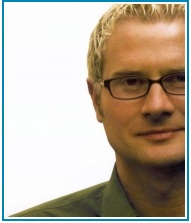
RobBell.jpgYesterday I posted a recent interview with Rob Bell about what an "evangelical" is, and I said I'd weigh in today. I don't think Rob Bell has defined "evangelical" but given a set of statements that are true about the use of the term in the media (political conservatives, sometimes anti-intellectual) and that are reactive and corrective to that stereotype. We need to avoid falling for how the media define terms, and it is a constant temptation in sound byte format to make our point -- and that usually blocks perspective and dimension.

I'm dubious that Rob Bell is even attempting to define "evangelical" in its fullness. I would not equate this interview with what Rob Bell believes about "evangelicalism." 

Furthermore, he defined "evangelical" by appealing to justifiably important elements of one part of the term "evangelical" -- its socially active pursuit of justice and compassion and the good. 

But what he said about "evangelical" is not enough, and it fits in with a trend, a rather flippant one, of folks thinking they can determine what an evangelical is or not. Before I get to the trend, a good definition.

To define "evangelical" we need to pay attention to those who have made it their life study to come to terms with this movement, and two scholars have done just that: Mark Noll in the USA and David Bebbington (The Dominance of Evangelicalism: The Age of Spurgeon And Moody (History of Evangelicalism) ) in the UK. They agree on this: an evangelical is a Christian Protestant for whom the central ideas are the leading authority of Scripture, the necessity of personal conversion, the centrality of the death of Christ on the cross as a substitutionary atonement, and the importance of a life of active following Jesus, seen in such things as Bible reading, prayer, church attendance, and deeds of compassion and justice. That is the standard definition of evangelical. This definition summarizes those who care about getting this term accurate. It is not a definition designed to exclude some of whom they are worried. It's big tent definition, but it bears no ill-will toward others. 

Now my observation today: I'm seeing a baffling desire by many who almost never talk about any of the above four ideas (as central to what they believe) but for some reason want to be called "evangelical." They make a point to say they are evangelical. To be committed to justice or compassion as the central pursuit in life does not make one an evangelical, though evangelicals should be committed to justice and to compassion -- and shame on those who aren't. But what makes an evangelical is a commitment to the above four ideas (Bible, conversion, cross, discipleship). 

My question: Why do these folks want to be connected to the evangelicals?

Now let me back down just a tad: no one is the final judge on who is and who is not an evangelical, but that doesn't mean there isn't a general ballpark definition like that of Noll and Bebbington that deserves serious respect. I'd call on all those who say they are evangelical to measure themselves accurately. And I'd especially call on those being asked by the media to offer clear and accurate definitions because only such folks can correct -- over time -- the stereotypes.
Advertisement
Comments
cas
October 3, 2009 8:57 AM

I've emailed Michael Paulson, who I met last year at Brandeis University, where he is on the board of the Gralla Fellowship program that I attended for a week. He struck me as an eminently fair and sensitive reporter. I'd be really surprised if he took Bell's statements out of context, etc.

I'll post his response if and when he replies to my email.

Patrick
October 3, 2009 2:14 PM

RJS way back at 33 - love the way you put that, thanks.

Although in my culture (Republic of Ireland) I don't tend to use the term evangelical (since it is either unknown or likely to be misunderstood) I cannot think of another word that captures that heartbeat of Bible, Cross, discipleship and conversion.

The word is also a unique bridge builder between like-minded Christians across the globe - as with the World Evangelical Alliance and all its constituent national alliances. Naturally this has been a very American conversation, but the (often negative) American experience expressed in many comments here is not necessarily shared elsewhere around the world.

On Scot's original question. There have been Catholic groups here very keen to describe themselves as evangelical. Hard to know why - it is hardly popular, powerful or prestigious! Tends to be connected to a charismatic spirituality that stresses belonging primarily via a common experience of the Spirit, So historic doctrinal differences between Catholics and evangelicals are downplayed or ignored ...

Michael W. Kruse
October 3, 2009 4:23 PM
http://krusekronicle.typepad.com

John Stackhouse wrote a piece in "Books & Culture" two years ago in response to Ron Sider's "Scandal of the Evangelical Conscience." Stackhouse demonstrates quite well why we need to be precise with our language in our critiques:

What Scandal? Whose Conscience?

cas
October 3, 2009 6:14 PM
http://www.christineascheller.wordpress.com

I emailed Michael Paulson this morning and told him about the discussion here regarding his interview with Rob Bell. My email included the following:

On September 30, RealRobBell tweeted: "Ever done an interview and then read it and realized they left out most of what you said? Maddening."

The interview did seem really short. I kept clicking on the next page icon trying to find page 2, but got a different article several times.

Was part of the interview missing?
Did you take his comments out fo context?
Was the Q&A published out of context?

Michael Paulson responded:

I published a relatively lengthy (for a blog) transcript of much of my
interview with Rob Bell on my blog, at this link:
http://www.boston.com/news/local/articles_of_faith/2009/09/rob_bell.html

A shorter version appeared in the paper the following Sunday -- we reverse publish abbreviated excerpts from my blog in the Sunday paper every week.

I was not aware that Rob Bell had any concerns about the interview until you e-mailed, and I'm sorry to hear that. In answer to your questions, the published Q&A is not a full transcript of our conversation, but does include the bulk of the exchange -- as is common practice, I made some judgments about what to publish for length and clarity. But nothing is out of context -- I'm not even sure how that could happen in a Q&A, because you see the questions, and you see his answers, with no interpretation or added commentary from me. And his answers are quite internally consistent, or at
least seem that way to me -- late in the interview, when I ask a question about the relative paucity of explicity religious language in his answers, he doesn't say, 'You are misrepresenting what I said,' but instead explains why he uses the language he does. Obviously, if he now feels that the answers don't fully reflect his thoughts (which is what he seems to say in his Tweet), I'm sorry to hear that, and would certainly be open to posting more if he were to contact me -- there are certainly occasions on which I wish I had said more or phrased something differently -- but I am confident
that the exchange as published fairly reflects the relatively brief phone conversation that he and I had last month.

cas
October 4, 2009 1:26 PM

I should add that Michael Paulson granted permission for his email response to be posted here.

Read All Comments

Post a Comment

By submitting these comments, I agree to the beliefnet.com terms of service, rules of conduct and privacy policy (the "agreements"). I understand and agree that any content I post is licensed to beliefnet.com and may be used by beliefnet.com in accordance with the agreements.


Please type the text you see in the box below to verify your post and help us prevent spam. You have a limited time to type - you may wish to compose your comment in a separate document and paste it here upon completion.

Type the characters you see in the picture above.

Advertisement

Search This Blog

About Jesus Creed

Scot McKnight is a widely-recognized authority on the New Testament, early Christianity, and the historical Jesus. He is the Karl A. Olsson Professor in Religious Studies at North Park University (Chicago, Illinois). A popular and witty speaker, Dr. McKnight has given interviews on radios across the nation, has appeared on television, and is regularly asked to speak in local churches and educational events. Dr. McKnight obtained his Ph.D. at the University of Nottingham (1986). Click to continue reading Scot McKnight's Bio...

View Scot's Speaking Schedule

Contact Scot at Facebook

feed icon Subscribe

RSS Feed

Receive updates from Jesus Creed

Calendar


Add to Technorati Favorites

Blogroll

Daily Prayers:

Emerging Movement:

Other sites I frequent:

Recommended Online Readings:

Scholarly Books I've written:

Scholarship Online:

Stuff online:

Advertisement

Advertisement


About Beliefnet

Our mission is to help people like you find, and walk, a spiritual path that will bring comfort, hope, clarity, strength, and happiness. More about Beliefnet.

Legal

Copyright © Beliefnet, Inc. and/or its licensors. All rights reserved. Use of this site is subject to Terms of Service and to our Privacy Policy. Constructed by Beliefnet.

Advertisement

Report as Inappropriate

You are reporting this content because it violates the Terms of Service.

All reported content is logged for investigation.