Jesus Creed

My Top Ten Books about Leadership

Friday November 6, 2009

Categories: Pastoring and Leading
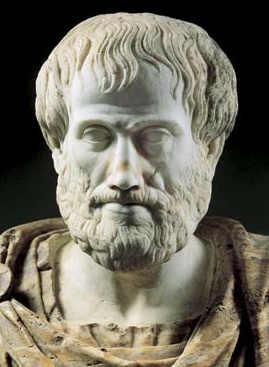
Aristotle.jpg

What makes a leader? Ideas. Courage. Contact with great thinkers. What makes a Christian leader? Great ideas, courage, and contact with great thinkers re-shaped and shaped by the gospel. 

So, I offer to you a list of my top ten books for leaders, and none of the titles of these books have the word "leader," or its buddy "leadership," in it. Some of these are overtly Christian classics; others are not. These books have the ability to swell the chest, flood the mind, and reshape how we see the world around us - and a gospel-reshaping of these great works can inspire a leader to new levels.

From the classical world, though one could choose all sorts of great works, I recommend a soaking in Aristotle, Nicomachean Ethics, to see how the great philosopher constructed a set of ethics that shaped the Western world. Homer told the story of Odysseus and Virgil, in The Aeneid, developed what Homer began for the Roman world and handed on to all of us the power of a journey into ideas and ideals, sanctifying place and history. Dante took Homer and Virgil to the next level in his Divine Comedy, and if you follow him all the way down into the inferno, up through purgatory and then climb into the swirling glorious presence of God you will find new dimensions to life's journey.


I've heard the case made that St. Augustine's Confessions reshaped the entire Western world, not least in his probing of his own soul and conscience, but I'm confident that the great North Afrian can lead each of us to the potent truth of original sin and the need to read our lives before God. Not long ago I began to re-read John Milton, Paradise Lost, and was mesmerized not only by his language and meter, but by the brilliance of his vision for the cosmic battle of human life. 

No one on this side of the Atlantic can fail to be captured, humbled and even humiliated before God by Harriet Beecher Stowe, Uncle Tom's Cabin, as it brings into living reality the evil of slavery and the heart of darkness, a heart that was eschewed by the arch-individiual, Henry David Thoreau in On Walden Pond. Americans need to dip into this classic work of human independence and freedom if only to capture again what makes so many Americans still tick. Hemingway said Mark Twain's The Adventures of Huckleberry Finn was the great American novel. I'm not expert enough on American novels to pose such a conclusion, but I can say that very few have probed more deeply the foibles of the human heart, whether Twain does so with withering wit or raw finger-pointing.

For some reason few today have read C.S. Lewis, Dymer, his first work, a saga, a journey, and a portrait of human hybris at its apex - and the work provides for us a revelation of what Lewis was like, what his yearning was like, before it became Surprised by Joy. I confess to being one of the few who have not read all of Tolkien's Lord of the Rings - I have read The Hobbit - but I return regularly to his short story, "Leaf by Niggle," and often wonder if there is a better way of describing our vocation and its relation to eternity. Every summer, somehow, I find my way to Ernest Hemingway, The Old Man and the Sea, and whether it is the combination of the hunt with baseball in the old man's musings or not, the struggle to catch and never show what one found ... Hemingway reminds me of the intangibles of the human struggle. Probably the deepest and penetrating book I read during my seminary days was Martin Buber's I and Thou, a philosophical, theological essay into the relational nature of what matters most.

Not your usual list of books on leadership, but I wonder sometimes if leadership might best be described by those who are intellectual and cultural leaders instead of by those who talk about it.

Advertisement
Comments
brian Rice
November 9, 2009 5:17 PM
http://www.lci.typepad.com


Hi Scott:

Thanks for a great list of books, but I think I look at this issue from a different point of view than most of comments. I'll admit that my bias is that I am a leadership development specialist, working both in the local church and globally to train leaders.

I have read everything on the list except for the Aeneid and the one by C.S. Lewis. The Lord of the Rings trilogy and its Hobbit prequel, I have read once a year since 1970.

I think these are wonderful books, but their subject matter is not leadership (per se) as much as it is life, worldview, story and philosophy… Reading (and living) these books will make one a better human being but not necessarily a better leader.

A nurse, engineer, lawyer, accountant, stay at home parent, etc. could read these books and not become a leader.

Someone could read these books and remain a weak or even poor leader, uneducated concerning the intricacies of leadership and untrained in the core skills of leadership.

I know many pastors who are truly insightful people, well versed in counseling, public speaking and even biblical theology… but who are very inadequate as a leader. They have read many books similar to the ones you mentioned, but those books did not shape them as leaders. It shaped them as human beings.

As a corollary, I had many teachers in my grad schools who were wise and insightful people, but not necessarily gifted in teaching. Reading books like the ones mentioned is not going to make them better teachers. They would be better served by reading books on teaching. Just like someone who is a weak leader needs to read leadership specific texts.

Here is a short leadership list. I won't annotate it due to this post becoming tedious.

Most of these books are longer, pretty substantial, and not written by Christians.

The Congruent Life: Following the Inward Path to Fulfilling Work and Inspired Leadership by C. Michael Thompson (okay, a short annotation. This is the one book you should read above all the others.)

Two by Ronald Heifetz of Harvard
Leadership Without Easy Answers
Leadership on the LIne

Two by Peter Koestenbaum
Leadership: the Inner Side of Greatness -- a Philosophy for Leaders
The Philosophic consultant: Revolutionizing Organizations With Ideas

Unnatural Leadership by Dotlich and Cairo

Leadership D ivied: What Emerging Leaders Need and What You Might be Missing by Ron Carucci

Leading MInds: An Anatomy of Leadership by Howard Gardner

Leadership by James MacGregor Burns (magisterial and historic in scope)

Intuitive Leadership by Tim Keel (one of the best from a postmodern point of view)

Reviewing Leadership by Robert Banks (a short, nice introduction to the field of leadership)

If anyone is interested in any of the books, I would suggest you do a Google search to read reviews before you buy any of them. In most cases they are not easy reads.

Brian

brian Rice
November 9, 2009 5:19 PM

Sorry for the typo about Ron Carucci's book. It is Leadership Divided.

Peggy
November 10, 2009 2:35 PM
http://abisomeone.blogspot.com

Thanks, RJS, for hitting LOTR right off the bat. More "leadership" (both good and bad) in Tolkien's characters than could be discussed in a lifetime....

What about Taylor Caldwell? She has written some amazing books -- check out this listing:

http://www.amazon.com/s/ref=nb_ss_1_10?url=search-alias%3Dstripbooks&field-keywords=taylor+caldwell+books&sprefix=Taylor+Cal

Of course, one of my favorites is "Leadership Secrets of Attila the Hun" by Wes Roberts ... especially is you like ancient Roman history ;^)

http://www.amazon.com/Leadership-Secrets-Attila-Wess-Roberts/dp/0446391069

And Lewis B. Smedes has some amazing books which speak all over the issues of leadership -- especially what it takes to be a good one.

Cheers, all!

RJS
November 10, 2009 2:58 PM

Hi Peggy,

Nice to hear from you - its been quite awhile.

Peggy
November 12, 2009 12:24 AM
http://abisomeone.blogspot.com

Thanks, RJS...it's nice to be remembered! Been way too crazy around my neck of the woods to even read...I check blogs in my Google Reader about once a month, if I'm lucky!

Has anyone read the book on Attila the Hun? It is really quite interesting....

Back to my closet ;^)

Read All Comments

Post a Comment

By submitting these comments, I agree to the beliefnet.com terms of service, rules of conduct and privacy policy (the "agreements"). I understand and agree that any content I post is licensed to beliefnet.com and may be used by beliefnet.com in accordance with the agreements.


Please type the text you see in the box below to verify your post and help us prevent spam. You have a limited time to type - you may wish to compose your comment in a separate document and paste it here upon completion.

Type the characters you see in the picture above.

Advertisement

Search This Blog

About Jesus Creed

Scot McKnight is a widely-recognized authority on the New Testament, early Christianity, and the historical Jesus. He is the Karl A. Olsson Professor in Religious Studies at North Park University (Chicago, Illinois). A popular and witty speaker, Dr. McKnight has given interviews on radios across the nation, has appeared on television, and is regularly asked to speak in local churches and educational events. Dr. McKnight obtained his Ph.D. at the University of Nottingham (1986). Click to continue reading Scot McKnight's Bio...

View Scot's Speaking Schedule

Contact Scot at Facebook

feed icon Subscribe

RSS Feed

Receive updates from Jesus Creed

Calendar


Add to Technorati Favorites

Blogroll

Daily Prayers:

Emerging Movement:

Other sites I frequent:

Recommended Online Readings:

Scholarly Books I've written:

Scholarship Online:

Stuff online:

Advertisement

Advertisement


About Beliefnet

Our mission is to help people like you find, and walk, a spiritual path that will bring comfort, hope, clarity, strength, and happiness. More about Beliefnet.

Legal

Copyright © Beliefnet, Inc. and/or its licensors. All rights reserved. Use of this site is subject to Terms of Service and to our Privacy Policy. Constructed by Beliefnet.

Advertisement

Report as Inappropriate

You are reporting this content because it violates the Terms of Service.

All reported content is logged for investigation.