Jesus Creed

Jesus Creed

Wheaton 2

posted by Scot McKnight | 12:12am Monday January 25, 2010

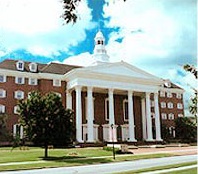
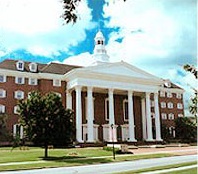
Wheaton.jpg

Andrew Chignell’s piece on Wheaton will surely be of interest to many readers of the Jesus Creed blog, not the least of which reasons is that “where Wheaton goes, there goes evangelicalism.” So, the question Andrew writes is the question many are asking: Whither Wheaton? I clip a bit from his article, and I’d like to have a conversation about Wheaton’s future here.

This spring, the board of trustees at Wheaton College will appoint a new president. As the flagship evangelical institution–the “Harvard of the Christian schools,” say the tour guides–Wheaton will be closely monitored by other colleges, by pastors and churches around the world, and by observers of Christendom generally. Indeed, in a November 2009 article, the New York Times went so far as to characterize Wheaton, Illinois as a kind of “evangelical Vatican.”…


Interestingly, this apparent drift towards the center among students occurred during an administration that was initially charged with steering the college toward the right. Some members of the board of trustees were apparently alarmed in 1992 when the college newspaper reported that well over half the faculty was voting Democratic, and that membership in mainline Protestant denominations–especially the Episcopal Church–was on the rise. Wary of both Clintonism and Canterbury, these trustees began to see the college as on a slippery slope towards Oberlin, with the professors supplying much of the lubrication. In response, and without substantive consultation with the faculty, the board appointed a pastor from Memphis named Duane Litfin over candidates with widespread support and stronger academic credentials. Most prominent of these alternates was the then-Provost of Notre Dame, Nathan Hatch, himself a Wheaton alumnus and Trustee who was reportedly being groomed by the outgoing president, J. Richard Chase, to be his successor. (After the Litfin surprise, Hatch resigned from the board and later went on to become president of Wake Forest.) …


Each of the 40 or so people consulted for this article–including Bolyanatz, Van Dyke, and Hochschild–expressed renewed hope and goodwill for Wheaton as it moves into the next 150 years. These are not embittered grumblers.

The central question, rather, is this: How magisterial must an administration be regarding the interpretation of core commitments in order to keep the institution on course? Or, put another way, how much wiggle-room for reasonable, charitable differences in interpretation can be allowed while still preserving a school’s distinctive confessional character?

The question has been answered in one way over the last 17 years, and the results (as with all administrations, perhaps) have been decidedly mixed. The new president’s answer to this question is likely to be the defining characteristic of his or her administration. The sense of the constituency interviewed for this story (and my own sense as well) is that it is crucial to keep in mind that a college is not the church, and its presidency is not the papacy. Even at a systemic institution like Wheaton, there must be protected space–wiggle-room–for the creative thinking, loving disagreement, and emphatic debate–even about interpretation of the heritage–that set academic communities apart.

Professor Holmes sums up the vision:

We need a person of evangelical conviction and practice who understands and respects the diversity within the evangelical movement. We need one who understands the distinctives, the promise, and the problems of Christian higher education, an optimistic and creative leader who will support and encourage faculty in their multifaceted callings. We need someone who understands and inspires undergraduate students in their struggles and their problems, someone in whom they might find a model of wisdom and caring.

It could hardly be better put. May God speed the flagship.


Previous Posts

This blog is no longer active
This blog is no longer being actively updated. Please feel free to browse the archives or: Read our most popular inspiration blog See our most popular inspirational video Take our most popular quiz

posted 3:10:39pm Aug. 31, 2010 | read full post »

Our Common Prayerbook 30 - 3
Psalm 30 thanks God (vv. 1-3, 11-12) and exhorts others to thank God (vv. 4-5). Both emerge from the concrete reality of David's own experience. Here is what that experience looks like:Step one: David was set on high and was flourishing at the hand of God's bounty (v. 7a).Step two: David became too

posted 12:15:30pm Aug. 31, 2010 | read full post »

Theology After Darwin 1 (RJS)
One of the more important and more difficult pieces of the puzzle as we feel our way forward at the interface of science and faith is the theological implications of discoveries in modern science. A comment on my post Evolution in the Key of D: Deity or Deism noted: ...this reminds me of why I get a

posted 6:01:52am Aug. 31, 2010 | read full post »

Almost Christian 4
Who does well when it comes to passing on the faith to the youth? Studies show two groups do really well: conservative Protestants and Mormons; two groups that don't do well are mainline Protestants and Roman Catholics. Kenda Dean's new book is called Almost Christian: What the Faith of Ou

posted 12:01:53am Aug. 31, 2010 | read full post »

Let's Get Neanderthal!
The Cave Man Diet, or Paleo Diet, is getting attention. (Nothing is said about Culver's at all.) The big omission, I have to admit, is that those folks were hunters -- using spears or smacking some rabbit upside the conk or grabbing a fish or two with their hands ... but that's what makes this diet

posted 2:05:48pm Aug. 30, 2010 | read full post »

Advertisement
Comments read comments(40)
post a comment
RJS

posted January 25, 2010 at 6:57 am


It is an interesting piece by Chignell.
When I left college and went to graduate school one of my rather tentative plans was to teach college, and probably Christian college.
By the time I was looking for jobs I would not consider a place like Wheaton. The discussion of the controversy over origins – explicitly Adam and Eve – in Chignell’s article is a perfect example of why I would not consider it.
No matter what my view at the time (and I am still “agnostic” on aspects) Litfin would have limited acceptance to one of many possible Christian positions. He would have eliminated, for example, the position suggested by John Stott in his commentary on Romans. Stott suggests that “God gave a human spirit to a pair of pre-existing human-like creatures, or hominids,” a position Litfin declared inconsistent with the Wheaton statement of faith.
Such micromanagement is the bane of evangelical Christian scholarship. It forces people to develop a means to twist the evidence to fit preconstructed boxes.
The same tendency is evident in Biblical scholarship. The arguments presented in Beale’s ridiculous counter Enns’s book is but one painful example. John Walton’s book is excellent – until he discusses Gen 2-3 (Adam and Eve). There it becomes vague.
We need a safe place for excellent evangelical Christian scholarship. (And some 18 years at a secular university makes this also painfully clear.) But Christians must be allowed to wrestle with the issues to search for a pathway to understanding without micromanaged idiocy.


report abuse
 

Percival

posted January 25, 2010 at 7:35 am


I understand the motivation for keeping control of the world view of the faculty. The Harvards, Dukes, and Oberlins of America are clear examples of a Christian world view being sacrificed for other values. But top down approaches rarely work for long and are odious to those under authority.
When I was an undergrad at Asbury College in the early 80′s (a Wesleyan/Arminian type school) the big controversy was an avowed Calvinist lecturer in the Bible department. He was sent packing. Another professor doubted the existence of a personal Satan and remained there. The difference was that the first one attempted to persuade others toward his belief while the second one merely expressed his lack of conviction in that area.
To me, the difference is one of good manners and unselfishness towards your community. If a faculty member takes the stance that it is their job to “open the minds” of the majority and “stand up for the truth” in the face of the community, they are putting their own personal agenda ahead of the goals of the community. In my view that’s where administration needs to step in.


report abuse
 

RJS

posted January 25, 2010 at 7:49 am


Percival,
The real point here, I think, is that we need evangelical Christian scholarship with wiggle room. I find denominational schools with specific theological positions, especially at the undergraduate level, just as troubling. I am dead sure that every denomination gets much wrong, and we need to be able to move forward without ties. But you are right – a person who does not respect the sincere views of others and deems it his calling to persuade others of the truth, and who uses divisive means to do so, defeats the purpose. (Note the qualifier – the attempt to persuade is of course part of any scholarship including evangelical scholarship – the kicker is “uses divisive means.”)
Wheaton is nondenominational school – the kind of place that should be able to lead. I would love to see it really step up and move to the fore. But it will not with a small tent micromanagement approach to evangelical Christian faith.


report abuse
 

Scot McKnight

posted January 25, 2010 at 7:57 am


RJS and Percival,
Chignell’s decision to go public so soon with the inside story of his article is not the wisest of ways to make one’s situation known — at least that’s how I would see it from what I know.
But, what he discovered — and I wonder how many professors didn’t want to go public — concerns me about how administration relates to faculty. When a school is tied to a doctrinal statement, and one that also assumes connection to orthodox creeds and the Reformation without even stating some of that (which got Wheaton into the Joshua Hochschild case), logic requires that they maintain the commitment.
I’d rather see less theological articulation in the doctrinal statement and much more careful interviewing of potential faculty. What would concern me for Christian university/college professors is whether what they are teaching denies or undermines the gospel or whether it encourages exploration of the gospel through the lens of a discipline.
Which is to say: Christian colleges have a moral obligation to their Christian constituency and a conscience obligation to their statements.


report abuse
 

Percival

posted January 25, 2010 at 8:09 am


RJS,
Your point about the small tent is pertinent as well. One difference may be that big tent schools like Wheaton or TEDS have a different reason for being than a school like Asbury College, which is intended to be distinctive and narrower in some senses. (Although quite a bit broader in other ways.)
However, how big is the evangelical tent itself? Not as big as some of us would like. and not as broad as Christianity in general. But to hope that Wheaton could be a merely Christian university, broader than evangelicalism, is perhaps not realistic and maybe not even desirable.
Question: Are there any Christian colleges that you would say now provide this “wiggle room” for evangelical scholarship?


report abuse
 

dopderbeck

posted January 25, 2010 at 8:32 am


Scot (#4) — your points here are well taken, but if that is the posture, then let’s drop all this chatter about Wheaton being the “flagship.” If what it is is the flagship institution of the Alliance of Confessing Evangelicals, then let it be that and only that.
I think what bothers me most about this is that if the doctrinal commitment is too tight it leads to subtle forms of intellectual dishonesty or at least tension among the faculty. Take, for example, this origins course that was taught at Wheaton, and note particularly the subtext of the portion of the course on human origins. Why should faculty be pressured to bury lines of thinking that they’re obviously considering valid under this sort of “hypothetical” teaching format?


report abuse
 

Scot McKnight

posted January 25, 2010 at 8:35 am


dopderbeck, say more. Not sure what you are getting at in your opening salvos in that comments. Are you saying that there can be no theological constraints?


report abuse
 

Paul

posted January 25, 2010 at 8:37 am


My wife and I both graduated from Wheaton about 6 years back. When I read these articles to her, she had a similar response to the idea of Wheaton being more “small tent” on the issue of creation.
Basically, this was not our experience at all.
Although it might have been left a little “up in the air” as to all the details, it was fairly clear to us where the professors stood on this issue (both science and theology/christian ed). And very few held anything similar to a conservative viewpoint. Even more so, it was clear to us that as Christian students we were being given room to think and explore the issues ourselves and to come up with a conclusion (no ideas were forced upon us). Similar to what RJS describes as needed.
Now, that being said, it is entirely possible that “behind the scenes” this was not entirely encouraged or supported by some in the school …which is sad to me if that is the case, as I felt it was exactly this type of environment (wiggle room) that has only strengthened and encouraged my faith


report abuse
 

Percival

posted January 25, 2010 at 8:41 am


In the Chignell article the theory of the pendulum was put forth. Something to the effect that since schools tend to drift leftwards, you choose a president to the right of what you actually want in order to stop the drift.
Wow! I never thought of that!
I guess I never realized that all human thought could really be put on a left/right spectrum like that. I mean, we talk about left and right as if they are good summaries of world view but most of realize that they aren’t. Don’t we? Don’t we? Please tell me that we are not really making decisions on Christian leadership based on left or right leanings on hot button issues. No way!


report abuse
 

RJS

posted January 25, 2010 at 8:54 am


Scot,
I assume that you put up two posts to separate discussion of “the inside story” of Chignell’s article from discussion of the actual content of the article.
I agree – a Christian university/college should hire and retain professors who encourage exploration of the gospel through the lens of a discipline. It should not hire or retain a professor if his or her teaching denies or undermines the gospel.
Now of course we have to have a definition of gospel – and that is a a bit sticky itself. I think we need a rather large tent approach to gospel – as much discussion on this blog has made clear.


report abuse
 

Scot McKnight

posted January 25, 2010 at 8:59 am


RJS, I agree and esp with the last paragraph in #10.


report abuse
 

Pat

posted January 25, 2010 at 9:06 am


“How magisterial must an administration be regarding the interpretation of core commitments in order to keep the institution on course? Or, put another way, how much wiggle-room for reasonable, charitable differences in interpretation can be allowed while still preserving a school’s distinctive confessional character?”
I would ask this same question of the Church. How charitable can we be in differences of interpretation while still preserving a distinctive confessional character? If the so-called (and I question this) “evangelical Vatican” can’t do it (or for that matter, any Christian institution of higher learning), don’t expect much different from the local church.


report abuse
 

RJS

posted January 25, 2010 at 9:07 am


The paper on the origins class at Wheaton linked by dopderbeck (#6) is interesting. This course is an excellent example of the kind of discussion a Christian college should encourage. But note this admission at the end (p. 8 right column, just above “Student Evaluations and Course Assessment).

A significant population of students chose the recent representative view, a position in tension with the Wheaton College Statement of Faith affirming Adam and Eve as the historical parents of the entire human race (other humans could not precede them).

The president of the school declared this position “inconsistent with ongoing employment” at Wheaton (he did not declare it inconsistent with orthodox Christian belief – presumably not wishing to define CS Lewis or John Stott as heretics).
This is an excellent example of the way we dig our own grave at times in the arena of evangelical scholarship.


report abuse
 

Julie Clawson

posted January 25, 2010 at 9:33 am


I lived through what Andrew wrote about during my time at Wheaton. And if anything, he was too nice in his piece in dealing with the emotional intensity that surrounded these issues – especially the “letting go” of beloved professors.
Litfin’s DTS party line was felt strongly. Over and over in classes I had professors stop short in their discussions, saying they shouldn’t continue because big brother was watching. I know as students we felt that (especially after they started scanning our emails and tracking our movements on campus with our electronic keys). Cessationism was encouraged. Students who took the Origins class were mocked and had their faith questioned by other students. The College Democrats were flat out called sinners. The Students for Biblical Equality were not granted meeting space and had their signs vandalized.
But what disturbs me the most here are the numerous statements I am reading from professors, board members and editors about how they are too afraid to go on the record commenting about any of this. Do we really want Wheaton as our flagship if they have positioned themselves so that no one can question or criticize them without fearing for their job?


report abuse
 

Lived in Wien!

posted January 25, 2010 at 9:44 am


Actually, a few years back, PBS did a special on the teaching of creationism & evolution in Christian universities, and Wheaton was featured as being one of the more liberal, open-ended thinking schools.


report abuse
 

Phil

posted January 25, 2010 at 9:59 am


I must say that my experience at a Wesleyan rooted school was much more liberal than I thought. The school had holiness living in place (no drinking, dancing and smoking), but was staffed in the Theology department by Armenians, but in the Science’s we had Calvinist and Catholic faculty. Origin’s was taught well, especially in Geology. We even had Franciscan’s speak in Chapel and this was in the mid-90′s.


report abuse
 

Eddie

posted January 25, 2010 at 10:40 am


My respect for Wheaton is significant, and made stronger by their fabulous OT prof John Walton who has written a courageously wonderful Book on Creationism called: The Lost World Of Genesis One”.
They are allowing the right discussions there and I applaud them for it.


report abuse
 

Percival

posted January 25, 2010 at 10:55 am


Eddie,
I also liked the Walton book, but the sad thing is that it is considered courageous. It was straight forward discussion of a Biblical text looking at the intent and language of the ancient writers. Why should that be considered courageous in an evangelical school? The fact that we say he is be “allowed” write on the topic reinforces the point. At some other Evangelical schools I doubt that it would have been considered quite so “out there.”
In my view he stopped short of the more radical implications of his study. If you read between the lines you could almost hear him trying to cover his hindquarters.


report abuse
 

Jon Berbaum

posted January 25, 2010 at 11:07 am


Just for balance, I was at Wheaton the same time as Julie (#14) and had a different experience. I took the Origins class, enjoyed it, and found it fairly broad in its presentation of the inter-related disciplines. I did not experience any significant amount of big brother paranoia, either from faculty or concerning my own key card.
I do think the student body generally felt Litfin’s approach was pretty heavy-handed, and there were short-lived uproars when faculty were let go. He was an unpopular president among the student body when I was there, and remains a villain among my classmates. Don’t know if that adds much to the larger issues being raised, but I wanted to add a second insider’s voice.


report abuse
 

Waldron Scott

posted January 25, 2010 at 11:41 am


As a retired general secretary of the World Evangelical Alliance, I have read the above comments with great interest. My own judgment is that the drift away from core commitments is inevitable,sometimes so incremental as to be near invisible. Cultures change over time; if institutions within those cultures do not change, they become obsolete and irrelevant, save to a small minority. The nature of colleges and universities is such that this secular drift in the direction of Oberlin or Harvard is not disastrous. The latter institutions made their own positive contributions to society and, meanwhile, God raises up new colleges to serve the needs and interests of those who require a strong confessional base.


report abuse
 

Julie Clawson

posted January 25, 2010 at 11:43 am


oh but, Jon, you didn’t live in “the nunnery.” I admit, I think I saw the extreme of the extremes inside its Victorian style walls … ;)


report abuse
 

Karl

posted January 25, 2010 at 11:45 am


One thing I gather from this discussion and others I have had in recent years, is that the Wheaton College I attended during the last years of J. Richard Chase?s administration (my class of ?93 was the last to graduate under Chase), was different in significant respects from the Wheaton College of the middle to latter part of the Litfin administration.
Like Paul in #8 above, my experience at Wheaton was somewhat different than as described by Andrew. In 1991 or ?92 I took an Origins class at Wheaton, taught by (I believe) Andrew Chignell?s father, a Wheaton chemistry professor. Dr. Chignell stated unequivocally that there were no young-earth creationists among the science faculty, and that either all or nearly all of the science faculty believed that some form of evolution was used as the means of creation. That came as a surprise to me at the time and no question it would have been a controversial position in the Bible/Theology department, or even among the student population generally. But it didn?t cause a huge hubbub or controversy on campus under the Chase administration, as far as I was aware, and the professors weren?t inhibited from teaching.
A slight but maybe important quibble I have with Andrew?s article is his assertion that in 1993 justice issues were ?tertiary.? With many students, and by some measures, he is probably correct. But at the same time, in the early 90?s over a third – nearly half – of the student population was volunteering at least once a week for one of the ministries of the Christian Service Counsel (CSC), which ministries included tutoring inner-city junior high kids in basic math and reading, prison visitation, homeless shelter assistance and visitation, and the like. All of them primarily focused on justice/mercy, with evangelism being ?tertiary.? Maybe Litfin curbed or changed the emphasis of the CSC, too? As another example re. justice issues, in my freshman year, most of the incoming students read a book in the required ?Theology of Culture? class entitled ?Discovering an Evangelical Heritage? which is described on Amazon as follows:
When it first appeared, Discovering an Evangelical Heritage was widely regarded as a groundbreaking historical work. The continued relevance of the issues with which this book deals justifies its reappearance twelve years after its first advent challenged countless people to rethink their Evangelical heritage. If anything, the challenge is even greater now to follow the example set by the forebears of twentieth century evangelicalism. For instance, Catherine Booth, co-founder of the Salvation Army and ardent feminist, offers a powerful testimony to the impact that Christian witness can and should have upon society. Likewise, abolitionist Theodore Weld, converted under the ministry of Charles G. Finney, showed what a response to the radical call of Christ means as he strove to right social injustice and inequity during his day.Despite the hardship and consequences of living out their faith, these and other evangelical forerunners left a heritage to be remembered and an example to be followed. Like the author himself, the reader will be challenged to rethink his or her own relationship with Evangelicalism and will have to reflect upon the broader significance of that movement in American culture.
So, apparently Litfin was brought in to correct the ?leftward drift? that resulted in the very positive experience that I had at Wheaton. That seems a real shame. It?s also shame that Hatch wasn?t given greater consideration and the faculty members weren?t more deeply and meaningfully involved in the selection of Chase?s successor. I hope they make good decisions this time around.


report abuse
 

Percival

posted January 25, 2010 at 12:10 pm


Wise words from Waldron Scott #20.
Institutions should change. Some should die. Some new ones should be born.


report abuse
 

Mike Clawson

posted January 25, 2010 at 12:16 pm


I was at Wheaton from 1996-2001, and was a youth pastor at a church in Wheaton for several years after that, so I was around for almost all of the things Andrew describes and I can say from first hand experience that Andrew’s account is right on the money.
(As is my wife’s elaboration in comment 14 – Jon, whether or not you experienced some of the things she mentioned probably depends on your particular circumstances. For instance most students didn’t realize they were being tracked by their key cards, but I had friends on academic probation who weren’t allowed to be out of their dorms after a certain hour and this was tracked by means of the key cards – a little “Big Brother” if you ask me, especially when you’re talking about legal adults.)
At any rate, I have to agree with dopderbeck in #6 – if Wheaton continues on this same “small tent” course with their next president, I don’t think it will make any sense to call them an evangelical “flagship” anymore. At best it will be the flagship of the neo-fundamentalist/”Confessing Evangelicals” wing of evangelicalism. In fact, I’m not convinced it’s not already that.


report abuse
 

dopderbeck

posted January 25, 2010 at 12:23 pm


Scot, what I was responding to was this line in #4: “Christian colleges have a moral obligation to their Christian constituency and a conscience obligation to their statements.”
What I mean is that, if the college’s “statement” is one that is strongly confessional in a particular direction, then it can’t claim to be the “flagship” school of Evangelicalism writ large. On the sorts of things referenced in Chignell’s article, Evangelicalism writ large is incredibly diverse; Wheaton’s statement makes little room for that diversity; ergo Wheaton cannot be the “flagship” of Evangelicalism writ large.
I do NOT mean to suggest that Christian colleges should give up on requiring that faculty evince a commitment to basic Christian doctrines — or even that some schools shouldn’t be narrowly confessional. But a school that aspires to be the Evangelical flagship, IMHO, should tie its most basic doctrinal commitments only to the foundational ecumenical doctrines — e.g. as summarized in the Apostle’s Creed.
BTW, when I think of my own alma mater, Gordon College, I’m not totally sure I could be employed there. The first paragraph of Gordon’s Statement of Faith reads as follows:

The 66 canonical books of the Bible as originally written were inspired of God, hence free from error. They constitute the only infallible guide in faith and practice. A careful translation, such as the New International Version, is sufficiently close to the original writings in text and meaning to be entitled to acceptance as the Word of God.

Now, could I append my own nuanced interpretation to this statement in order to affirm it? Probably. But if Gordon seeks to be broadly Evangelical, which it always has, some aspects of this statement really should be clarified. I wonder if there are many Evanglical NT scholars, for example, who would place such confidence in the NIV??? Isn’t this why so many punt to the autographa?!
Anyway, even when I was at Gordon in the ’80′s, Donald Bloesch was admired there, so I can’t imagine that even then very many of the faculty took the above statement “literally.”
What bugs me is that there is an obvious lag between how we define “Evangelical” and what we think of as “Christian scholarship” today compared to how we thought of these things in the ’50′s, ’60′s and 70′s, when many of these “statements” were first formulated. I’d suggest that the mainstream of Evangelical scholarship is “post-conservative” now, whereas these “statements” often are stuck in the era of Evangelicalism defining itself primarily in opposition to “liberalism.” That inevitably will lead to tensions when administrators and other constituents start to inquire about what the faculty really think about the particulars of the doctrinal statement.


report abuse
 

Adam Shields

posted January 25, 2010 at 1:42 pm


My concern with Wheaton is exactly what Karl brought up. I graduated in 95. At the time almost half participated in CSC, about 1/3 participated in World Christian Fellowship and about 40% participated in Discipleship Small Groups (obviously many did all three, and quite a few did none.) But over the 11 years that I lived in Chicago and had some contact with Wheaton through friends and occasional visits, there was a noticeable drop off in CSC participation. The budget was cut and it became to expensive to drive into Chicago for CSC, so the work became more focused on suburban ministry. Wheaton did open up a Urban focus, but it was not funded or supported all that well from my outside observation of it. The Urban focus summer missions project was eliminated (although later brought back but only a few students participated.)
In my mind, it doesn’t really matter how much you control the theology and academics if your students lose the focus on ministry. As someone that has worked in urban ministry in Chicago I was surrounded by Wheaton grads, very high performing ones that were well prepared for urban ministry. While there are many students that will continue to graduate and work in urban missions and other ministry fields, I am concerned that more and more will not be adequately supported and prepared (and encouraged) to work with the least among us. The conservative politics of Wheaton does matter with regard to urban ministry. I have directly asked Litfin about the drop in CSC participation and focus on urban ministry (in public forums) and the response has been “Wheaton students are just too busy.” If we are too busy to serve God in college, then we will be too busy to serve God when we graduate, get married, have kids, start a career, etc.


report abuse
 

nathan

posted January 25, 2010 at 2:25 pm


while this is interesting, i personally think Wheaton is a great school, but not the bastion of exceptionalism it purports to be.
when you have to invoke Harvard instead of letting your brand stand on it’s own then something’s pretty wrong and only perpetuates the image that evangelicals are scrambling to “keep up” with the mainstream culture.
Wheaton, great school, but it’s no Harvard.


report abuse
 

John W Frye

posted January 25, 2010 at 2:33 pm


I think this observation by David (comment #25) is provocatively right on: “I’d suggest that the mainstream of Evangelical scholarship is ‘post-conservative’ now, whereas these ‘statements’ often are stuck in the era of Evangelicalism defining itself primarily in opposition to ‘liberalism.’” Agree?


report abuse
 

Randy G.

posted January 25, 2010 at 3:43 pm


Adam Shields said in #26:
“I have directly asked Liftin about the drop in CSC participation and focus on urban ministry (in public forums) and the response has been “Wheaton students are just too busy.” If we are too busy to serve God in college, then we will be too busy to serve God when we graduate, get married, have kids, start a career, etc.”
I graduated from Calvin College in 1989, and definitely saw this trend there at that time. It has been a real source of joy to see the development of spiritual formation, service learning and vocational exploration opportunities grow immensely there in both class and in extra-curricular activities since then.
Peace,
Randy G.


report abuse
 

Scot McKnight

posted January 25, 2010 at 4:53 pm


John #28, I don’t want to quantify these things because I don’t know if we have numbers, but one thing is reasonably predictable: the 20something evangelicals will become postconservative. If that is what is meant by the mainstream of evangelicals, then David’s got his thumb on the hot spot in the pulse. I’ve argued for some time that evangelicalism is coming apart at the seams, and I don’t know where the numbers are on each side, but one side is clearly moving in the direction of postconservatism.


report abuse
 

John W Frye

posted January 25, 2010 at 6:15 pm


Scot (#30),
Do you think that younger evangelicals accept a “chastened epistemology” and are more open to leave the arrogant certainty that many of us grew up in and were shaped by? They tend to think more narratively than systematically when it comes to theology. The younger thinkers/scholars seem to be better at reconciling what Enlightenment-shaped evangelicalism atomized and they embrace mystery as a delightful given rather than a problem to be solved. And, I’m with you. I don’t have stats on this…just broad-stroke observations.


report abuse
 

Steven Rossi

posted January 25, 2010 at 9:43 pm


As a current student (sort of…I’m taking the semester off), I wanted to add two thoughts:
First, from my experience, opinions of Litfin around campus are generally pretty favorable. While I would hate to speak for the entire student body, I honestly can’t think of a conversation I’ve had in which another student outright bashed Dr. Litfin with words stronger than, “Eh, he’s a little too Evangelical.” I’ve heard that line of argument before, but for the most part, I’m pretty sure most students like him, for whatever subjective opinions (reported by someone who has done no substantive research) are worth.
Second, it seems as though most professors I’ve come into contact with hold a pretty open view of age-of-the-earth/evolution/origins issues. Off the top of my head, I can’t recall a class in which a professor described creation in any manner similar to what I heard in Sunday school. Given, that may be because they just assumed that was the accepted view; regardless, for the most part I’ve been pretty surprised almost every time I’ve heard the topic brought up to hear how open to non-literal-7-day-stuff professors are. And after taking Geology 101, it’s hard to not feel silly if you argue in favor of a young earth.
I’ve heard it said that when Litfin first became president many students disliked him, but in having discussions with people it seems as though his popularity grew as students got over his “newness”. That’s always seemed interesting to me, as well, perhaps as if to say that students liked him as soon as they got to the point where they didn’t know any better.
Anyway, I’m honestly sad to see Litfin go. I enjoy his chapel messages a lot, and I think he’s genuinely a great guy. I’m really interested in who they’ll choose for the next president, as he’s got some pretty substantial shoes to fill, for better or worse.


report abuse
 

Julie Clawson

posted January 26, 2010 at 12:11 am


Steven #32 – I have to admit – I always enjoyed Litfin’s chapel messages – especially his Christmas ones. I honestly ended up at Wheaton because of Litfin. He was friends with the pastor of my church who was overjoyed that Litfin was guiding Wheaton on conservative paths – my dad liked that so took me to Wheaton to visit, and I actually fell in love with the college. Although I became who I am today in part in reaction to my experience at Wheaton – I do appreciate my experience there.


report abuse
 

Jonathan Dunn

posted January 26, 2010 at 1:46 am


As a current senior at Wheaton I read Chignell?s article with great interest, and was thus very surprised by his portrayal of President Litfin and the current administration. I cannot speak of Litfin?s beginnings as president (I was much too busy enjoying the first grade to pay attention to what he was doing), nor to the opinions of faculty outside of the classroom. I can say, however, that the atmosphere at Wheaton that I?ve encountered has largely been one of inquisitive academic freedom. I have never felt like I couldn?t say something or hold a certain opinion for fear of repercussion, nor have I ever observed a professor stop short of saying anything out of fear of the administration.
To use one example topic (that Chignell himself uses), I am aware of zero (0) faculty in the science departments who hold to young-earth creationism. I have also heard a number of different, and even contradictory, opinions on creation and Adam & Eve from profs in the science, anthropology, and theology departments.
Of course a certain degree of doctrinal unity is expected among faculty, students, and staff, and as to fostering discussion on where that cut-off line falls, Chignell?s article succeeds. However, as viewing Wheaton ?the way it views itself? (his words), I found his article lacking.
Obviously my opinion of Wheaton is not authoritative, nor is it wholly representative. However, it would do everyone well to remember that neither is Chignell?s.


report abuse
 

Hobbes828

posted January 26, 2010 at 8:14 am


Class of ’07 here. (witnessed Noll’s leaving as well as Hochschild’s departure)
I am really intrigued by the statements about the CSC, etc. and I would have to agree it was largely ignored by most students for various reasons, one of which probably would be that students considered themselves too busy, which is a little sad.
@ Julie/Mike Clawson, sorry to hear about your experience, but I would have to agree with other commenters that most people I knew were aware that the college could “track” your entrance into dorms, especially at night when card access was required, but few were bothered by it, of course you could have someone open any door from the inside and nobody would know. As for those on probation, hopefully a compromise about not going out at night was preferable to being kicked out of school…
I felt that Litfin (D.L. Smooth, as we called him) was fairly well appreciated by the students. There was some tension in the faculty if you looked for it (or was obvious in certain cases like Hochschild’s), but I remember attending a talk by Noll before he left where he basically admitted to writing Scandal of the Evangelical Mind in response to Litfin’s appointment (which everyone already knew), but that he was happy to say that in general things weren’t nearly as bad as he imagined they might be and that Wheaton still had a good direction.
Also you might gather from the comments that the expectations for students and those for faculty were not the same, we didn’t have to sign anything about Adam or beyond a simple statement of faith (and the community covenant (re: rules). Catholics, etc. are allowed to attend.
Basically I feel the article sensationalized the situation a bit, but I do think that there are faculty-administration issues to work out and that hopefully the next President and his cabinet :) will create a healthier space for honesty and openness.


report abuse
 

Mike Clawson

posted January 26, 2010 at 10:22 am


It’s interesting to hear current student’s impressions of Litfin. I think the disparity in their views and those of us from a decade or so ago might be explained by a number of possible factors:
1) Most of the big controversies that Chignell writes about happened while my wife and I were there. When you’re in the midst of it, when it’s your own professors, ones whom you know and respect – who maybe helped shape and grow your own faith, who are facing the inquisition, you feel the injustice of it more keenly than if it’s just some forgotten controversy that happened a few years before you got to Wheaton.
2) Related to this, I think one’s relative contentedness with Liftin is also a function of how aware and involved one is in the inner workings of the college. Most students I knew, even while I was one, were blissfully unaware of most of the behind the scenes stuff going on. Because we deliberately befriended several of the faculty (from a number of different departments, including Bible/Theology, Philosophy, and the Sciences), got to know them beyond our roles as teachers and students, and remained friends with them after leaving Wheaton, Julie and I got to see the college from a slightly different angle than most of the students do. Now I’m saying the guys who have posted here are unaware, I don’t know any you to say, I’m just making a general comparison.
3) In the years after leaving Wheaton, but while we were still in the area, we did notice a decided right-ward drift (at least doctrinally/culturally, though Andrew is right about the increased concern with social justice and political diversity) among newer students, and our professor friends confirmed that Liftin and his administration were definitely influencing the admissions department as to the type of students who were being admitted. Again, I’m not saying that is necessarily true of the guys who posted here, but it does seem likely that the increased contentment with Liftin among current students is due in part to Litfin making an effort over time to admit more students who would tend to agree with him already in the first place.
At any rate, I don’t think Litfin is the devil. Like my wife said, I generally respected him while I was there, and we both appreciated our time at Wheaton, but I have also changed a lot since then as well, and in retrospect some of the controversies that seemed like minor annoyances back then, start to look like a very disturbing pattern after a few years distance. I’m just sayin…


report abuse
 

Ken Stewart

posted January 26, 2010 at 9:25 pm


While the primary focus of the Chignell article is the ‘fit’ of various Wheaton presidents and would-be presidents relative to the developing profile of the school, when considered from within, I think it is helpful to stand back from this immediate question and to ask how this story relates to the wider evangelical story unfolding in our time.
The evangelical ‘tent’ has certainly grown broader and more inclusive in our lifetimes. This is probably for the good, as formerly evangelicalism in North America was too much defined by white northerners ranging from the midwest to the northeast. Now this hegemony is gone and we have a North American evangelicalism which is more racially inclusive, denominationally inclusive and gender inclusive. But all this being said, there is at the same time a theological struggle going on within evangelicalism and this has unfortunate parallels with the early twentieth century. At that time, this terminology was introduced: ‘liberal evangelicalism’ and ‘conservative evangelicalism’. The latter terminology continued in use into the 1960′s; the former faded out much sooner. Both need to be brought back. Both terms were deemed acceptable by those who applied them to themselves.
A lot of noted frustration recorded in connection with the Chignell essay assumes that the progressive modification of evangelical theology is inevitable and sure to triumph; on this view very many positions which a generation ago were considered ‘closed’ ought now to be considered ‘open’. Impatience is recorded with those who make it their business to try to ensure that evangelical theology stands where it stood. Beyond as well as within the Wheaton context, there are plenty of indications of this evangelical polarization; it is not going to go away.
College presidents are answerable to college trustees. A president cannot go farther out on a limb than his or her trustees will provide backing. Wheaton’s trustees are apparently deciding now who will stand at their helm. The last time they chose, they chose conscious that polarization within evangelicalism was already underway. How can they be less conscious of this now?


report abuse
 

DF

posted January 28, 2010 at 4:06 pm


I was at Wheaton at about the same time as Julie and Mike Clawson (though apologies to Mike, I don?t know if we ever met).
As a minority student active within Koinonia, the Asian and Asian-American fellowship, my impression of Duane Litfin and (shared by several fellow Asian-Am students) was one of mild and distanced contempt. Litfin did nothing to help improve our frustrating experience as minorities despite our repeated attempts at interaction with him during the few appointments he allowed us to set with him. His responses to us were always a puree? of defensiveness and what we perceived to be apathy toward our survival (minority shareholders that we were), served up with a side of hopelessly obsolescent 1980s vintage color-blind race theory. We always respected his scholarship and intellect, but he was never ?our? president in the familial sense. If Andrew Chignell?s pendulum reference is correct, it makes a lot of sense to me.
A. Duane, in my opinion, was a remarkably a-relational being. On at least on occasion, an entire chapel full of students agreed with me:
One day, Litfin addressed the school on endowments, projects, and generally the future of the college. As part of his presentation he took us through the same Powerpoint show that he gave off-campus to donor groups. One slide in particular featured a photo of two students sitting on a bench on sunny Blanchard Lawn. Prominently leaning over them, with one foot on the bench, arm resting on bent knee was Duane Litfin, brow furrowed, listening intently to what the students were telling him. Seeing this, the whole of Edman Chapel roared as one with mighty laughter. For his part, Litfin could not understand what his audience found to be so comical. He asked, twice, ?What?s so funny?? In that instance I realized that our president was relationally tone-deaf. He was the only one in the room not in on the joke that he set himself up for. D.L. Smooth indeed. He could not understand that the fact that he simply did not physically exist outside of the President?s Office could be hernia-inducingly comical when juxtaposed with this fantasy-land marketing photo of him actually interacting with students.
During my time at Wheaton there were rumors of a tunnel under Blanchard that went to some house. If that?s true, that house must have been Litfin?s because I never saw him around or on campus unless he was appearing at some official function. And he seemed to disappear just as quickly.
I am glad that Wheaton appears to be seeking a more relational president. I realize that ?wiggle-room? might be, academically speaking, preferable to relationship, but I do hope that in terms of the college community, relation is upheld over the mere tolerance-for-diversity implied by the “wiggle-room” term. Again, if the pendulum theory is true, a generation of minority students have paid a steep price for the Wheaton trustees? decision to allow Bill Clinton to decide the last president of Wheaton College.


report abuse
 

John W.

posted February 21, 2010 at 11:39 pm


What can I say, I’m really a bit shocked that all of this went on at Wheaton. I graduated in the late 80′s and I don’t consider myself to be a typical Wheaton graduate, nor typical Wheaton student while I was there. I grew up Catholic, graduated only in the top 50% of my HS class and Wheaton class for that matter. I had a lot of friends that hated the place, for many of the same reasons discussed on this blog, and I never understood why they stayed. They could have transferred and probably been happier elsewhere. I never really had a great expereince at Wheaton with the other students, or professors, many of which acted like I was disturbing their precious time if I came to their office for academic help.


report abuse
 

John W.

posted February 21, 2010 at 11:46 pm


What can I say, I’m really a bit shocked that all of this went on at Wheaton. I graduated in the late 80′s and I don’t consider myself to be a typical Wheaton graduate, nor typical Wheaton student while I was there. I grew up Catholic, graduated only in the top 50% of my HS class and Wheaton class for that matter. I had a lot of friends that hated the place, for many of the same reasons discussed on this blog, and I never understood why they stayed. They could have transferred and probably been happier elsewhere. I never really had a great expereince at Wheaton with the other students, or professors, many of which acted like I was disturbing their precious time if I came to their office for academic help. Maybe I am learning very late that the reason for my poor experience there had something to do with the inner tensions between faculty and administration, and just some of the needless controversies over faith and science.


report abuse
 

Post a Comment

By submitting these comments, I agree to the beliefnet.com terms of service, rules of conduct and privacy policy (the "agreements"). I understand and agree that any content I post is licensed to beliefnet.com and may be used by beliefnet.com in accordance with the agreements.

Share this story


About Beliefnet

Our mission is to help people like you find, and walk, a spiritual path that will bring comfort, hope, clarity, strength, and happiness. More about Beliefnet.

Help

Media Kit

Subscribe

Legal

Copyright © Beliefnet, Inc. and/or its licensors. All rights reserved. Use of this site is subject to Terms of Service and to our Privacy Policy. Constructed by Beliefnet.

Advertisement

Report as Inappropriate

You are reporting this content because it violates the Terms of Service.

All reported content is logged for investigation.