Daily Prayers:
- A. Book of Common Prayer
- A. Book of Common Prayer 2
- A. Divine Hours
- A. Evening Prayer (Anglican)
- A. Morning Prayer (Anglican)
- Celtic Prayer
- Creeds of Christendom
- Eastern Orthodox Prayers
- Lectionary
- Liturgy of the Hours
- Missio Dei
Emerging Movement:
- Andrew Jones
- Andrew Perriman
- Anthony Stiff
- Art Boulet
- Bob Robinson
- Br. Maynard
- Dan Kimball
- David Fitch
- Dogwood Abbey
- Ecclesia Network
- Emerging Women
- Eugene Cho
- Henrik Holmgaard
- Jamie Arpin-Ricci
- Jazz Theologian
- John Frye
- John Lagrou
- Jonny Baker
- JR Briggs
- Leonard Hjamarlson
- LeRon Shults
- Lukas McKnight
- Peggy Brown
- Sivin Kit
- Stephen Shields
- Steve McCoy
- Steve Taylor
- Tamara Buchan
- The Practicing Church
- Tim Miekley
- Todd Hiestand
- Tom Smith (RSA)
- Tony Jones
Other sites I frequent:
- Allan Bevere
- Andy Rowell
- Attie Nel
- Barna
- Brad Boydston
- Chris Ridgeway
- CC Blogs
- Don Johnson
- Ed Gilbreath
- Erika Haub (Carney)
- Faith Blogging
- Falsani
- Fr. Rob
- Hummers
- iMonk
- James McGrath
- Jim Martin
- John Stackhouse
- JR Woodward
- Karen Spears Zacharias
- Laura Barringer
- LaVonne Neff
- LeaderFOCUS
- LL Barkat
- Luke/Annika
- Mark Galli
- Mark Roberts
- Michael Kruse
- Nexus
- Owen Youngman
- Ted Gossard
- Tom Wright
Recommended Online Readings:
Scholarly Books I’ve written:
- Dictionary of Jesus and the Gospels
- Hist Jesus Anthology
- Interpreting the Synoptic Gospels
- Introducing NT Interpretation
- Jesus and His Death
- Jesus in Memory (ed.)
- New Vision for Israel
- Synoptics: Biblio
- The Face of New Testament Studies
- Who Do They Say I Am?
Scholarship Online:
- Apollos
- Books & Culture
- ChristianityToday
- CS Lewis
- EAC
- Early Xian Writings
- Euaggelion
- Gospels
- Jesus and His Death Blog
- Karl Barth Online
- Mark Goodacre’s Weblog
- Online Journals Access
- Online Pseudepigraph
- Pete Enns
- Prime Time Jesus
- Theopedia
- ThinkTank
Stuff online:
- 5 Streams
- Big Muddy
- Catalyst Scripture
- Catching the Wave
- DaVinci Code
- Forgiveness
- Future or Fad?
- Gospel of Judas
- High Calling
- Interview on Emerging
- Interview with LL Barkat
- IVCF Eikons
- IVCF Gospel
- John Bunyan
- Keys of the Kingdom
- Lake Emerging
- Mary in CT
- Missional in Seattle
- Missional Matrix
- Nativity Story
- Never Alone
- New Perspective
- Pepperdine Interview
- Professor as Scholar
- Recl Mind Mary 1
- Robust Gospel
- Social Justice
- Trojan Horse 2
- WiredParish Mary Interview
- Word/World NPP


posted August 24, 2010 at 2:34 pm
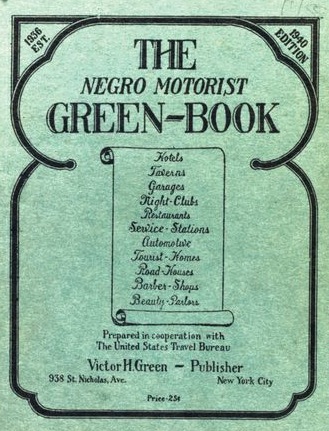
Wow. While it’s a sad reminder that such a book was necessary, I’m thankful that it existed for those who needed it.
posted August 24, 2010 at 2:38 pm
Perhaps there needs to be a new one published for our Hispanic and Muslim brothers and sisters – especially those travelling through Arizona! What a sad commentary on our “history” – if only this kind of prejudice were indeed history!
Thanks for sharing
Andy
posted August 24, 2010 at 3:06 pm
As an African-American, there are still places I won’t go in my own city because of acts of violence perpetrated against African-Americans in the RECENT past. This particular area of the city is known for some of its restaurants and I’ve always thought about what my response would be to friends that would suggest going to this area and how they would react to my reasoning. Fortunately, I’ve not had to deal with it yet.
posted August 24, 2010 at 3:12 pm
I have LGBTQ friends who rely on similar resources in the blogosphere. You can’t be too careful. And frankly, as a straight man who isn’t very macho, I’ve learned the hard way that I need to be cautious about where I go. Looking gay is almost as dangerous as being gay. Not to co-opt a post on race. I’m grieved that there are still too many places where de facto segregation and racism are normative. The comment about our Hispanic and Middle Eastern sisters and brothers is equally sad
posted August 24, 2010 at 3:51 pm
Send a copy to Dr Laura!
posted August 24, 2010 at 4:14 pm
Last evening as it was getting dark, my husband and I were walking back from taking our dog for his evening stroll to the apartment where we’ve been living the last few months. This neighborhood is predominantly black. There was a new truck, an ice cream truck parked in the church parking lot we passed. As we returned an SUV had pulled up next to it, and a man was inside the ice cream truck moving around. We glanced over curiously, and the man immediately came out of the ice cream truck and emphatically said, “that’s my truck!” We were a bit taken aback, but smiled and said, “that’s cool, we just hadn’t seen it here before.” He launched into a lengthy explanation of how he usually parks it here at the church in the summer for the kids, but he was helping the church take down their old air conditioners from the roof, so he hadn’t gotten to it until now. We smiled and agreed it was good for the kids not to have to walk far on the busy roads to get an ice cream, and mentioned that we’d visited the church a couple of weeks previously. He invited us to make sure we go meet the bishop and his wife at the church.
As we walked away, I realized that his primary response was indicative of just how incredibly sensitive and defensive blacks feel daily just for being black. We ourselves had just experienced a gathering where we were the only Christians and could sense that we were subject to intensified criticism, scrutiny and judgment of our choices, and so perhaps we were more in tune to his sense that all white folk default to suspicion of blacks.
This isn’t just an old problem; it’s an ongoing problem given the reactions we experience here. I think one major reason we are so warmly received in this neighborhood is because we respond with the love of Christ to those whom we meet, not with default suspicion or self-protectiveness. We’ve prayed with them, cried with them, spoken of our trials together, and worshiped with them. I needed to be reminded how such a seemingly small gift for us is such a blessing for them. They don’t want to lose touch with us, even though we’re moving closer to my husband’s office this weekend. We feel very humbled by their caring.
posted August 24, 2010 at 4:22 pm
As an African-American, this really provokes sadness and even a tinge of anger in my heart. I also have experienced unnecessary treatment due to the color of my skin. I must say also, there is a certain level of ignorance in trying to equate the LBGQT with African-Americans in regards to issues of discrimination…the two aren’t even remotely close. I long for the day when Jesus returns and governs with righteousness and justice.
posted August 24, 2010 at 4:36 pm
And that is the very era in this country’s history that many people today consider part of the “good ol’ days” that we’re headed away from as a morally-depraved country… *sigh*
posted August 24, 2010 at 5:04 pm
It’s an interesting example of why libertarianism falls apart in the real world. In the ideal world, businesses would not write off a market because the people in it were the ‘wrong’ color. The market would correct their behavior.
In the real world, it turns out that businesses are happy to exclude customers and the market is amoral. Like the rain, profit falls on the just and the unjust alike. Governmental action in the form of law and regulation — simply put, restrictions on freedom — is the only thing that stopped this horrible behavior.
And sometimes that’s not even enough. I grew up in a town where every black was forced to leave in the 1920′s, and those who traveled through after that were told to not let the sun go down on them. Law enforcement was happy to look the other way. Those attitudes were alive and well in the 80s when I left.
I think part of man’s original sin is our need to oppress those who are not like us. It happened 2000 years ago, it happened 50 years ago, and it’s happening today.
posted August 24, 2010 at 7:08 pm
JM @ 8–I agree: I was raised in liberal northern Cal. I can remember my sweet old grandmother lamenting in the late sixties that she didn’t want to stay in motels anymore “because a negro might have slept in the bed.” She was from Boston and would be about 128 today. As a teenager I was shocked at the words and the idea of it. Whenever people tell me how bad my generation has behaved I think about these kinds of things.
posted August 24, 2010 at 7:32 pm
Wow, Scot thanks for posting it, hard to understand the reality of that time in our country. Hope we never head back there again.
posted August 24, 2010 at 8:55 pm
This book is a part of American History and my hope is that it will never be lost for the sake of progress. I am one who believes in reconciliation and I know that peace is possible between black and white Americans–especially among those that know Christ. One of the advantages of the faith tradition of Black America is the sensitivity gained by being a member of an underclass within an oppressive society. This is the common thread of suffering shared with “God’s people”
The ability to relate to those who have suffered hopefully creates a sensitivity towards others on the margins of society. There is also the shared theme of overcoming by God’s grace. This rich tradition of experientially knowing that ‘God is able’ despite the oppression of others can be noted throughout African American history. I don’t mean to convey that the Black American experience is a totally exclusive experience, but it is unique and should be at least understood.
There tends to be a desire to quickly move on past stuff like the “The Negro Motorist Green Book” but I dare not and I appreciate Mr. McKnight’s post.
posted August 24, 2010 at 9:21 pm
In response to this comment below, I disagree entirely that they are not remotely close. They do not have to be. Both are wrong.Ignorant or not, wrong is wrong, and thats that. Discrimination is the same, whether one is black, gay, black and gay, or otherwise. To spend time trying to show how different both are is loosing focus! Lets not invoke what we think the lord will do.
As an African-American, this really provokes sadness and even a tinge of anger in my heart. I also have experienced unnecessary treatment due to the color of my skin. I must say also, there is a certain level of ignorance in trying to equate the LBGQT with African-Americans in regards to issues of discrimination…the two aren’t even remotely close. I long for the day when Jesus returns and governs with righteousness and justice.
Read more: http://blog.beliefnet.com/jesuscreed/2010/08/a-moment-for-reflection_comments.html#ixzz0xZlvCBL4
posted August 24, 2010 at 9:27 pm
Interesting timing.
Just last week I listened to an NPR piece on “Sundown Towns”: Towns where it was implicitly known or explicitly posted that African Americans (and sometimes Jews) should be out of town by sunset. The author had found that literally thousands of such towns existed in the North and the South.
Peace,
Randy G.
posted August 24, 2010 at 9:39 pm
This stuff is still going on — see, for example, the documented cases of rampant racial discrimination by cops on the New Jersey Turnpike. An old law prof of mine, David Rudosky, has handled a number of those types of cases.
posted August 24, 2010 at 11:56 pm
Fish @9
It’s an interesting example of why government falls apart in the real world. In the ideal world, government wouldn’t pass laws prohibiting blacks and whites from voluntarily conducting business with each other, prohibiting interracial marriages, or prohibiting blacks and whites from gathering in the same place. The government would correct its behavior.
In the real world, it turns out that government was happy to pass and enforce laws that did all those things.
“Governmental action in the form of law and regulation — simply put, restrictions on freedom — is the only thing that stopped this horrible behavior…It happened 2000 years ago, it happened 50 years ago, and it’s happening today.”
If it’s still happening today, governmental action must be doing a pretty poor job.
Just a little friendly push back from the libertarian-leaning portion of the readership. We do agree, however, that sin causes us to act in some unbelievably atrocious ways. One thing I find fascinating about the history of race relations in this country is the gamut of roles the Church has played – at times righteously promoting justice, and at others aiding and abetting great evil.
posted August 25, 2010 at 12:23 am
Scot– Sad and utterly amazing. I guess it is one thing to know that such a time existed in our history but to the see the book is a stark reminder of its reality.
posted August 25, 2010 at 12:38 am
Two relatives moved to Chicago this summer and tell me there are neighborhoods white people need to avoid. Is this true? If so, this must be relatively recent and localized to big cities–at least compared to the long-standing discrimination against blacks in much of the country?
posted August 25, 2010 at 1:25 am
It is truly shocking to me the horrible things African Americans have had to go through (and still go through). America has come a long way since the days of slavery and it goes without saying that there is still a lot more that needs to be done in achieving equality. This book still exists today. Maybe not in the printed form, but it is visible nonetheless. It just goes unacknowledged. The United States is still segregated. Think about Hair Salons and Barber Shops for example. Those are the best examples.
While you make an interesting point that we should stop and reflect on this piece of literature, I think the bigger issue we should be analyzing is the racial inequality that still exists today. Religion has nothing to do with it. It’s politics. The sooner we separate religion from politics, the sooner we can start tackling issues like this. God isn’t going to fix this one. We have to.
posted August 25, 2010 at 11:05 am
I have a friend, Dr. David Pilgrim, who is the founder and curator of The Jim Crow Museum of Racist Memorabilia at Ferris State University, Big Rapids, MI. The artifacts are a telling reminder of the ugly injustices of racism and anti-Semitism and anti-women factions.
http://www.ferris.edu/jimcrow/