by Davee Evans
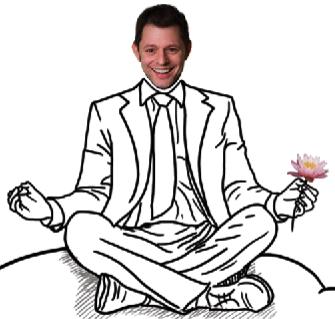
How about a year off? NY designer Stefan Sagmeister does this every seven years. He shuts his design firm, and heads off to work on personal projects for creative renewal. Watch his views on taking time off at the TED conference. Stefan's suggestion is outrageous for the working world, but not news in the spiritual. Retreat of some form seems to be a necessary component of contemplative practice. But how many of us as Western Buddhists can afford more than two weeks off for retreat, much less fifty two?
As Buddhism comes to the West, a major question on my mind is if the emphasis on retreat needs to change or if it is still a crucial component. In a certain sense, the retreat principle is in all forms of meditation. Even a few minutes a day is a kind of mini-retreat; of separating from both our daily, hectic schedule. But can we achieve anything from just an hour a day? For me personally, having day long and weekend long intensive practice sessions are significant experiences. I have no idea how to weigh their value vis-a-vis daily practice, but a day long takes me to a more subtle level.
What do you think? Can Western Buddhists be as successful a contemplative tradition, in the midst of busy lives? Or do you think it's just always been this tough to retreat?

Add to Newsvine
Add to StumbleUpon


In fact retreat, may lead away from enlightenment...if indeed such a direction exists
Sit. Focus on a point in the middle of the room. Focus on the "air" at this spot. It seems sort of to be composed of subtle microscopic 'speckles'...now see the 'clearness' the speckles are floating in. (or the 'space between the speckles') This is the Clear Light. It's not something 'spiritual', it's the light that illuminates your room, your corn flakes. See the clear light that the air is floating on. When you do, this is enlightenment. It is really extremely simple, and very close. It's effortless, yet incredibly difficult. It's sort of like maintaining complete and deep relaxation throughout an orgasm.
Thanks for the link Davee! I've been pondering this very question lately. I took last summer "off" to go on retreat, teach myself digital photography, and be outdoors. It wasn't really time off, it was time "on," and I found it deeply renewing.
Retreat is very much required to asses where we are on the journey to I.
One may follow whatever methodology he/she likes. It surely gives clarity on future approach.
i know a guy who teaches buddhist meditation. he lives in a group house with other buddhists and they all go away to england and italy for a week at a time on retreats. then, they organize these fund raisers at indian restaurants to get others to contribute money so they can get their group house fixed up (electrical wiring, new windows, etc). see, they have to save up their own money to afford the air fare for the retreats and of course none of them has real jobs, dealing with real assholes. they make a part-time living teaching meditation but it won't pay for the house repairs. that's where we lay-buddhists come in. we contribute our hard-earned money in return for good karma so they can live a comfortable existence and still go away to charming temples overseas. as jung said, organized religion is a safe haven for the frightened, lonely, world-wary but eventually you still have to individuate and mature into a whole human being who takes on real responsibilities i.e. goes to work and deals with real assholes in the real world. i meditate and work on myself to avoid the shenpa that my co-assholes assault me with everyday in the workplace. and i've never been on a retreat in my life.
Post a Comment
By submitting these comments, I agree to the beliefnet.com terms of service, rules of conduct and privacy policy (the "agreements"). I understand and agree that any content I post is licensed to beliefnet.com and may be used by beliefnet.com in accordance with the agreements.