On the Doorposts of My House

On the Doorposts of My House

Minyan

posted by mkosanovich

So I’m having this conversation on Facebook with a very dear friend. It started with his news that he no longer counted as a Jew for the purposes of a minyan.

For those who don’t know, a minyan is a group of ten Jews who have gathered for the purposes of prayer. Issues surrounding who is eligible to be counted in a minyan are complicated. Traditionally, only men over the age of 13 count. Traditionally, only men who are Jewish count – if you are in the process of conversion, you are not eligible. These rules are opening up in more liberal strains of Judaism to allow for all sorts of other people to be included in a minyan – women, transgender people, and gender queer Jews are all finding their ways into minyans.

So, back to the conversation. I am talking with my friend Stuart who is sad that he no longer counts for a minyan. He has converted to Christianity and is happy as a Christian. But it is a sad day when something that was so important no longer applies. Becoming eligible for a minyan marks you as an adult Jew responsible to the community. To lose that identity marker must be hard.

My first response to Stuart was that I would always count him in a minyan if I was praying.

That was about three days ago and I am still thinking about it. I am no longer so clear on what my answer would be. I love Stuart. I would pray with Stuart with absolutely no problems and count it as a sincerely spiritual experience. I believe that we are all straining towards the same G…d, and the value of interfaith prayer is incalculable.

But at the same time, there is a reason I am a Jew and not a Christian, or a Muslim, or a person who is spiritual but not religiously affiliated. We pray in specific ways. We perform our rites and rituals in specific ways. There are things that make us Jews and not something else. And there are reasons behind why we do the things in the ways we do them.

How do we understand what makes our religious identity? How do we decide which traditions should be maintained and which traditions can be shifted?

I don’t have the answer to any of this, just as I no longer have an answer to whether I would count Stuart in a minyan. I’m not sure if this is a line that must be held, a tradition that marks us as Jews who pray together. There is something about being in a room with nine other Jews, praying towards the same goal, praying in the same language, praying at the same time. Stuart could be there; he could speak the language. He knows the forms. He could go through the prayers, and he would (I’m sure) mean them deeply. But at the same time, in many ways, he is not a Jew anymore.

Does it matter? Does it change the prayer if he counts in a minyan and isn’t Jewish? Does it matter if there is a minyan?

I don’t know…

Dear Mitt Romney

posted by mkosanovich

Dear Mitt Romney,

I’ve heard you are having money troubles. After all, if the best thing you can think of to do with 10,000 dollars is make a bet with someone on television, then clearly you aren’t getting creative with ways to invest your money. I thought perhaps you could use a little help thinking of things, so I am making a list for you. I’ve stuck with mostly things that could happen in this country (though I have a ton that you could do overseas as well), and I’ve tried to cover a bunch of bases for you, so surely something on my list will appeal to you. Please let me know if you find that any of them move you.

1) Buy textbooks for a school. Any school. I’m not picky. Students are going home to study without books. Students are sharing in classrooms. I cannot begin to guess how many textbooks 10,000 dollars would buy, but I bet it would let some of our youth actually choose not to do their homework, instead of not being able to do it.

2) Pay someone’s medical bills. Thousands of us are uninsured and facing crippling debt just to pay our medical bills. This year, for Christmas, give one of us a break and pay off our bills. Then maybe we can sit down and talk about what healthcare reform platform you are running on.

3) Feed someone. Feed a lot of someones. 10,000 dollars buys a lot of fruit and veggies. Support a food bank. Give a gift to a homeless shelter. Feed some of the children who are living on our streets, starving. Imagine, a huge outdoor feast in central park where all the homeless and starving of NYC could come and have a gigantic Christmas dinner. It would be amazing!

4) Support a church that would otherwise have to close. America loses 3500-4000 churches a year. Now I’m sure that some of this is because of lack of attendance, but some of these churches are closing their doors because they cannot afford to operate. They are small churches in small communities. They are churches that are desperately needed for their after-school care, their support of community faith, their shelters, and their education services. They are needed because communities need churches. Find one and allow them to stay open. I’m pretty sure it’s something Jesus would like.

5) Donate to a women’s shelter. Women are running for their lives in this country. They are hiding from spouses. They are leaving everything they have and living in fear on a daily basis. They are starving in shelters. They are terrified for their children. DO something. Build a shelter. Support the shelters that already exist. Save a woman’s life. Show her that there is an option for a life without fear.

6) Pay the adoption fees for a family desperately longing for a child. There are families desperately hoping to bring their own child home for the holidays. They have been waiting and struggling and praying for a chance to make their families whole. At a time of year that is supposed to be all about family, use that 10,000 to make a family whole for the holidays.

7) Open a no-kill animal shelter. Rescue some of the thousands of animals that are being tortured, beaten, or neglected this holiday season. Our friendship with animals is a gift from G…d and we should cherish it. Instead, we abuse and neglect them, leaving them on the streets to starve. Open a shelter that would allow this to end. 10,000 buys a lot of dog food.

8 ) Promote sex education. Help provide condoms and birth control. If we really want to move beyond the discussion about pro-life or pro-choice, then the way to do this is to create systems in which abortion does not seem like the only option. Perhaps if we could educate our youth, give them the tools they need to be safe, and create support systems for when mistakes do happen, we could create a world in which pro-life truly meant pro-life – instead of being a political term that is thrown around. Pro-life could mean all life, and pro-choice would include options beyond just abortion. See #6. Families are longing for children. Let’s make a world where instead of abortion being the easiest option, adoption is.

9) Rebuild a house. They are everywhere – the houses that people have left, the houses that nature has damaged. People are living in houses with blue tarp roofs because they cannot afford to get them fixed. People are homeless while houses fall into disrepair. Why not put the money you were going to bet to good use and give a family the gift of a house for Christmas? Nothing says love like a roof over your head where there used to be a tarp.

I’m sure that one of the above nine options will move you. I can’t wait to see what you decide to do.


Sincerely,

Malachi Kosanovich

One of the 99%

Prayers for healing

posted by mkosanovich

One of the strangest parts of my job is the completely transitory nature of the relationships I build. Sure, every bar has it’s regulars. They keep the bar going. But for the most part, people come in and out. You see them once or twice, while they are in town, and then they disappear. Because of where the bar I work at is located, these transitory relationships are both fleeting and intensely personal in heartbreakingly strange ways.

See, my bar is right next to both a major hospital and a veteran’s center, which specializes in mental healthcare. The people who come in come in devastated. They are waiting for bad news. They have already received bad news and are at the hospital for treatment. They are in town to watch loved ones die, or because their children are in the cancer ward, or because they gave months or days or years of service and it left them broken.

They come into the bar for the hours, days or weeks during which they are being treated or waiting for treatment. I see them through the worst parts of their treatment, fear, and depression. I rarely see them afterwards. I never get to find out if they are ok. I never know if the spouse/child/parent survived surgery. I never know if the cancer/heart disease/mental illness is made better.

And I’m never sure what to do. I rarely know their names. I am not a part of their lives. All I know is why they are in my bar. What I hear is:

“I’m waiting for test results on my wife’s cancer.”

“My daughter has been in the ICU since she was born.”

“I haven’t slept without nightmares since I came back.”

It breaks my heart.

But in other, surprising ways, I think it has brought me closer to G…d. I have found that I pray more – for these nameless people who come in and out of my bar. They are the people constantly in my thoughts. They are the people for whom I pray in the evening. And I am learning to let go of asking for an answer to the prayers.

When I first started at the bar, I didn’t ask people why they were there. I knew that I wasn’t going to find out if they were healed, and I couldn’t stand the constant questions. I couldn’t stand the wondering. Now, I ask. I listen. I pray. I know that I won’t know if they are healed. I won’t know if they are cured. I won’t know what happens to their loved ones. I no longer think I need to know. My prayers shouldn’t be about the answers. They should be about the people, about letting G…d know that I care for them. The need for answers is a selfish need, and not the point of the prayer.

A reading list for the rest of us

posted by mkosanovich

Recently, the Huffington Post ran an article on the 18 texts every Jew should read. While it was a fascinating article and filled with wonderful texts, it had a few flaws that should not be overlooked. Most of the authors were men. Almost all of the books are religious in nature. Few of the books mention what it is like to be a Jew of a different flavor – African American, atheist, or LGBT, for example. So… here it is, a reading list for the rest of us.


Yentl’s Revenge: The Next Wave of Jewish Feminism – Danya Ruttenberg and Susannah Heschel

The 20 authors who wrote for Yentl’s Revenge bring an enormous range of voices to the table. The book covers a wide array of topics (such as Jewish identity, witchcraft, transgender issues, and finding a good Jewish boy) with passion, warmth, and deep insight. Curl up with this book and explore Jewish punk, Jewish body image, circumcision, faith… there is an essay in here for any occasion or interest. Whether you agree with the authors or not, this book will make you think … which should be the point of feminism, after all.

Everything Is God: The Radical Path of Nondual Judaism – Jay Michaelson

Mainstream, traditional views of God often posit a separation between Divinity and man. God is a separate entity, far apart from the world as we know it. Michaelson’s book follows in the footsteps of Kabbalists and Hasidim in challenging this view. Instead, Michaelson’s book shows us a God who is present in all of us. Indeed, everything and everyone is a manifestation of the Divine. Pulling on sources from Judaism, Buddhism, Hinduism, and a host of other traditions, Everything is God not only explores nondual Judaism but shows how it is lived in practice.

Torah Queeries: Weekly Commentaries on the Hebrew Bible – Gregg Drinkwater, Joshua Lesser, David Shneer and Judith Plaskow

Every year we read the first 5 books. It’s a cycle that is near and dear to the hearts of a lot of Jews. One of the points of this reading is to see the passages in new and different ways. Torah Queeries will help you to do just that. Though the commentaries found in its pages are written from a decidedly LGBTQ bent, this book is one that everyone should own. It will open up the Torah readings for every reader, no matter who that reader might be.

 Balancing on the Mechitza: Transgender in Jewish Community – Noach Dzmura

There’s really not enough good I can say about this book. Dzmura has brought together voices from across the Jewish spectrum to shed light on the realities of being a gender-nonconforming Jew. This book can, and should, change the face of Judaism – it is not only a treat for gender-nonconforming Jews who are searching for voices that mirror their own, but also an excellent resource for all Jews who are struggling to be open, supportive, and understanding in a deep and honest way. This bok is a joy.

 New Jewish Feminism: Probing the Past, Forging the Future – Elyse Goldstein and Anita Diamant

While not quite (at least on the surface) as radical as Yentl’s Revenge, New Jewish Feminism is a fascinating exploration of what it means to be a Jewish woman today, how Jewish issues have been affected by feminism and Jewish women, and what the next steps are for Jewish women as feminist Judaism moves forward.

 The Color of Water – James McBride

I know – it’s not strictly a Jewish book. I still believe it belongs on the list. McBride’s mother, a Polish Orthodox Jew (and convert to Christianity) is the focus of this moving tribute, which looks at issues of mixed-race marriage and religion through very personal lenses. This is a book filled with love and care for McBride’s mother, while still pushing people to think about issues of race, religion, and identity as they all converge in one messy mixed space.

 Black, Jewish, and Interracial : It’s Not the Color of Your Skin, but the Race of Your Kin and Other Myths of Identity – Katya Gibel Azoulay

Azoulay, the child of a Jewish mother and a Jamaican father, takes on issues of identity and personhood in this book which explores her own experiences as a child. This book blends not only historical and theoretical perspectives on issues of identity, but also carries the reader through the deeply personal issues about ientity that the author had to negotiate as an interracial child. Don’t be fooled though – this is no light memoir. Azoulay’s book is deeply embedded in philosophy and politics as she explores both Black and Jewish experiences in America.

Jews without Judaism: Conversations with an Unconventional Rabbi – Daniel Friedman

Friedman begins this book with the contention that “it may fairly be said that religion plays virtually no part in the lives of most American Jews”. This book, written by a longtime rabbi, then begins to explore this idea, through as series of fictional conversations (many of them made up from pieces of real conversations). Friedman explores what Judaism is without God, how to deal with morality without God, and what constitutes Jewish identity. This is an important book that deals with important issues – for both religious and non-religious Jews alike.

God-Optional Judaism: Alternatives for Cultural Jews Who Love Their History, Heritage, and Community – Judith Seid

Seid explores, in God-Optional Judaism, ways in which non-theistic Jews can connect with their culture, heritage, liturgies, and music in authentic but non-theistic ways. She is creative and passionate about he ways in which she interacts with Jewish prayer and ritual, providing suggestions for holiday celebrations, and revealing with care the ways in which Judaism embraces diversity in all forms of celebration. The book is filled with practical suggestions and resources, making it a valuable addition to the libraries of both secular and religious Jews.

In Every Tongue: The Racial and Ethnic Diversity of the Jewish People – Diane Tobin, Gary A. Tobin and Scott Rubin

I have to admit that I haven’t read this one yet. It’s next on my reading list, and so I am taking the description straight from Amazon.com. Check it out. It looks fascinating.

Jews have always resembled the peoples among whom they live, whether in Africa, Asia, or Europe. Why should American Jews be an exception? In a land where racial and ethnic boundaries are becoming increasingly blurred, the American Jewish community is also shifting. In Every Tongue is both a groundbreaking look at the changing faces of the Jewish people and an examination of the timelessness of those changes. Ranging from distinct communities of African American Jews and adopted children of color in white Jewish families to the growing number of religious seekers of all races who hope to find a home in Judaism, In Every Tongue explores the origins, traditions, challenges, and joys of diverse Jews in America. This book explodes the myth of a single authentic Judaism and shines a bright light on the thousands of ethnically and racially diverse Jews in the United States who live full and rich Jewish lives. It is impossible to read In Every Tongue without coming away with a deeper respect for and a broader understanding of the Jewish people today. In a time when Jewish community leaders decry the shrinking of the Jewish population, In Every Tongue imagines a vibrant and daring future for the Jewish people: becoming who they have always been.”

 Choosing a Jewish Life: A Handbook for People Converting to Judaism and for Their Family and Friends – Anita Diamant

Anita Diamant, married to a convert herself, writes in this book a guide for anyone who knows anyone thinking of conversion to Judaism. From choosing a Hebrew name to finding a rabbi, from celebrating the holidays to visiting the mikvah – Choosing a Jewish Life walks converts and their families through all of the issues that they will address during the process. While fundamentally a handbook, Diamant has managed to fill this book with spirituality, faith, humor, and an ability to anticipate the questions that readers might have.

Queer Theory and the Jewish Question – Daniel Boyarin, Daniel Itzkovitz and Ann Pellegrin

Oh, I love love love this book, which explores the relationships between Jewishness and queerness, between anti-semitism and homophobia, and between queer theory and Jewish identity theory. Certainly one of the more weighty books on this list, it is worth the read as the essays interact with such theorists ad Daniel Boyarin, Judith Butler, and Eve Sedgwick.

Like Bread on the Seder Plate: Jewish Lesbians and the Transformation of Tradition – Rebecca Alpert

Not enough can be said to urge you to read this book. Alpert, one of the first women to be ordained as a rabbi, has created a space for lesbians to feel welcome and accepted in Jewish life and tradition. A blend of personal reflection and scholarly insight gives this book accessability and authority, and makes it an invaluable resource for anyone interested in lesbian issues, queer theory, or Jewish life.


Previous Posts

Minyan
So I'm having this conversation on Facebook with a very dear friend. It started with his news that he no longer counted as a Jew for the purposes of a minyan. For those who don't know, a minyan is a group of ten Jews who have gathered for the purposes of prayer. Issues surrounding who is eligible

posted 3:54:03am Dec. 18, 2011 | read full post »

Dear Mitt Romney
Dear Mitt Romney, I’ve heard you are having money troubles. After all, if the best thing you can think of to do with 10,000 dollars is make a bet with someone on television, then clearly you aren’t getting creative with ways to invest your money. I thought perhaps you could use a little help

posted 3:57:35pm Dec. 12, 2011 | read full post »

Prayers for healing
One of the strangest parts of my job is the completely transitory nature of the relationships I build. Sure, every bar has it's regulars. They keep the bar going. But for the most part, people come in and out. You see them once or twice, while they are in town, and then they disappear. Because of wh

posted 9:00:00pm Nov. 30, 2011 | read full post »

A reading list for the rest of us
Recently, the Huffington Post ran an article on the 18 texts every Jew should read. While it was a fascinating article and filled with wonderful texts, it had a few flaws that should not be overlooked. Most of the authors were men. Almost all of the books are religious in nature. Few of the books me

posted 9:52:49pm Nov. 02, 2011 | read full post »

Breaking up is hard to do
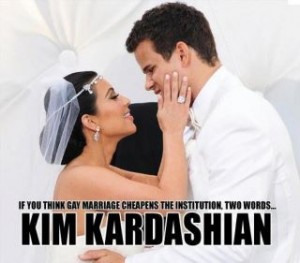
I will admit it readily. I have no idea who Kim Kardashian is. I have no idea to whom she is married. I don't really care that I don't know. Maybe she made a silly marriage. Maybe everyone around them knew that it wasn't going to last. But I find it hard to believe that Kim or her future ex went

posted 2:40:05am Nov. 02, 2011 | read full post »


About Beliefnet

Our mission is to help people like you find, and walk, a spiritual path that will bring comfort, hope, clarity, strength, and happiness. More about Beliefnet.

Help

Media Kit

Subscribe

Legal

Copyright © Beliefnet, Inc. and/or its licensors. All rights reserved. Use of this site is subject to Terms of Service and to our Privacy Policy. Constructed by Beliefnet.

Advertisement

Report as Inappropriate

You are reporting this content because it violates the Terms of Service.

All reported content is logged for investigation.