Pontifications

Galileo gets his due...

Friday January 30, 2009

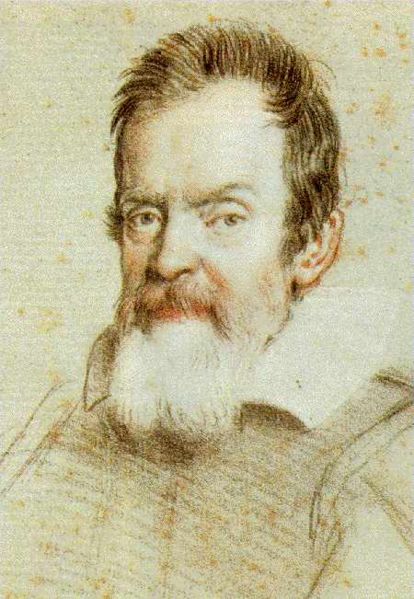
Galileo.jpgPope John Paul II had already "rehabilitated" the astonomer, condemned by the Inquisition in 1633. But as we approach his 450th birthday on Feb. 15, the Vatican is pulling out the stops for Galileo Galilei, the Italian scientist who proved that the earth goes 'round the sun--not the other way around.

From CNS:

Galileo deserves honor, gratitude of Catholic Church, says Vatican

By Carol Glatz
Catholic News Service

VATICAN CITY (CNS) -- Galileo Galilei, who had been condemned by the Catholic Church's Holy Office, was a genius and a man of faith who deserves the appreciation and gratitude of the church, the Vatican said.

The 17th-century astronomer was "a believer who tried, in the context of his time, to reconcile the results of his scientific research with the tenets of the Christian faith," said a written statement released by the Vatican Jan. 29.

"For this, Galileo deserves all our appreciation and our gratitude," it said.

Galileo was the first scientist to study the cosmos with a telescope, which opened up a whole new frontier for discovery and forced humanity "to reread the book of nature in a whole new light," it said.

"Therefore, the church wishes to honor the figure of Galileo -- innovative genius and son of the church," it said.

The statement was released during a Vatican press conference detailing a number of initiatives sponsored by Vatican offices during this year's International Year of Astronomy.

Not a moment too soon, indeed. But before you jump on the anti-Vatican bandwagon, it's important to recall that scientific inquiry was, until a couple centuries ago, largely due to church institutions and researchers, and that today the Catholic Church is a bulwark against "scientism" on one side and fundamentalist "literalism" on the other.

In Catholicism, faith and reason, science and meaning, can coexist, as they do, and must, in human beings--not always easily, but at least honestly. And the church does "change" as facts and faith warrant.

Or, at Galileo might have put it, "Eppur, si muove..."

Advertisement
Comments
Tom
January 31, 2009 5:57 PM

Most don't seem to know what originated the source of friction between Galileo and the Ecclesiastical authorities to begin with. This audio link explains it better than I ever could.

http://www.ewtn.com/vondemand/audio/resolve.asp?audiofile=cathbuildciv_04.mp3

Timothy
January 31, 2009 7:36 PM
http://christian-apologetics-society.blogspot.com/

>JAB: "Isn't it interesting how long it takes the church to come around?"

Yep, it a great thing, as there was no scientific means to prove Galileo's theories right or wrong until after the American Civil War, when science "caught up." The Church showed great integrity by not making any premature announcement. Good thing to as we also know, while part of Galileo's theories are true, science has also disproven some parts as well. The Church would have been in error to wholeheartedly approve Galileo's work.

http://www.catholic.com/library/galileo_controversy.asp

http://www.catholic.com/thisrock/2003/0305sbs.asp

Its a very good thing that the Church does not make snap decisions in favor of what seems to be true, but abides it time to decide what actually is true. Would that other Christian sects had that integrity and patience.

God bless... +Timothy

Gerard Nadal
February 1, 2009 12:11 PM

Tom,

I really enjoy reading your posts.

Great audio by Thomas E. Woods. I also enjoyed his book, How The Catholic Church Built Western Civilization. Far from a papal hagiography, he gives credit where credit is due, and pulls no punches.

Galileo's has always made for great Protestant agitprop against Rome, always neglecting that Rome built the very civilization out of which Protestantism grew, and as Woods says, not always perfectly or prudently.

Now that Rome, under Pope John Paul The Great's leadership has rectified our injustices toward Galileo and our Jewish Brethren, as well as having apologized to our Protestant and Orthodox brethren, I wonder if this is where ecumenical dialogue will end? Will ecumenical dialogue continue to consist of Rome apologizing unilaterally? Or will the rest of the world follow his lead and admit their humanity as well? That really is the subtext to the whole Galileo story.

Tom
February 1, 2009 2:41 PM

Gerard,

Thanks for the compliment. Enjoy reading your posts as well.

Part of the problem as I see it is that Protestants (and perhaps several factions of the Jewish community though unrelated to ecumenism) tend to question whether the motives of the Catholic Church are genuine. For one, they see the Church's claim to have the one full deposit of Christian faith to be an arrogant one. Protestantism is in a sense largely based on relativism (Sola Scriptura) at least in retrospect. So many different groups (30 some odd thousand and counting) have splintered as a result of this philosophy because they feared Church hierarchy gaining a monopoly more than Dogmatic errancy.

Protestant communities also felt slighted when they found out they were not "churches", failing to understand the ancient definition of the term. The Congregation of the Doctrine of Faith explained:

"According to Catholic doctrine, these Communities do not enjoy apostolic succession in the sacrament of Orders, and are, therefore, deprived of a constitutive element of the Church. These ecclesial Communities which, specifically because of the absence of the sacramental priesthood, have not preserved the genuine and integral substance of the Eucharistic Mystery[19] cannot, according to Catholic doctrine, be called “Churches” in the proper sense[20]."

If you ask me, the secular press (not necessarily you, David :-) have done more to slow the wheels of progress to a grinding halt than the Catholic Church ever could. They isolate certain phrases in the Pope's speeches out of context, feed them to the ill-informed masses, then pandemonium ensues.

Also, if more of us Catholics were ready to 'render an account' then more people outside the Church might come to a deeper understanding of what it means to be Catholic. I still have faith that we'll be able to turn the corner though.

God bless.

Charles Cosimano
February 1, 2009 6:00 PM

To quote Jacob Bronowski, "In the year that Galileo died, Isaac Newton was born, and by the time he was through it no longer mattered what any Pope thought about anything."

Read All Comments

Post a Comment

By submitting these comments, I agree to the beliefnet.com terms of service, rules of conduct and privacy policy (the "agreements"). I understand and agree that any content I post is licensed to beliefnet.com and may be used by beliefnet.com in accordance with the agreements.


Please type the text you see in the box below to verify your post and help us prevent spam. You have a limited time to type - you may wish to compose your comment in a separate document and paste it here upon completion.

Type the characters you see in the picture above.

Advertisement

About Pontifications

This blog is no longer updated and is closed for comments. We welcome your comments about Catholicism in our Catholic forums.

David Gibson is an award-winning religion writer who specializes in writing about the Catholic Church, which he joined as a convert at the age of 30. He is the author The Rule of Benedict: Pope Benedict XVI and His Battle with the Modern World. He also wrote The Coming Catholic Church: How the Faithful are Shaping a New American Catholicism. He has written about Catholicism for leading newspapers and magazines, including the New York Times, Newsweek, The Wall Street Journal, New York magazine, Boston magazine, Fortune, Commonweal, and America. Gibson worked in Rome for Vatican Radio for several years and traveled frequently with Pope John Paul II. He later covered religion for The Star-Ledger of New Jersey. He has co-written several recent documentaries on Christianity for CNN. For further information check out his website at dgibson.com.

Search This Blog

David's Books:

book_rule.jpg

buybook.gif
  book_coming.jpg

buybook.gif

Advertisement

Advertisement


About Beliefnet

Our mission is to help people like you find, and walk, a spiritual path that will bring comfort, hope, clarity, strength, and happiness. More about Beliefnet.

Legal

Copyright © Beliefnet, Inc. and/or its licensors. All rights reserved. Use of this site is subject to Terms of Service and to our Privacy Policy. Constructed by Beliefnet.

Advertisement

Report as Inappropriate

You are reporting this content because it violates the Terms of Service.

All reported content is logged for investigation.