The following is cross-posted at On Faith.
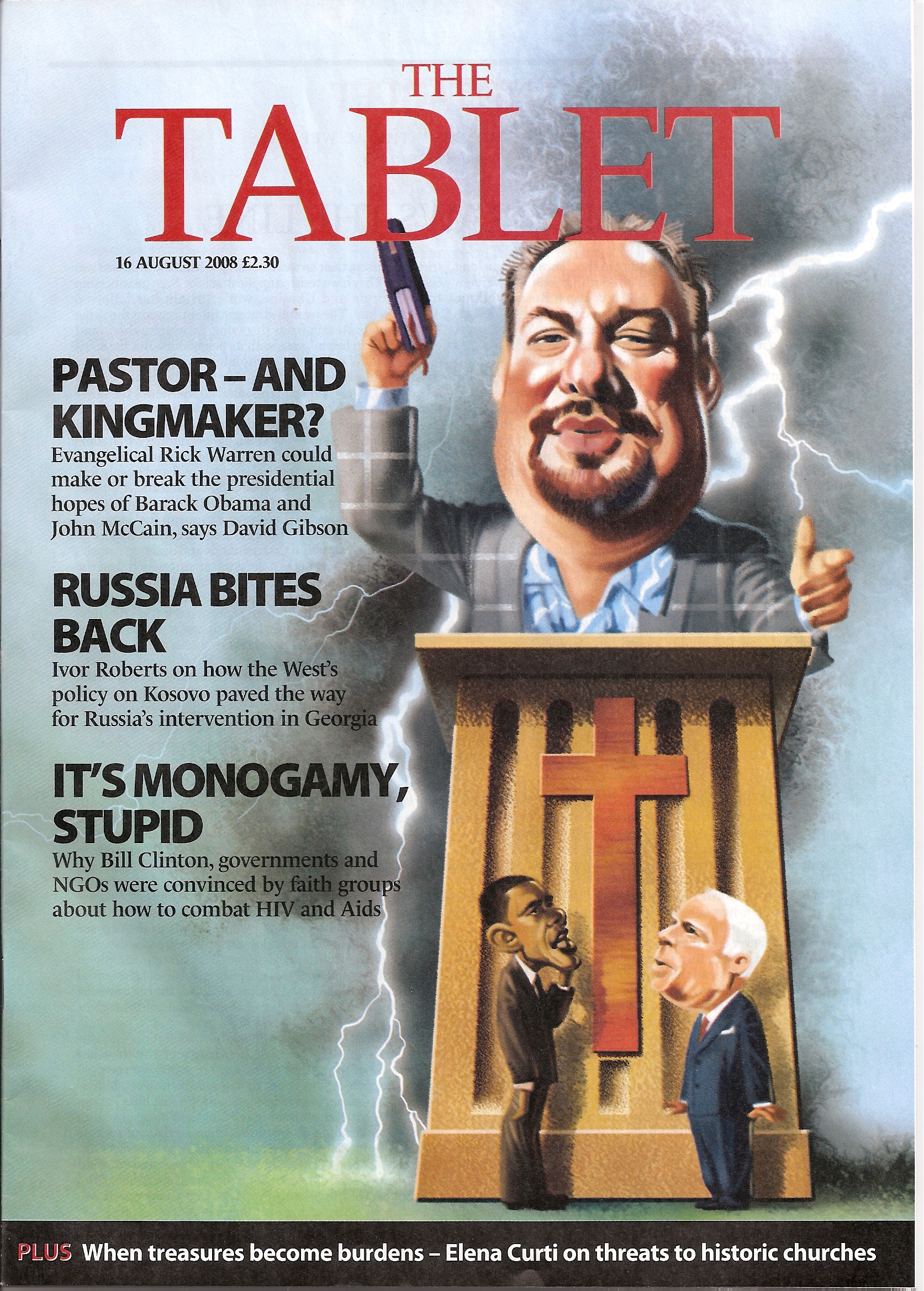
I approached Rick Warren’s Saddleback Civil Forum with much anticipation, but without a clear idea of how he would handle the sensitive issues at the intersection of religion and politics. I believe Pastor Warren set an example of civility that I hope others will follow, but at the same time some of his questions crossed a line that makes this election seem as if we are electing a pastor-in-chief rather than a commander-in-chief.
Pastor Warren’s opening statement, if not his questions, reflected precisely the thought of the founders of our nation and explicitly conveyed the spirit of their intent in the religious liberty clauses of the Constitution. Preventing institutional entanglements between religion and politics or the institutional subservience of one to the other is a necessity that differs dramatically from personal perspectives on politics and politicians influenced by an individual’s faith or lack of faith. From my point of view, the forum could not have started with a more important statement.
However, as the forum continued, primal distinctions between faith and politics became blurred and, in some instances, were erased. A question about a candidate’s commitment to Jesus seems of little relevance to a religiously pluralistic nation made strong by a secular government that appreciates religion but gives no preference to religion over non-religion. For the most part, I found Pastor Warren’s questions creative and helpful and his attitude a refreshing encouragement of all that is civil. However, his inquiry about personal faith and his citations from the Hebrew and Christian Scriptures well could have left the wrong impression. Many people in this nation do not turn to those scriptures for wisdom or to faith for guidance. Questions essential in a church are not particularly helpful in a conversation a church sponsors to help educate diverse voters in the nation.
In response to Pastor Warren’s questions on religion, both John McCain and Barack Obama seemed compelled to offer confessions of faith as a credential for their attractiveness as a candidate for the White House. But, that should not be the case. There is no religious test for public office according to our Constitution and we have no business trying to establish what the Constitution forbids.
As I said in email I sent to the members of the Interfaith Alliance: “After watching the Saddleback Forum on Saturday evening, I did not see a clear winner but I did see a clear loser – it was people like us. While I appreciate Pastor Rick Warren’s civility, I believe questions like: ‘What does it mean to trust in Christ?’ have no place in a political forum.”
The format on Saturday night was good as were many of the questions, especially those related to the Supreme Court, for example, but the strong religious foundation of the forum and the heavy religious slant obvious in its inquiries sent the wrong message about the rule of faith in the crucial decisions that must be made about our national leaders. But, then, the forum was held in a church, a fact, which, in itself, raises some questions and presents some difficulties when you really think about it.
 Read Previous Post