I’ve just returned from Kenya and this post in the New York Times has particular significance to me. As a non-profit leader, I’m constantly asking myself if what we are doing as an organization is truly helping the people we seek to serve. Or, are some of our methods more about an experience we receive (missions tourism), instead of initiative that help release people from poverty. Thanks to my buddy, Chris Marshall, for the heads up on the article. The author, Kennedy Odede, lived in Kibera slum in Nairobi for 23 years. Take a look at things from his perspective: 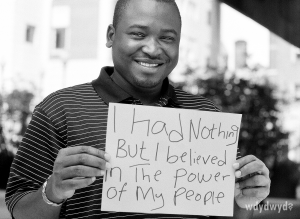
Slumdog Tourism
SLUM tourism has a long history — during the late 1800s, lines of wealthy New Yorkers snaked along the Bowery and through the Lower East Side to see “how the other half lives.”
But with urban populations in the developing world expanding rapidly, the opportunity and demand to observe poverty firsthand have never been greater. The hot spots are Rio de Janeiro, Mumbai — thanks to “Slumdog Millionaire,” the film that started a thousand tours — and my home, Kibera, a Nairobi slum that is perhaps the largest in Africa.
Slum tourism has its advocates, who say it promotes social awareness. And it’s good money, which helps the local economy.
But it’s not worth it. Slum tourism turns poverty into entertainment, something that can be momentarily experienced and then escaped from. People think they’ve really “seen” something — and then go back to their lives and leave me, my family and my community right where we were before.
I was 16 when I first saw a slum tour. I was outside my 100-square-foot house washing dishes, looking at the utensils with longing because I hadn’t eaten in two days. Suddenly a white woman was taking my picture. I felt like a tiger in a cage. Before I could say anything, she had moved on.
When I was 18, I founded an organization that provides education, health and economic services for Kibera residents. A documentary filmmaker from Greece was interviewing me about my work. As we made our way through the streets, we passed an old man defecating in public. The woman took out her video camera and said to her assistant, “Oh, look at that.”
For a moment I saw my home through her eyes: feces, rats, starvation, houses so close together that no one can breathe. I realized I didn’t want her to see it, didn’t want to give her the opportunity to judge my community for its poverty — a condition that few tourists, no matter how well intentioned, could ever understand.
Other Kibera residents have taken a different path. A former schoolmate of mine started a tourism business. I once saw him take a group into the home of a young woman giving birth. They stood and watched as she screamed. Eventually the group continued on its tour, cameras loaded with images of a woman in pain. What did they learn? And did the woman gain anything from the experience?
To be fair, many foreigners come to the slums wanting to understand poverty, and they leave with what they believe is a better grasp of our desperately poor conditions. The expectation, among the visitors and the tour organizers, is that the experience may lead the tourists to action once they get home.
But it’s just as likely that a tour will come to nothing. After all, looking at conditions like those in Kibera is overwhelming, and I imagine many visitors think that merely bearing witness to such poverty is enough.
Nor do the visitors really interact with us. Aside from the occasional comment, there is no dialogue established, no conversation begun. Slum tourism is a one-way street: They get photos; we lose a piece of our dignity.
Slums will not go away because a few dozen Americans or Europeans spent a morning walking around them. There are solutions to our problems — but they won’t come about through tours.
 Read Previous Post