Science and the Sacred

Science and the Sacred

Does Science Have Room For Miracles?

posted by The BioLogos Foundation | 10:12am Saturday June 6, 2009

image-question11-large.jpg

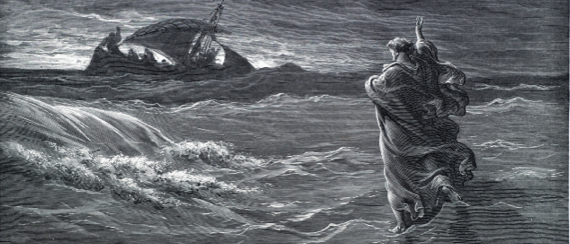
If we accept a scientific view of the world in which fixed physical laws hold true, how can we believe in miracles?  After all, miracles are a suspension or interruption of these laws by God.  For example, is there a scientific way to explain the parting of the Red Sea?  If so, does it cease to be a miracle?

Francis engages the question in an interview with Dr. Robert Lawrence Kuhn of Closer to Truth.  He cautions against overuse of the word “miracle.”  For example, while beautiful and perhaps inspiring, the blooming of a flower is not miraculous, as a scientist can explain the precise genes and chemicals that cause the flower to bloom.  However, Francis reminds us that while the prior of a true miracle — in which the physical laws really are suspended — is very, very low, it is not zero.

Ultimately, Francis asks three questions.  “Do you believe in God?”  “Do you believe in a God who is at least in part outside of nature?”  “Do you believe in a God who is still active in modern times?”  If the answers are yes, miracles are only a short jump away.

The full interview can be found on Closer to Truth’s website, along with a plethora of other interesting and insightful videos.  For more on BioLogos and miracles, be sure to read Question 11.


Previous Posts

We're Moving
Science & the Sacred is moving to our new home on The BioLogos Foundation's Web site. Be sure to visit and bookmark our new location to stay up to date with the latest blogs from Karl Giberson, Darrel Falk, Pete Enns, and our various guests in the science-religion dialogue. We're inaugurating ou

posted 8:00:00am Dec. 11, 2009 | read full post »

Shiny Scales, Silvery Skins, and Evolution
  Source: Physorg.comIridescence -- a key component of certain makeup, paints, coatings of mirrors and lenses -- is also an important feature in the natural world. Both fish and spiders make use of periodic photonic systems, which scatter or reflect the light that passes against their scales or

posted 8:00:00am Dec. 09, 2009 | read full post »

A Stellar Advent Calendar
Looking for a unique way to mark the days of the Advent season? The Web site Boston.com offers an Advent calendar composed of images from the Hubble Telescope, both old and new. Each day, from now until the celebration of the Nativity of Christ, the calendar will offer a beautiful image from the hea

posted 8:00:00am Dec. 09, 2009 | read full post »

Belief, Guidance, and Evolution
Recently BioLogos' Karl Giberson was interviewed by Marcio Campos for the Brazilian newspaper Gazeta do Povo's Tubo De Ensaio (i.e. "Test tube") section. What follows is a translated transcript of that interview, which we will be posting in three installments. Here is the first. Campos: Starting o

posted 8:00:00am Dec. 08, 2009 | read full post »

Let's Come at this From a Different Angle
Every Friday, "Science and the Sacred" features an essay from a guest voice in the science and religion dialogue. This week's guest entry was written by Peter Enns. Enns is an evangelical Christian scholar and author of several books and commentaries, including the popular Inspiration and Incarnatio

posted 8:00:00am Dec. 04, 2009 | read full post »

Advertisement
Comments read comments(6)
post a comment
Your Name

posted June 6, 2009 at 3:02 pm


In life there are not only sciences, there are also the arts and the religions. If sciences don’t accept this, they are not sciences.
Einstein: “Religion without science is blindness; sciences without religion is shear paralysis.”
Askin Ozcan
Author of “SMALL MIRACLES” – ISBN 1598001000 (Outskirts Press)


report abuse
 

Albert the Abstainer

posted June 6, 2009 at 4:02 pm


If it leaves physical evidence, science will observe it, and try to model it. If no physical evidence exists which can be properly validated and verified, expect science to reserve opinion at best. If physical evidence exists but the event is unique, expect the science community to be uncomfortable and doubtful due to the non-repeatability of the event. If miracles that leave physical evidence become common, expect a lot of work to be done to research these events.
My own expectation is that science will not bow to a “God” which cannot demonstrate itself in a fashion which would enable the scientific method to be used.
Do miracles occur? Psychologically yes, physically no, in my opinion.


report abuse
 

Jordan Dillow

posted June 8, 2009 at 6:36 pm


When a body is sick and a medical doctor can confirm the sickness, if there is a miracle and the person is healed, the same medical doctor should be able to confirm the change, seeing as it is physical and quantifiable. However, since all things, including science, are created by and subject to God, the creator of miracles, then subsequently miracles are confirmable but not limited by science. If they are beyond human understanding, we can be sure that God has purposed it that way. There are more events and global happenings that science cannot explain, which are not considered miracles than those which are. God is not limited by science and neither are His works. Examples of miracles confirmed by science: http://scoan.org/healings_cancer.htm.


report abuse
 

Albert the Abstainer

posted June 9, 2009 at 10:57 pm


The day I see an amputated limb restored by faith and prayer is the day I accept that miracles occur.


report abuse
 

Your Name

posted June 12, 2009 at 1:39 pm


1- All research science makes, is being made in nature which is the creation of God (since it has an order, it has been created by some
power. If it didn’t have an order, we could say it happened by itself, as a result of co-incidences.)
2- The amputated limb:
In a world where there is death, “amputated limb” is a small matter.
Our prayers can not put a stop to the phenomenon of death. We are not the masters of life. God is. Prayers have their limited power.
But they have a certain power.


report abuse
 

Beaglelady

posted June 14, 2009 at 3:04 pm


Because science is limited to the natural world, it cannot address the question of whether or not miracles occur. This is not a flaw of science; rather, it is one of its strengths. I don’t even think it is proper to ask whether or not science has room for miracles. How could it?
As a believer, I think that miracles can and do happen, but they must be few and far between by definition. The greatest miracle of all time was, in my option, the Resurrection.


report abuse
 

Post a Comment

By submitting these comments, I agree to the beliefnet.com terms of service, rules of conduct and privacy policy (the "agreements"). I understand and agree that any content I post is licensed to beliefnet.com and may be used by beliefnet.com in accordance with the agreements.

Share this story


About Beliefnet

Our mission is to help people like you find, and walk, a spiritual path that will bring comfort, hope, clarity, strength, and happiness. More about Beliefnet.

Help

Media Kit

Subscribe

Legal

Copyright © Beliefnet, Inc. and/or its licensors. All rights reserved. Use of this site is subject to Terms of Service and to our Privacy Policy. Constructed by Beliefnet.

Advertisement

Report as Inappropriate

You are reporting this content because it violates the Terms of Service.

All reported content is logged for investigation.