Science and the Sacred

Science and the Sacred

A Culture War

posted by The BioLogos Foundation | 8:00am Tuesday September 1, 2009

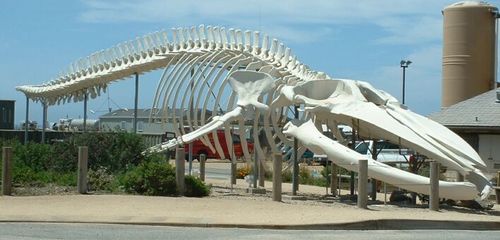
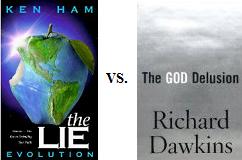
culture war.jpgThe discussion surrounding evolution is often marked by the loud voices of opposing sides. To some, evolution represents a challenge to morality and religion that must be fought head on. They agree with leading anti-evolutionist Henry Morris, who wrote that “evolutionism is the proximate cause of the world’s evils, for it is the basic belief and deceptive tool of Satan.” To others, it is religion that poses a problem for humanity. Science alone, they argue, can answer the deepest questions of humanity, and those who look to the supernatural for such answers must be, as Richard Dawkins put it, “ignorant, stupid, or insane (or wicked).”

Why does evolution bring out so many attacks from each side? Is it proof that science and religion can never see eye-to-eye? In his book Saving Darwin, Karl Giberson proposes another reason why the debate surrounding evolution is marked with such loud opposition:

“The answer is, quite simply, that evolution has become the focal point of a culture war, which means that the goal of the protagonists is to win, not to discover the truth. Conceding minor points to your opponents, using inoffensive language, working out compromises, and finding middle ground are simply not allowed. Too much is at stake for such wussy pussyfooting.”

- Saving Darwin, p. 172
The good news is that not everyone subscribes to the extreme views of the propagators of this culture war. BioLogos believes that there is harmony between science and religion. While evolution cannot be separated from its complex ties to this culture war, it is in no way proof of an incompatibility between these two important sources of truth.

Share
|


Previous Posts

We're Moving
Science & the Sacred is moving to our new home on The BioLogos Foundation's Web site. Be sure to visit and bookmark our new location to stay up to date with the latest blogs from Karl Giberson, Darrel Falk, Pete Enns, and our various guests in the science-religion dialogue. We're inaugurating ou

posted 8:00:00am Dec. 11, 2009 | read full post »

Shiny Scales, Silvery Skins, and Evolution
  Source: Physorg.comIridescence -- a key component of certain makeup, paints, coatings of mirrors and lenses -- is also an important feature in the natural world. Both fish and spiders make use of periodic photonic systems, which scatter or reflect the light that passes against their scales or

posted 8:00:00am Dec. 09, 2009 | read full post »

A Stellar Advent Calendar
Looking for a unique way to mark the days of the Advent season? The Web site Boston.com offers an Advent calendar composed of images from the Hubble Telescope, both old and new. Each day, from now until the celebration of the Nativity of Christ, the calendar will offer a beautiful image from the hea

posted 8:00:00am Dec. 09, 2009 | read full post »

Belief, Guidance, and Evolution
Recently BioLogos' Karl Giberson was interviewed by Marcio Campos for the Brazilian newspaper Gazeta do Povo's Tubo De Ensaio (i.e. "Test tube") section. What follows is a translated transcript of that interview, which we will be posting in three installments. Here is the first. Campos: Starting o

posted 8:00:00am Dec. 08, 2009 | read full post »

Let's Come at this From a Different Angle
Every Friday, "Science and the Sacred" features an essay from a guest voice in the science and religion dialogue. This week's guest entry was written by Peter Enns. Enns is an evangelical Christian scholar and author of several books and commentaries, including the popular Inspiration and Incarnatio

posted 8:00:00am Dec. 04, 2009 | read full post »

Advertisement
Comments read comments(29)
post a comment
alptekin

posted September 1, 2009 at 10:35 am


I do not understand why opposing evolution is always presented as opposing evolution. I am biology gradute. I see no scientific evidence of evolution, therefore I do not believe in evolution. But I am not against science, I do science. I believe in science. As a biologist I cannot explain people how random mutations can make a perfect eye, or any organ. I cannot tell them that evolution is true while I know that there is not even a single fossil of a transitional form.
I think accusing people of being against science when they do not believe in evolution is a propaganda of people like Richard Dawkins. It is unrealistic. No one buys it anymore.


report abuse
 

mikefree2

posted September 1, 2009 at 12:07 pm


As an engineer married to a biologist my minister asked me to present a series on how science has brought me a better understanding of God. I was really suprised at how well it was recieved and how many people came to me and said that they had ignored science and its discoveries because they simply thought science was wrong and would now open their mind through the leading of God. Young christians studying science could really lead us closer to the Lord.


report abuse
 

kenneth

posted September 1, 2009 at 12:13 pm


There may be no inherent conflict between science and religion, but there is when it comes to evolution. In that instance, the conflict is between a source of truth (science) and a delusion posing as science (intelligent design/creationism. For a biologist to say they can’t be convinved of evolution is not an indictment of evolution, it is an admission that he didn’t turn up at school or read very often or that the educational system failed him. It’s akin to an astronomer saying we should all believe geocentrism because he can’t figure out how it is the earth revolves around the sun (but he still believes in astronomy).


report abuse
 

alptekin

posted September 1, 2009 at 1:03 pm


Evolution is just an assumption, a hypothesis which is suggested to explain the origin of species. However it is not proven scientifically. No serious paleontologist show the fossils as the proof of evolution theory. The fossils claimed to be the “missing links” or the supposed “ancestors”are hidden from the public and other scientist who want to examine or study them (suggest you to read the September 2009 issue of Scientific American).


report abuse
 

BeagleLady

posted September 1, 2009 at 1:23 pm


Evolution is just an assumption, a hypothesis which is suggested to explain the origin of species. However it is not proven scientifically. No serious paleontologist show the fossils as the proof of evolution theory. The fossils claimed to be the “missing links” or the supposed “ancestors”are hidden from the public and other scientist who want to examine or study them (suggest you to read the September 2009 issue of Scientific American).

I suggest that you visit a good natural history museum.


report abuse
 

Unapologetic Catholic

posted September 1, 2009 at 1:24 pm


alptekin,
This statement is simply misleading:
“. No serious paleontologist show the fossils as the proof of evolution theory.”
Nothing can constitute “proof” of evolution.
If you are really a scientist with a degree in biology you would know that.
You would also know that ALL serious paleontologists recognize the vast number of fossils, including very large numbers of transitionals, provide powerful evidence is support of evolutionary theory.
Your statement therefore is phrased to be “technically correct” but intended to mislead a reader.
…if you were a a biologist, you would know that.


report abuse
 

Daniel Mann

posted September 1, 2009 at 2:10 pm


Is the case for evolution a slam-dunk? Even hardened evolutionists admit that the evidence is lacking. All the following quotations are taken from John Lennox’s book, “God’s Undertaker: Has Science Buried God”:
“There is no theoretical reason that would permit us to expect that evolutionary lines would increase in complexity with time; there is also no empirical evidence that this happens.” (John Maynard Smith, E. Szathmary—quoted from 107.)
“In the whole experimentally accessible domain of microevolution (including research in artificial breeding and in species formation), all variations have certainly remained within the confines of basic types” [species, more or less]. (Siegfried Scherer)
“Cell biologist E.J. Ambrose of the University of London argued that it is unlikely that fewer than five genes could ever be involved in the formation of even the simplest new structure, previously unknown in the organism. He then points out that only one in 1,000 mutations is non-deleterious, so that the chance of five non-deleterious mutations occurring is 1 in a million billion replications”
Laboratory failure to produce evidence:
“In his book, Grasse observed that fruit flies remain fruit flies in spite of thousands of generations that have been bred and all the mutations that have been induced in them…More recent work on the E. coli bacterium backs this up. In this research no real innovative changes were observed through 25,000 generations of E. coli bacterium.” (108)
Astro-physicist Fred Hoyle: “Well, as common sense would suggest, the Darwinian theory is correct in the small, but not in the large. Rabbits come from other slightly different rabbits, not from either [primeval] soup or potatoes.”
Fossil Evidence:
“The number of intermediate varieties, which have formerly existed on the earth, [should] be enormous. Why then is not every geological formation and every stratum full of such intermediate links? Geology assuredly does not reveal any such graduated organic chain.” (“The Origin of Species”)
Palaeontologist David Raup of the Field Museum of Natural History…said, “We are now about 120 years after Darwin and the knowledge of the fossil record has been greatly expanded. We now have a quarter of a million fossil species, but the situation hasn’t changed much. The record of evolution is still surprisingly jerky and, ironically, we have even fewer examples of evolutionary transition than we had in Darwin’s time.” (111)
Eldredge [American Museum of Natural History] makes an astonishing admission. “We palaeontologists have said that the history of life supports [the story of gradual adaptive change] knowing all the while it does not.” (111)
Eldredge continues…”I tried in vain to document examples of the kind of slow directional change we all thought ought to be there every since Darwin told us that natural selection should leave precisely such a tell-tale signal…I found instead that once species appear in the fossil record they tend not to change very much at all. Species remain imperturbably, implacably resistant to change as a matter of course – often for millions of years.” (113)


report abuse
 

Dan

posted September 1, 2009 at 3:53 pm


Daniel Mann,
Virtually every single quote is way out of context, or not even by an evolutionists. I will try to respond with a post later that places these quotes in context and show that it was not honest for Lennox to use these very misleading quotes. You can check out many of them at TalkOrigins’s quote-mine page, but I will try to respond in detail later tonight.


report abuse
 

Unapologetic Catholic

posted September 1, 2009 at 4:05 pm


Great, the creationist quote miners have appeared.
“All the following quotations are taken from John Lennox’s book, “God’s Undertaker: Has Science Buried God””
Which means you didn’t verify if they were accurate. An intelligent and literate person interested in the truth would check the original sources for accuracy. You can’t be bothered, apparently.
They aren’t accurate quotes. They are all well known misrepresentations of the person’s position and are commony offered on creationist websites not interested in the truth.
Let’s just discuss one example–Charles Darwin. The alleged quote:
“The number of intermediate varieties, which have formerly existed on the earth, [should] be enormous. Why then is not every geological formation and every stratum full of such intermediate links? Geology assuredly does not reveal any such graduated organic chain.”
Inaccurately quoted. Here’s the full in context quote:
“The main cause, however, of innumerable intermediate links not now occurring everywhere throughout nature depends, on the very process of natural selection, through which new varieties continually take the places of and supplant their parent-forms. But just in proportion as this process of extermination has acted on an enormous scale, so must the number of intermediate varieties, which have formerly existed, be truly enormous. Why then is not every geological formation and every stratum full of such intermediate links? Geology assuredly does not reveal any such finely graduated organic chain; and this, perhaps, is the most obvious and serious objection which can be urged against my theory.”
Note carefully, non-scientists, what Darwin is doing here. He’s trying to think of objections to his own theory! He’s playing the devil’s advocate attempting on his own to poke holes in his theory–as all legitimate scientists do.
His question is not rhetorical. He intends to answer it. And he does. Here is his next sentence: “The explanation lies, as I believe, in the extreme imperfection of the geological record.
In the first place, it should always be borne in mind what sort of intermediate forms must, on the theory, have formerly existed. I have found it difficult, when looking at any two species, to avoid picturing to myself forms directly intermediate between them. But this is a wholly false view; we should always look for forms intermediate between each species and a common but unknown progenitor; and the progenitor will generally have differed in some respects from all its modified descendants.” [Providing specific evidence of this in breeding pigeons]
So with natural species, if we look to forms very distinct, for instance to the horse and tapir, we have no reason to suppose that links directly intermediate between them ever existed, but between each and an unknown common parent. The common parent will have had in its whole organisation much general resemblance to the tapir and to the horse; but in some points of structure may have differed considerably from both, even perhaps more than they differ from each other. Hence, in all such cases, we should be unable to recognise the parent-form of any two or more species, even if we closely compared the structure of the parent with that of its modified descendants, unless at the same time we had a nearly perfect chain of the intermediate links.
It is just possible, by the theory, that one of two living forms might have descended from the other; for instance, a horse from a tapir; and in this case direct intermediate links will have existed between them. But such a case would imply that one form had remained for a very long period unaltered, whilst its descendants had undergone a vast amount of change; and the principle of competition between organism and organism, between child and parent, will render this a very rare event; for in all cases the new and improved forms of life tend to supplant the old and unimproved forms.”
Leaving Darwin’s detailed response out intentionally give the false impression Darwin was puzzled by the fossil record. He was not–he was simply addressing the same groundless objections that have been repeated for 150 years.
Every other “quote” offered is a similar falsehood.
These quotemines are analyzed and addressed here: http://www.talkorigins.org/faqs/quotes/mine/part1-2.html


report abuse
 

Art

posted September 1, 2009 at 9:09 pm


In fact, the ‘Basic facts of Paleontology’ actually say NO to the General Theory of Evolution (i.e. Common Ancestry), as well as to The Special Theory of Evolution (i.e. Darwin’s mechanism of how evolution is suppose to occur).
According to the theory of evolution, every species has emerged from a predecessor. One species that existed previously turned into something else over time, and all species have come into being in this way.
According to the Darwin’s theory on how evolution occurs, this transformation proceeds gradually over millions of years during which very long lineages of descent with very gradual modification produce innumerable generations of intermediate species, with each diverting lineage undergoing the transformations of accumulating new organs and body plans that their ancestors did not have.
If this were true, there must have existed billions of such creatures that made up these major evolutionary trends. More importantly, the remains of these creatures should be present in the fossil record, documenting the many millions of the predicted gradual trends of morphological evolutionary transformations known as ‘phylogenies’. This is the one solid real science prediction of evolution, that we would be able to see it in the fossil record if such broad-scale evolution is true.
The fossil record embarrassed Charles Darwin. It was suppose to provide and establish these innumerable phylogenies, but few could be found in his day, and these few were questionable. A contemporary of Darwin, a paleontologist, questioned Darwin’s Theory by pointing that if Darwin’s Theory be true, why do each successive layer of fossil beds merely have the same unchanged fossils of each type of animal or plant that are found at the different layers.
Darwin was well aware of this, and in his book Charles Darwin tried to explain this ‘unpleasant’ fact away by appealing to the imperfection of the fossil record in his day. Darwin gambled the validity of his theory on his prediction that future generations of paleontologists will discover the phylogenies. Ever since Darwin, Paleontologists (and others) traveled the world hoping to make a name for themselves by establishing the phylogenies that Darwin’s Theory predicts must exist.
They were never found in the geological record. They do not exist. Not even one was estabkished. e.g. The Darwins finches which
Testimonies to this fact include:
Botanist and evolutionist Dr. Heribert Nilsson (From a 1953 Science Journal, as quoted in Arthur C Constance book: `The Earth Before Man’, part 2, Doorway Publications, Ontario Canada, 1984):
“My attempts to demonstrate evolution by an experiment carried on for more than 40 years have completely failed. At least, I should hardly be accused of having started from a preconceived anti-Evolutionary standpoint. … It may be firmly maintained that it is not even possible to make even a caricature of an Evolution out of paleo-biological facts. The fossil material is now so complete that it has been possible to construct new classes, and the lack of transitional series cannot be explained as being due to the scarcity of material. The deficiencies are real, they never will be filled.”
Evolutionary paleontologist David Kitts, Ph.D. Zoology, Head Curator of the Department of Geology of the Stoval Museum, `Paleontology and Evolutionary Theory’, Evolution, Vol. 28, Sept. 1974, p 467. Writes: “Despite the bright promise that paleontology provides as a means of `seeing’ Evolution, It has presented some nasty difficulties for evolutionists, the most notorious of which is the presence of `gaps’ in the fossil record. Evolution requires intermediate forms between species and paleontology does not provide them.”
Evolutionist Dr. Edmund J. Ambrose, Emeritus Professor of Cell Biology at the University of London, admits (1982) with respect to the Fossil Record that:
“At the present stage of geological research, we have to admit that there is nothing in the geological record that runs contrary to the view of conservative creationists, that God created each species separately, presumably from the dust of the earth.”
Right after the pounding of Neo-Darwinian Theory of Evolution as presented by excellent mathematicians at the 1966 Wistar Symposium that was held in Philadelphia and was titled, ‘Mathematical Challenges to the Neo-Darwinian Theory of Evolution’. A young Stephen Gould and Niles Eldredge published:
“Under the influence of phyletic gradualism, the rarity of transitional series remains our persistent bugbear. … It has stood as the bulwark of anti-evolutionist arguments: “For evolution to be true, there had to be thousands, millions of transitional forms making an unbroken chain.” (Anon., 1967- from a Jehovah’s Witnesses pamphlet).
Thus, not only in Darwin’s day, but also throughout the Twentieth century the creationists (e.g. Paleontologist Price) were rightly rejecting Darwin’s theory on this basis, as Gould and Eldredge pointed out.
This led in 1970’s there came a big frontal assault against being forced to defend failed Darwinian evolution emanating from the whole Field of Paleontology, led by the Evolutionary Paleontologists: Stephen Gould, Niles Eldredge, Steven Stanley, and Colin Patterson. Gould and Eldredge believed they were saving The General Theory of Evolution, by casting out the updated Darwin’s Theory ‘Neo-Darwinism’, also known as the ‘The Modern Synthesis’.
Gould and Eldredge believed that their new theory for the mechanism of evolution (Punctuated Equilibrium) would replace the false Darwinian Paradigm and thereby preserve the Academic credibility of the General Theory of Evolution (i.e. Common Ancestry). P.E. basically states that evolution occurs in small populations and in too short a time period, and this is why evolution is not revealed in the fossil record.
Gould’s and Eldredge’s public rebellion from ‘forced’ Darwinism on the scientific field of Paleontology that came from the evolutionary biologists and powers that be in Academia, led leading Paleontologists to admit what they knew to be true all along about the fossil record.
“All paleontologists know that the fossil record contains precious little in the way of intermediate forms; Transitions between major groups are characteristically abrupt.” Stephen J. Gould, `Return of the Hopeful Monster’ Natural History, Vol. 86, 1977, p. 22)
“The extreme rarity of transitional forms in the fossil record persist as the trade secret of paleontology. The evolutionary trees that adorn our textbooks have data only at the tips and nodes on their branches, the rest is inference, however reasonable, not the evidence of fossils.” Stephen J. Gould, `Evolutions Erratic Pace’ Natural History, 1979.
Paleontologists Steven Stanley (1979) points out:
“In part, the role of paleontology in evolutionary research has been defined narrowly because of a false belief, tracing back to Darwin and his early followers, that the fossil record is woefully incomplete. Actually, the record is of sufficiently high quality to allow us to undertake certain kinds of meaningful analysis at the level of the species.”
In the same book (‘Macro-evolution: Pattern and Process’, p.38), Stanley points out:
“The known fossil record fails to document a single example of phyletic evolution accomplishing a major morphologic transition.”
Dr. Steven Stanley repeats this fact in his 1981 book “The New Evolutionary Time Table:
“Since the time of Darwin, paleontologists have found themselves confronted with evidence that conflicts with gradualism, yet the message of the fossil record has been ignored. This strange circumstance constitutes a remarkable chapter in the history of science, and one that gives students of the fossil record cause for concern,.”
Perhaps unwittingly, in one of his earlier books, Ernst Mayr laid the groundwork for G&E’s Theory of Punctuated Equilibria. Mayr went against the Modern Synthesis in proposing that rapid speciation occurred in geographical isolated areas and that this may account for the abrupt appearance of species and the lack of evidence of transition found in the fossil record. However, according to Paleontologist Steven Stanley: “little attention was paid to the punctuational elements of his work until the 1970′s. This paradox was partly the result of the diffuse, but ever present, counter pressure supplied by the field of genetics, in which Mayr was not a specialist. This gradualistic march of the geneticist had gathered too much momentum to be diverted by peripheral activities.”
(Steven Stanley, “The New Evolutionary Timetable”, 1981, p.78).
Darwin’s predictions about the fossil record have been Falsified!:
Gould (Natural History, May 1977) writes of Darwinian gradualism:
“The evolutionary trees that adorn our textbooks have data only at the tips and nodes of their branches: the rest is inference, however reasonable, not the evidence of fossils. Yet Darwin was so wedded to gradualism that he wagered his entire theory on a denial of this literal record: “The geological record is extremely imperfect and this fact will to a large extent explain why we do not find interminable varieties, connecting together all the extinct and existing forms of life by the finest graduated steps. He who rejects these views on the nature of the geologic records, will rightly reject my whole theory.”
“We have all heard the traditional response so often that it has become imprinted as a catechism that brooks no analysis: the fossil record is extremely imperfect. … This traditional approach to morphological breaks merely underscores what Feyerabend meant … in comparing theories to party lines, for it renders the picture of phyletic gradualism virtually unfalsifiable.” (G&E, 1972).
Gould & Eldredge, explaining PE’s departure from the Modern Synthesis:
“To Darwin… speciation entailed the same expectation as phyletic evolution: a long and insensibly graded chain of intermediate forms. Our present texts have not abandoned this view, although modern biology has.” (G&E, 1972).
In 1980, Paleontologist Colin Patterson removed the Horse Series from the British Museum because that artificial series of horse evolution was simplt not true. At the same time Geologist David Raup removed Eohippus from The Chicago Museum because it had become clear that Eohippus was not ancestral to the horse family. Niles Eldredge called the horse series ‘Lamentable’.
Dr. Kenneth Hsu, geologist at the Geological Institute of Zurich, (‘Darwin’s Three Mistakes’ Geology, Vol. 14 1986) Shows that the lack of transitional forms in the fossil record cannot be blamed on the inadequacy of the Fossil record:
“We know that Lyell and Darwin were wrong on their insistence on the imperfection of the geologic record. … The Cretaceous/Tertiary boundary falls within magnetostratigraphic Chron C29R, which was less than .5 m.y. in duration (Kent, 1977). The boundary is recorded by precision stratigraphy, which has a resolution power to recognize events in thousands, if not hundreds, of years duration.”
“Paleontology is now looking at what it actually finds in the fossil record. Not what it is told that it supposed to find. As is now well known, most fossil species appear instantaneously in the fossil record, persist for millions of years virtually unchanged, only to disappear abruptly – The Punctuated equilibrium Pattern of Eldredge and Gould.” Tom Kemp, Curator of the University Museum at Oxford University, `A Fresh Look at the Fossil Record’, New Scientist, Vol 108, No: 1485, Dec. 5, 1985, p. 66)
And what they were definitely not finding were the evolutionary transitions, those phylogenies predicted by the Theory of Evolution.
As is often the case in evolution theory, hopeful confirmations along new lines of inquiry often end up to be bitter disappointments for the evolutionists. Evolutionist N. Macbeth and E. Saif give yet another example.
” A. The Commitment in Theory: Darwinian theory asserts the physical descent with modification has been universal, which means that every modern species is the latest link in a phylogeny. There must therefore have been hundreds of thousands of phylogenies, and it was Darwin’s’ expectation that these would be found. His followers, sharing his expectation, felt a duty to seek and find the phylogenies. …
B. Another Miserable Failure: The expectations were in vain. In the 125 years since the Origin was published, nothing has been accomplished. No phylogenies have been established and the pursuit of them has fallen into dispute.”
Evolutionists E. Saif and Norman Macbeth. Evolution, 1985.
By 1981 The Biologists and powers that be in Academia were very upset with the ‘Punctuation’s’ and forced them to tone down their theory, particularly because it is a theory not based on observing evolution in action, but rather, it was based on the inability to see evolution in action in the geological fossil record. They were accused of shaking the public’s faith in ‘Evolution the Fact’ and were forced to say their theory of PE was complementary to the Modern Synthesis (even though at one point Gould and Eldredge already called the Modern Synthesis ‘dead’) and not an ‘Alternate to Darwinims’ in their science papers. They were also coerced into putting out attacks on creationary scientists, who used the punctuationists admissions as confirmation of what they had been saying all along, that the fossil record actually falsifies Darwinian evolution.


report abuse
 

Art

posted September 1, 2009 at 9:56 pm


My above post was to demonstrate the above author’s point in clearer detail, that even leading evolutionary scientists get emotional in what they believe is “The fact of Evolution” and are willing to turn on fellow scientists when these scientists present scientific discoveries that oppose their religiously held scientific beliefs, and let their beliefs blind them to what science actually has to say about the world we live in.
Scientific evidences contrary to evolution theory is met by many evolutionary scientists with as much hostility as evidences of a much older earth and universe is met by YEC’s. These are emotional reactions.
There is no need to fear science, the truth will always win out eventually, and those who arrogantly oppose the truth will be revealed as false teachers to their own shame.
Let science be science must be said to both sides of such issues, and their is a need to stop forcing religously held science views be forced upon Academia or the public. As a Christian, I love science as it is an ongoing program that, to me, reveals God’s handiwork. But we could never see this if some are maliciously tampering with the evidence to suit their own personal agenda.


report abuse
 

Beaglelady

posted September 1, 2009 at 10:02 pm


Good grief, Art, you must have been visiting creationist web sites all night.
As an antidote to all this silliness, I thought I’d post one my favorite articles by Stephen J. Gould
Hooking Leviathan by Its Past. You can even learn about some fossil whales that aren’t supposed to exist.


report abuse
 

Amy

posted September 1, 2009 at 10:29 pm


Art,
Quite a lengthy list. It surprises me that the latest reference date you cite is 1986 with one reference going back to 1953…surely, you can’t be serious. You’ve got at least 23 years of catching up to do! Comparisons of DNA sequences between species have established a phylogeny and the pursuit of them have cleared up many disputes. Also, I’d add that transitional fossils are so common these days, its actually hard to hear about them in the media. This is a post from the Biologos Foundation – start here. Read the Books from Bloggers above by Collins, Falk and Giberson. (I’d add Gordon Glover’s book “Beyond the Firmament” to that list esp. the last chapter on evolution and the discussion of the fossil record.) Cheers.


report abuse
 

Dan

posted September 1, 2009 at 10:57 pm


Daniel Mann,
I just wanted to post a bit more detailed response to your list of quotes. I have seen that you really do want to have a spirited debate so I will try to respond to several. The same principles apply to Art’s post of quotes.
First, anytime you see a major evolutionist’s quote seem to say that that person doubts evolution you should be very wary. It would be the same if you saw a quote by a famous astronomer (like Carl Sagan) that implies they doubt helocentrism, or if you see a major historian quoted in such a way that it makes them appear to doubt the holocaust. Similarly, if you see a quote (especially if the person quoting is antagonistic) from an evolutionists like that you should doubt it until you verify the context. I have even seen Dawkins’ quoted in such a way that it appears he doubts evolution! Which is obviously beyond ridiculous.
It is so easy to take a quote out of context, twist it, and use it to imply the author meant the exact opposite of what they really intended. I re-read Ken Ham’s Evolution: The Lie a few months ago and there were a few quotes I could easily have taken out of context to say he supports evolution. Obviously it would be dishonest to do that, but it appears Lennox did that in his book. And several of the people you quote from are not even evolutionists.
Siegfried Scherer is a creationist who was connected to the Discovery Institute for awhile and was the President of a creationist group in Germany.
I cannot find a reference to Ambrose’s quote, but he has said that “It is strikingly clear in the geological records, when life had reached the stage where organisms were capable of living in a previously unoccupied region of the planet, such as the move from estuaries to dry land, the appearance of plants growing to great heights which provided a location (habitat) for climbing animals, or when birds and insects actually moved up and flew in theair[sp] above the earth’s surface. Large numbers of new species appeared at these times; this has been called radiation, a spreading out of life (from TalkOrigins).” So obviously he thinks that the geological record supports evolution.
Lennox says “Grasse observed that fruit flies remain fruit flies in spite of thousands of generations that have been bred and all the mutations that have been induced in them.” Of course they remain fruit flies! Evolution does not predict that in a few decades fruit flies will suddenly turn to something else. This is based on a lack of understanding of evolution.
The E. Coli quote is interesting because I assume Lennox is referring to Lenski’s E. coli experiment. If you read the papers Lenski’s results do show innovative changes. I am particularly disturbed that Lennox would specifically say after 25, 000 generations. He is completely ignoring (or maybe he did not know when he was writing) that the E. Coli evolved a completely new metabolic ability after 30,000 generations that allowed them to survive in a high citrate environment. This was a completely innovative change!
Fred Hoyle is not an evolutionist in any traditional sense of the term. He spend many years criticizing chemical evolution, and his explanations sound much more like something from one of his sci-fi books than actually science.
I’ve seen the Darwin and supposed lack of fossils quote before, and if I remember correctly Darwin is specifically talking about pre-Cambrian fossils, not fossils in general. It is very dishonest to make it sound that Darwin was saying no, fossils, when he was specifically talking about during ONE time period. And many pre-Cambrian fossils have been found now.
David Raup has said “There is a mountain of experimental and observational evidence, much of it predating genetics, which shows that natural selection as a biological process works (from TalkOrigins).” In context, Raup is saying that evolution is a fact, but that he does not think the evidence fits best with gradual evolution. I don’t know about the exact context, but Raup has said similar things as Lennox’s quote in reference to Cambrian fossils , not the fossil record overall.
Niles Eldredge (and Gould) is often misquoted by creationists. I have seen several quotes of theirs saying how frustrated they are that creationists are distorting their work. Eldredge is specifically talking about how the fossil record shows that evolution is not gradual, nut punctuated in the first quote. He is certainly not saying that the geologic evidence for evolution is bad. See http://www.talkorigins.org/faqs/quotes/mine/part1-4.html#quote71
Both Gould and Eldredge have said repeatedly that they see numerous examples of transitional fossils at the family and genus levels.
Hope these quotes help you see that almost anytime you see a quote from an evolutionist that does not make sense you should check the original context.
All the dishonest quoting was one of the original reasons I started to have major second-thoughts about young-earth creationism, and eventually saw the evidence for evolution.
Hope my post was informative. Have a great day!


report abuse
 

Daniel Mann

posted September 2, 2009 at 2:32 pm


Dan,
I’m not disposed to research those quotes, but I have a tremendously high regard for John C. Lennox. He has written with such, balance, depth, and insight, that it’s hard for me to regard him as a hardened deceiver. Besides, I had watched him demolish Richard Dawkins in debate. Had his quotations been off, Dawkins would have called him to account over them, but he didn’t.
However, I’d be glad to look it whatever evidence you might find to the contrary.


report abuse
 

Dan

posted September 2, 2009 at 6:11 pm


Daniel Mann,
I researched the quotes for you and showed that every one was taken out of context (or was from a creationist, not an evolutionists), and made to mean something the author had never intended. That is considered academic dishonesty. I think my post should have made you suspicious of Lennox’s quotes. I am not saying that he is being purposely deceitful, but it seems that he trying so hard to make evolution look bad that he is using quotes wildly out of context. It is exactly the same thing you see in most young-earth creationist’s books.
Like I said earlier, if you see a quote from Carl Sagan that seems to say that the heliocentric model is doubtful you should doubt the quote is in context. The same hold true with evolutionist’s quotes in creationists books.
I assume we saw the same Lennox and Dawkins debate. It was interesting, but I hardly think Dawkins’ was demolished, and I believe that the debate was more over philosophy and not really science. Lennox does a good job of changing the subject a lot (like Duane Gish), so I see why Dawkins did not bring up any of the quotes. I’m also pretty sure their debate was before Lennox wrote this book anyways, so obviously Dawkins could not have brought it up (I might be wrong).
As an aside, if you really want a book that honestly represents Dawkins you should check out Alister McGrath’s criticisms of Dawkins’ philosophy in the book “Dawkins God”. McGrath (who is a Christian) actually sent the manuscript to Dawkins to let him read it and make sure McGrath was not misrepresenting Dawkins in any way (and Dawkins said the book was accurate). I really respect that about McGrath, but sadly it appears Lennox did not go to much length to make sure his quotes were representative of their real view. It appears Lennox did not even read the context in any of these quotes. Maybe he just got the quotes from creationists’ websites and books, and did not look up the originals.
I can assure you that any quote of Dawkins’ that seems to doubt evolution is out of context (and virtually every quote by Gould). I once saw a book quote Dawkins (from The Blind Watchmaker) saying that a chance mechanism can’t make hemoglobin or an eye. Then the author went on to point out that evolution is based on chance, so Dawkins was admitting that evolution could not explain the eye. In reality, Dawkins spent most of that chapter explaining that natural selection is NOT based on chance, it is specifically the opposite! Then Dawkins went on for about a whole chapter explaining the steps in the evolution of the eye, with references to research papers! So obviously, the person quoting Dawkins’ dishonestly either did not read ANY of the context, or did and purposely used Dawkins’ quote to imply the exact opposite of what Dawkins’ had explicitly said.


report abuse
 

Unapologetic Catholic

posted September 2, 2009 at 6:19 pm


“I’m not disposed to research those quotes”
Well, then, frankly you’re bearing false witness.
These “quotes” aren’t accurate and Lennox knows it.
Now you do too.


report abuse
 

Daniel Mann

posted September 2, 2009 at 7:53 pm


Dan,
I think you’re going to have to do more work in order to demonstrate that these quotes are taken out of context. It’s not enough to say, “I can assure you that any quote of Dawkins’ that seems to doubt evolution is out of context.” Your assurances aren’t adequate.
You can’t reason, “Well, I know what this person would say, and if he’s quoted as saying something that I know he wouldn’t say, that makes the quote wrong.” Perhaps this is good grounds for skepticism, but this is hardly a knockout punch. It’s always necessary to go back to the sources.
To clear the record, you had claimed that I had quoted Giberson out of context, distorting his intended meaning, and you praised the BioLogos Foundation for having corrected me so gently. Consequently, I ran to the library for his book and found that I hadn’t distorted his intended meaning. I responded back to BioLogos with some additional charges, but they have failed to respond back to me.


report abuse
 

Dan

posted September 2, 2009 at 9:04 pm


Daniel Mann,
I guess you have a different definition of an out of context quote than me. If the person quoting is trying to say that the original author said something that the original author did NOT say in context, I define that as an out of context quote. How do you define an out of context quote?
I actually did go back to originals for most of the quotes, and saw that Lennox’s quotes are way out of context, so I am not sure I understand your point. I showed that the quote Lennox was using of Darwin was out of context because Lennox was trying to say Darwin was saying there was a lack of transitional fossils in general, while Darwin was talking about a specific (pre-Cambrian) time period.
I showed that Eldredge and Ruap, in context, were really saying that in their view the fossil record did not support very gradual evolution, but that it DID support more rapid, punctuated evolution, and that both think there are abundant transitional fossils. Lennox used the quotes to cast doubt on evolution in general, which is antithetical to the original authors point. Therefore the quote is out of context.
If you had read Dawkins’ I’m sure you would agree that anyone that has read him (even people who disagree) can say with complete assurance that he does not question evolution. I invite you to test that statement by taking any of Dawkins’ quotes used by creationists and then look at it in context. I have done so and EVERY time the creationist was misquoting or taking Dawkins’ wildly out of context. It really is laughable for an author to imply that Dawkins doubts evolution.
Do you agree that an author saying that Dawkins saying a random process cannot form an eye, and then implying that Dawkins does not think evolution can form an eye, is dishonest? Especially when Dawkins whole point in that book was that natural selection is the opposite of random, and that he spent a whole chapter on the evolution of the eye? To me there is no way someone can say that quote is in context, because it disagrees with the whole point of Dawkins book, and even the paragraphs before and after Dawkins’ quote.
You did take Giberson’s meaning out of context. You accused Giberson of heresy by saying that he was clear that you cannot accept Christ and macroevolution, which is the complete opposite of the entire point of BioLogos and Giberson’s book. Giberson does accept macroevolution, so your implication about his belief about Christ is clear. Not only did Giberson not say that, he was talking about his initial reaction to Dennott’s claims anyways, not his beliefs after he had thought through Christianity and evolution. His entire thesis was the exact opposite of what you implied. I’m sure you did not do it on purpose, but it still was a mistake.
While you made one mistake, which is certainly understandable, Lennox made dozens. I showed you that every quote was not represented by Lennox the way the original author intended. How can you still side with Lennox? I know he is eloquent, but that has no bearing on the honesty of his quotes. Maybe he just got them from creationist websites, and did not go to the origionals. That seems sloppy for academic writing, but if that is the case I am not saying he is dishonest.
I am interested in how you define taking a quote out of context. I noticed on your blog that you said you teach at a Bible College. If a student wrote a paper using dozens of quotes from CS Lewis’ “Mere Christianity”, Gk Chesterton’s “Orthodoxy”, and from Tim Keller’s “Prodigal God” that made it seem that Lewis, Chesterton, and Keller are atheists, or have serious doubts about Christianity, would you consider that a dishonest paper? That is exactly what it appears Lennox did in his book to the evolutionists he quoted. I am sure you would give an F to a student who turned in a paper like that. Right?


report abuse
 

Unapologetic Catholic

posted September 2, 2009 at 11:36 pm


This anti science/anti-knowledge mentality displayed in these comments is shocking and demoralizing. One of these “quotes” is from “Origin of Species” written by Charles Darwin in 1859. Guess what? The entire book is in the public domain and can be downloaded for free.
Yet not a bit of curiosity sparks in the minds of these commenters. No, they won’t read the book to see how carefully Darwin presents his case. They won’t even read the “quoted” extract to determine if it was taken out of context.
Is this complete lack of intellectual curiosity and blind worship of a false god a model for Christian behavior?


report abuse
 

Daniel Mann

posted September 3, 2009 at 8:52 am


Dan,
This will be my final response on this subject, but I do want to answer your challenge:
“If a student wrote a paper using dozens of quotes from CS Lewis’ “Mere Christianity”, Gk Chesterton’s “Orthodoxy”, and from Tim Keller’s “Prodigal God” that made it seem that Lewis, Chesterton, and Keller are atheists, or have serious doubts about Christianity, would you consider that a dishonest paper? That is exactly what it appears Lennox did in his book to the evolutionists he quoted. I am sure you would give an F to a student who turned in a paper like that. Right?”
Although the student’s quotes would make me highly suspicious, I wouldn’t give him an “F” until I confirmed his breach from the original source. Perhaps you have gone back to the original source, but you haven’t quoted it in context, leaving us to wonder whether YOU got it right.
This brings us to my quote from Giberson’s book:
“Acid is an appropriate metaphor for the erosion of my fundamentalism, as I slowly lost confidence in the Genesis story of creation and the scientific creationism that placed this ancient story within the framework of modern science….[Darwin’s] acid dissolved Adam and Eve; it ate through the Garden of Eden; it destroyed the historicity of the events of creation week. It etched holes in those parts of Christianity connected to the stories—the fall, ‘Christ as the second Adam,’ the origins of sin, and nearly everything else that I counted sacred.” (“Saving Darwin,” 10)
Regarding this quotation, you claim:
“Not only did Giberson not say that, he was talking about his initial reaction to Dennott’s claims anyways, not his beliefs after he had thought through Christianity and evolution. His entire thesis was the exact opposite of what you implied.”
Indeed, I agree that his thesis was to prove that Darwin and Jesus could be happily wed. However, by virtue of Giberson’s stated goal, you automatically dismissed my interpretation of Giberson’s quote and substituted it with your own interpretation: “he was talking about his initial reaction to Dennott’s claims.”
However, the context does not bear this out at all. Nevertheless, it does claim that Giberson was able to check the erosion of his faith. Let me continue the quote:
“I discovered, however, that this was about where Dennett’s [also Darwin’s] acid ran out of steam (or whatever acid runs out of when it stops dissolving everything). The acid of evolution is not universal, and claims that evolution ‘revolutionizes’ our worldview and dissolves every traditional concept are exaggerated. For starters, what exactly does evolution have to do with belief in God as creator? It rules out certain mechanisms that God might have used to create the world, but others remain. God apparently did not create the entire universe, and everything in it, over the course of a few busy days ten thousand years ago.”
Please notice that he isn’t saying that he has overcome the acid and has returned to his former faith, as you suggest. Giberson is merely saying that he was able to build a wall against the acid (at least he thinks he did) so it can’t dissolve more.
You made an assumption based on your preconceptions and not on the context. Giberson’s words do not represent his INITIAL reaction to the acid, but instead his present détente with Darwin’s acid.
However, his lucid example shows us that we Christians can only make peace with Darwin at the expense of Christ and His Word. (I never accused him of being a “heretic” as you allege. His own words do enough of the talking.)


report abuse
 

Art

posted September 3, 2009 at 1:46 pm


Amy, it is not the dates of the science articles that actually mean anything (if dates count, then we should simply discard Darwin’s book on the origin of the species, eh Amy), but whether or not what these leading Paleontologists from around the world gave their expert testimony that the fossil record neither looks like nor in any way supports, Darwinian Evolution. Each type of creature Now that becomes a very good reason to why Darwin’s two books on evolution to be discarded because his theory on common descent is completely wrong.
BTW, your reference of ‘start here’ to a post from the Biologos Foundation did not take me there when I clicked on it.


report abuse
 

Art

posted September 3, 2009 at 4:44 pm


A reply to Beagle Lady
Thanks for posting the link to Stephen Jay Gould’s Essay ‘Hooking the Leviathan’. I enjoy reading Gould’s writings; I read many of his books and science articles. He is a good communicator who keeps his writings interesting and informative. ‘Hooking the Leviathan’ was no exception.
But it turns out that what he wrote in this article based upon the then current state of paleontology plus the usual evolutionary assumptions. The evolutionary assumptions of the initial article proved later to be wrong as more information turned up from the fossil record. Ever since Darwin, this has been evolutionary theory’s longstanding tragedy: A little info comes in that is quickly interpreted on the assumption of evolution, and is sold as evidence for evolution in the science books, periodicals, in Academia, and to the public in popular articles and through the Mass Media. Then as more scientific evidence emerges, the evolutionary interpretations prove to be wrong and students and the public are not informed about these failures.
So is the case with the alleged Whale evolution stories.
When Gould wrote this article, the shapes of their teeth and ears lead paleontologists to say whales must be related to the group of mammals known as the mesonychids. The biologists disagreed; they stated that the DNA evidence is strongly against this. The molecular biologists were saying whales evolved from artiodactyls (e.g. Cows, Hippos).
Now Stephen Jay Gould in the article you provided Beagle Lady, Gould is excited to find that states: “Paleontologists have been fairly confident, since Leigh Van Valen’s demonstration in 1996, that whales descended from mesonychids, an early group of primarily carnivorous running mammals that spanned a great range of sizes and habits from eating fishes at river edges to crushing bones of carrion.”
Gould further adds: “As for place of discovery, Gingerich and colleagues found Pakicetus in river sediments bordering an ancient sea — an ideal habitat for the first stages of such an evolutionary transition (and a good explanation for lack of diving specialization if Pakicetus inhabited the mouths of rivers and adjacent shallow seas). My colleagues judged Pakicetus as “an amphibious stage in the gradual evolutionary transition of primitive whales from land to sea … Pakicetus was well equipped to feed on fishes in the surface waters of shallow seas, but it lacked auditory adaptations necessary for a fully marine existence.”
But years later, after the body of Pakicetus is found, and since then, it became clear that Pakicetids are artiodactyls, not mesonychids
Pakicetids are not ancestors to Whales. Their ankle bone alone eliminates this possibility, it would require reverse evolution and then re-evolve the a whale like ankle. When Gould wrote his article, only parts of the skull were known. Assuming evolution as a fact, it was decided that Pakicetus was ancestral to the modern day whales based solely on the basis of speculation on ear and tooth morphology. In fairness to Gould, he did warn that his evolutionary story was based only on the interpretations of the skull, and that if the body had been found. In 1999, they found more skull parts and much of the body of Pakicetus. It took over two years for the find to be published, and upon reading it; I understood why they were so slow in reporting the finds about Pakicetus. The expectation was that the body would have many Whale features, but it did not have any. It merely looked like a land animal. The Pakicetids walked and ran on their feet. This presents a major problem to it evolving into Basilosaurus, too many major morphological are required via a long series of beneficial mutations to the genetic code in a very short geological period. It also seems that the inital interpretation that the Pakicetus ears are similar to that of the Whales, is also in error.
A lot more good info on this alleged whale transition can be found here: http://www.scienceagainstevolution.org/v6i2f.htm#new


report abuse
 

Dan

posted September 3, 2009 at 6:39 pm


Daniel Mann,
I did go back to the context for the quotes by Eldredge, Dawkins, and Darwin, and Lennox took them out of context. He tried to make them say the exact opposite of what they were really intending. I don’t have that kind of time to type out the context of every quote (I’m a very slow typer). I read the context and explained it to you. Here is one example of Lennox’s dishonesty.
Here is a different quote from Dawkins’ that Lennox uses in the book (I saw this on your website). “It is grindingly, creakingly, crashingly obvious that, if Darwinism were really a theory of chance, it wouldn’t work. You don’t need to be a mathematician or a physicist to calculate that an eye or a haemoglobin molecule would take from here to infinity to self-assemble by sheer higgledy-piggledy luck.” You then write “Well, isn’t Darwinism a theory of “chance?” Isn’t it supposedly guided by nothing more than natural selection and random mutation?”
Here is the sentence RIGHT before the quote that Lennox uses. Dawkins says, “To this day, and in quarters where they should know better, Darwinism is widely regarded as a theory of chance (Climbing Mount Improbable, 77).” Notice that Dawkins’ specifically says from this that people who say that natural selection is based on chance should know better.
Then three pages later Dawkins says “Darwinism is widely misunderstood as a theory of chance…. Emphasizing that mutation can be random is [biologists] way of calling attention to the fact the crucial fact that, by contrast, selection is sublimely and quintessentially non-random (80).”
Two pages before the quote Lennox uses, Dawkins says, “What Hoyle and Wickramasinghe miss is that Darwinism is not a theory of random chance. It is a theory of random mutation plus non-random cumulative natural selection (75).”
Dawkins then goes on to spend almost 60 pages discussing how natural selection shaped the eye, and he specifically discussed haemoglobin.
Do you agree that at least in this one example Lennox ignored the context of the quote, and purposely tried to imply that Dawkins doubted evolution, when in reality Dawkins was simply explaining that natural selection is not random? I really don’t have time to type pages of context for the other quotes, but suffice it to say that I looked up several and they are way out of context. The ones I did not have accuse to the sources still are wrong, because those authors have specifically said that they see plenty of evidence for evolution, and are angered by creationists like Lennox taking them out of context.
My examples irrefutably showed sloppy scholarship (at a minimum) on Lennox’s part. I also showed that several of the quotes that were indicated to be from evolutionists where really from creationists (I don’t know if that is Lennox’s mistake or your posts). I also showed that Lennox said there were no new changes in E. coli after 25,000 generations, which is very misleading, since there was a major change after 30,000 generations (and there were several changes before 25,000 generations anyways).
You said that Giberson’s quote made it clear that a person cannot accept macroevolution and Christ. Which is the exact opposite of the whole point of the book. So you did make a huge mistake in using that quote to try to accuse Giberson of heresy.
When you read a book you should try to understand the author’s point, not search for a quote that can be easily twisted to say the exact opposite of the authors intended meaning. Like I said before, When I read Ken Ham’s Evolution: The Lie a few months ago I saw a few quotes I could have taken out of context to make him appear to doubt a young-earth creation, but to do so would be dishonest.
It’s very easy to make someone say whatever you want with an out of context quote. I always try to keep that in mind when I see a quote used in a way that contradicts everything else I have read from an author. Have a great day.


report abuse
 

Dan

posted September 3, 2009 at 6:52 pm


Art,
Do you want some references to peer-reviewed articles about the evidence for whale evolution? I can post a few references. The evolution of whales from land animals is actually fairly well understood, with several examples of transitional fossils.
Why did you never respond to my second post in the “The Flagellum Unspun” section about your claim that evolution violates the 2nd Law? You gave me examples of two physicists that you said criticized evolution based on the 2nd Law. While in reality neither did, and one of the physicists actually seemed to believed evolution was true.
I would also like to ask you if you read Lipson’s paper in “Physics Bulletin” or did you just read the quotes you posted. You said that paper criticized evolution based on the 2nd Law, but none of your quotes showed that. Do you have a link to his paper? Because I could not find it on the internet or in my universities library (or any of our online journal sites). It seems to be a hard journal to track down these days, when did you read Lipson’s article?


report abuse
 

Your Name

posted September 4, 2009 at 1:41 pm


There are things that are not worth debating. One is the truth that evolution by natural selection is the mechanism responsible for the variation of life forms we observe on Earth. Those that dispute this have an agenda that they will not give up and they cannot be convinced. The other is the existence of God, which is a matter of faith. Those that dispute this have an agenda that they will not give up, and they cannot be (and should not be) convinced.


report abuse
 

Amy

posted September 4, 2009 at 7:26 pm


Art,
Good grief. There is no link…see the right hand menu above.
Dates matter because scientific theories and hypotheses are always subject to revision and replacement. Most people are aware that even the best scientific minds miss the mark occasionally. Science builds on itself, refining as it goes. My reference to Collins was to show you how DNA testing see how the theory of common descent passed the genetic tests.
Yes, science is a process but that doesn’t mean you throw the baby out with the bath water. Even IF the paleontologists you quoted gave expert testimony based on their evidence in the 1970′s (which form other posts is doubtful), new technologies and evidence would refine their testimony today. It’s the same reason that many innocent criminals have been released from prison – new technologies revealing new evidence.
So, dates do matter…ask someone innocently accused of a crime if they would choose to be tried in 2009 or 1970.


report abuse
 

Beaglelady

posted September 4, 2009 at 11:19 pm


Ignore that last post. This blog software has been pulling junk from the cache.


report abuse
 

Beaglelady

posted September 4, 2009 at 11:23 pm


Art,
I should have pointed out that this article was written in 1994. Since then, we have even better information about the evolution of whales. But the article does show that
1) Gould accepted evolution
1) We have a very nice sequence of transitional fossils showing how the whales descended from fully terrestrial animals and became, over time, fully aquatic.
You are right that it was once assumed by scientists that whales descended from mesonychids. And Gould says that they were “fairly confident” that this was so. Not absolutely, 100% certain, but fairly confident. This is a very important point.
Later molecular studies and new fossil finds showed that whales probably descended from artiodactyls. But this is how science works– it seeks the best explanation based on what is known at the time. When research is conducted and published and more fossils are unearthed, scientists will refine their explanations. This is the strength of science.
But you wrote,

“The evolutionary assumptions of the initial article proved later to be wrong as more information turned up from the fossil record. Ever since Darwin, this has been evolutionary theory’s longstanding tragedy.”

But the only thing that was wrong was the ancestor of Pakicetus. And whether it was terrestrial, aquatic or both was an open question since only the skull had been found. And scientists change their minds all the time based on new evidence. Hardly a tragedy. Evolutionary theory is ever in the process of being refined as new evidence is uncovered.
Then you wrote,

“Then as more scientific evidence emerges, the evolutionary interpretations prove to be wrong and students and the public are not informed about these failures.”

This is hardly so. Only certain assumptions prove to be wrong, based on new knowledge. And scientists dearly love to use fresh evidence to overturn older assumptions. Even you found out about new discoveries.
Your rambling on about Pakicetus made no sense. For one thing, you wrote,

“The Pakicetids walked and ran on their feet. This presents a major problem to it evolving into Basilosaurus, too many major morphological are required via a long series of beneficial mutations to the genetic code in a very short geological period. It also seems that the inital interpretation that the Pakicetus ears are similar to that of the Whales, is also in error.”

No scientist thinks Pakicetus evolved directly into Basilosaurus. There were multiple intermediate species between these 2.
Science writer Carl Zimmer aptly pointed out,

“Pakicetus does look to have been very terrestrial, but it also had peculiar structures in its skull that are only found in whales.”

But now what I want to know is this: what is YOUR explanation of ancient whales? Has God been dropping them into the water at different points in history, each time making them look a little more like modern whales? If so, what would be the motivation for that? Has he simply been trying to make a modern whale all this time?


report abuse
 

Post a Comment

By submitting these comments, I agree to the beliefnet.com terms of service, rules of conduct and privacy policy (the "agreements"). I understand and agree that any content I post is licensed to beliefnet.com and may be used by beliefnet.com in accordance with the agreements.

Share this story


About Beliefnet

Our mission is to help people like you find, and walk, a spiritual path that will bring comfort, hope, clarity, strength, and happiness. More about Beliefnet.

Help

Media Kit

Subscribe

Legal

Copyright © Beliefnet, Inc. and/or its licensors. All rights reserved. Use of this site is subject to Terms of Service and to our Privacy Policy. Constructed by Beliefnet.

Advertisement

Report as Inappropriate

You are reporting this content because it violates the Terms of Service.

All reported content is logged for investigation.