Science and the Sacred

Science and the Sacred

Reading Nature and Reading Scripture

posted by The BioLogos Foundation | 8:00am Friday September 11, 2009

nature's witness large.jpg

Every Friday, “Science and the Sacred” features an essay
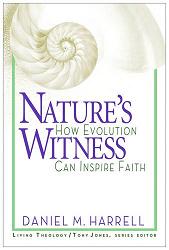
from a guest voice in the science and religion dialogue. This week’s guest entry was written by Daniel M. Harrell, a minister at Park Street Church in Boston and author of Nature’s Witness: How Evolution Can Inspire Faith.

I recently led a seminar on faith and science at a large Christian music festival (of all places) in rural Illinois. While the reception was gracious (befitting Midwestern hospitality), there were those for whom any allowance of evolutionary thinking amounted to theological heresy of the highest order. One pugilistic gentleman bulldogged me all week, insisting that geologists and biologists were misguided and mistaken. And yet as I listened to his harangue, it struck me that the real issue was not that humans and monkeys are close cousins, or that the will of God looks willy-nilly when it comes to genetic mutation, or that organic life requires an enormous amount of death and decay to occur. No, his real concern was Biblical authority. If the world was not created by God in six days (like the Bible says) and people were not made in God’s image (like the Bible says) according to divine purpose (like the Bible says), then why should he believe that Jesus rose from the dead for his sins (like the Bible says)? If evolution is right, then the Bible is wrong?about everything.

But what if, instead of the Bible, it is our reading of the Bible that is incorrect? What if the realities of nature mean we need to rethink the way we understand Scripture? Now I know that just because a particular theory makes sense of the way something could have happened doesn’t necessarily mean that it actually happened that way. But if evolution provides an accurate description of life on earth, how might we rethink what the Bible says? To rethink what we think about the Bible is not to rewrite Scripture, nor is it to capitulate to Christianity’s detractors. Instead, rethinking and reworking our theology in light of accurate scientific data results in a more dependable and resilient theology. To be a serious Christian is to seek truth and find it as revealed by God both in Scripture and in nature. If God is the maker of heaven and earth, as we believe, then the heavens and earth, as science describes them, have something to say about God. Natural selection need not imply godless selection. To be reliable witnesses of creation can’t help but make us more reliable witnesses to the Creator.

As interpretive human endeavors, science (which interprets nature) and theology (which interprets Scripture) are unavoidably limited and prone to error. Humility is required to do both. And yet, when interpretation gets it right, we should expect science and theology to concur inasmuch as nature and Scripture both come from God. That science convincingly shows the earth to be 4.5 billion years old means that “day” in Genesis must mean something more than a twenty-four hour period. That hundreds witnessed the resurrection of Jesus and billions more have been changed by the risen Christ means that death is not the complete end of life. Maybe what looks like willy-nilliness is really God’s will. What if God intends for the free-processes of evolution to operate as they do in order to result in free-willed people who look like God? Moreover, while evolution allows that nature could have turned out differently than it did, the fact that nature did not turn out differently but actually moved from simplicity toward greater complexity and climaxed with humanity makes divine purpose, intentionality and ingenuity plausible. What if the eons of organic death and decay prior to humanity’s appearance manifest God’s own sacrificial generosity?previewing the massively sacrificial generosity that occurred on the cross? Nature and Scripture can be read together.

After each of my seminars at the music festival, it was common for a crowd to gather outside to continue the discussion. In one such circle, a young man sadly described his loss of faith as a result of a freshman biology class. His theology was not equipped to embrace the onslaught of scientific evidence. When push came to shove, he had to go with the science. He bought my book in hopes of discovering a convergence between science and faith that would enable him to believe again. But he admitted that he had serious doubts as to whether that could ever happen.

As a minister in a stalwartly evangelical church in Boston, I’m accustomed to university students getting hammered by their biology classes and then coming to me for reassurance that God still exists. It’s easy to assure them that God is still there. What’s hard is getting them to think differently about God. And yet throughout Scripture, people were always coming up against a God who defied their expectations. From Moses atop Mt. Sinai to Jesus’ own disciples, to Paul on the Damascus Road and John on Patmos?God consistently revealed himself in ways that even the most faithful found hard to believe. But that’s as it should be. Faith is not fantasy. It is grounded in the reality of the way things are rather than in the way we want things to be.

Share
|


Previous Posts

We're Moving
Science & the Sacred is moving to our new home on The BioLogos Foundation's Web site. Be sure to visit and bookmark our new location to stay up to date with the latest blogs from Karl Giberson, Darrel Falk, Pete Enns, and our various guests in the science-religion dialogue. We're inaugurating ou

posted 8:00:00am Dec. 11, 2009 | read full post »

Shiny Scales, Silvery Skins, and Evolution
  Source: Physorg.comIridescence -- a key component of certain makeup, paints, coatings of mirrors and lenses -- is also an important feature in the natural world. Both fish and spiders make use of periodic photonic systems, which scatter or reflect the light that passes against their scales or

posted 8:00:00am Dec. 09, 2009 | read full post »

A Stellar Advent Calendar
Looking for a unique way to mark the days of the Advent season? The Web site Boston.com offers an Advent calendar composed of images from the Hubble Telescope, both old and new. Each day, from now until the celebration of the Nativity of Christ, the calendar will offer a beautiful image from the hea

posted 8:00:00am Dec. 09, 2009 | read full post »

Belief, Guidance, and Evolution
Recently BioLogos' Karl Giberson was interviewed by Marcio Campos for the Brazilian newspaper Gazeta do Povo's Tubo De Ensaio (i.e. "Test tube") section. What follows is a translated transcript of that interview, which we will be posting in three installments. Here is the first. Campos: Starting o

posted 8:00:00am Dec. 08, 2009 | read full post »

Let's Come at this From a Different Angle
Every Friday, "Science and the Sacred" features an essay from a guest voice in the science and religion dialogue. This week's guest entry was written by Peter Enns. Enns is an evangelical Christian scholar and author of several books and commentaries, including the popular Inspiration and Incarnatio

posted 8:00:00am Dec. 04, 2009 | read full post »

Advertisement
Comments read comments(35)
post a comment
Kathryn Applegate

posted September 11, 2009 at 10:39 am


This is one of the first articulations I’ve heard from a pastor rather than a scientist about the importance of seeking truth from both scripture AND nature. I appreciate the point that theology and science are *interpretive* disciplines and need to be in harmony if God is indeed the maker of the created realm.
On an unrelated note, I had the opportunity to worship with Park Street Church in July and enjoyed it thoroughly. It was refreshing to meet with believers and hear a gospel-centered message after a red-eye flight from the west coast!


report abuse
 

Rachael

posted September 11, 2009 at 11:30 am


Thank you for your post. As much as I have gotten out of the scientific aspects of understanding ‘science and faith’, I have been waiting for more pastors and theologians to lend their expertise to the subject. John Walton is making admirable inroads with Genesis and we need more pastors to help us work out the theological reinterpretations of things so that Christianity can remain in strong and vibrant dialogue with science.
(On a personal note, I am grateful to your church’s partnership in missions in the Middle East)


report abuse
 

Nancy Janisch

posted September 11, 2009 at 1:36 pm


I am very glad to read this. You are, I believe, exactly right. The “conflict” between science and religion is at root a Biblical interpretation problem. Many people lack the ability to read the Bible in any other way than literally. The simple lack the skills. Often I find they have no knowledge that alternate ways of reading exist and that they have existed in the Christian tradition for a very long time.
As someone trained in both biology and theology, I now think it is more important for me to place my efforts in helping people learn how to read and interpret the Bible. Once people have the tools and knowledge to read and engage the text well and seriously, most of the science and religion “issues” disappear. As you correctly point out, this isn’t dismissing the truth of the Bible or changing its meaning. It is acknowledging that our interpretations need to change and grow. Sadly this is a new and difficult concept for some of us.


report abuse
 

Scott Mapes

posted September 11, 2009 at 4:08 pm


This is a very well thought out and wise response to the seeming conflicts between science and biblical understanding. As one must be careful not to make presumptuous theological conclusions based on misguided hermeneutics, however, caution must be exercised on the part of scientists not to quickly dismiss biblical data as allegorical. Remember what happened when so-called 19th century “scientific” hermeneutics were dismantled by the discoveries of 20th century archaeology!


report abuse
 

dave

posted September 11, 2009 at 10:57 pm


Naaahhh.
I have a fresh bottle of water, tapped from an unadulterated source, and poured into a freshly sanitized glass.
I have a bottle of sewerage.
How much of the sewerage must I put into the clean water before you won’t drink from the sanitized glass?
*******************************************************************
I have the pure word of God.
I have a bunch of interpretations and scientific stories about how the universe and everything in it began, evolved, and got to where it is today.
How much of the latter must I add to the former before you will not believe either?


report abuse
 

Your Name

posted September 12, 2009 at 12:19 am


How old is the universe Dave? And the world?
Do you disregard all science, or just that which threatens a literal interpretation of the Bible?
Just as an exercise: Is there any evidence which could dissuade you from believing a literal Genesis? How do you think you would feel if you encountered such evidence? Would you confront it and grapple with it honestly, or react against it? You don’t have to answer any of these questions here, but you may want to ask them seriously and honestly in the privacy of your own thoughts.


report abuse
 

Dan

posted September 12, 2009 at 9:05 am


Dave,
I genuinely feel sorry for you that you see science as a “bottle of sewage.” By better understanding God’s creation I have felt a closer connection to the creator, I’m sorry that you do not see that.
Science isn’t always good, obviously, but think about all the great things that God has allowed us to develop by understanding the world through science. Things like vaccines, language, surgery, airplanes, books, computers, math, painting, architecture, antibiotics, and even evolution.
By viewing the study of God’s creation as a “bottle of sewage” you are really missing out on a better understanding and sense of reverence of God, like the Psalmists, Isaiah, Paul, and Job wrote about.


report abuse
 

Daniel Mann

posted September 12, 2009 at 4:17 pm


Daniel Harrell,
The history of Christianity carries many scars, which have resulted from well-meaning Christians trying to impose their latest, most appealing fad-theory upon the Bible. All of our heresies have resulted from this impulse to modernize the faith and to make it more appealing to our learned contemporaries. We have embraced Socinianism, Unitarianism, Deism, Universalism, Romanticism, Therapeutism, Postmodernism and Liberalism, and each of these “isms” coerced the Bible into saying what it demanded and robbed the Faith of its confidence and vitality. Darwinism is just the new kid on the block, and not even the prettiest one.
You wrote, “But what if, instead of the Bible, it is our reading of the Bible that is incorrect? What if the realities of nature mean we need to rethink the way we understand Scripture?”
We should always be willing to scrutinize the way we interpret Scripture. Likewise, we need to take a sober look at evolution to assess whether or not this theory has any correspondence whatsoever with Scripture.
It seems blatantly obvious that evolution presents us with a conflicting worldview. While Scripture presents us with a coherent portrait of a perfect creation, evolution presents us with a horror—a survival-of-the-fittest. While Scripture is unequivocal about the problem—human sin—evolution sees mankind and sin as part of a continuum with the entire animal kingdom. While Scripture presents the Messiah as the means of restoration (Acts 3:21) and the corrective for the Fall (Romans 8:20-23), the theistic evolutionist abruptly and artificially pushes aside Darwin in the final act in favor of Jesus who redeems mankind, but from what?—God’s original creation order? And for whom?—The continuum of the animal kingdom?
If God had ordained evolution to bring about His crowning achievement—humankind—then survival-of-the-fittest is a good thing. Then who can blame Adam and Eve for wanting to pull off the major coop of being like God, or who could blame Cain for wanting to kill his naïve, un-fit brother Abel? They were merely following in step with God’s creative plan.
By imposing evolution upon the Holy of Holies of Scripture, we not only defile Scripture, but we also insult God as the Designer of the survival-of-the-fittest—something far beneath His dignity.


report abuse
 

Amy

posted September 12, 2009 at 6:02 pm


Dave,
What does the incarnation of Christ mean to you?
Daniel Mann,
“Scripture presents us with a coherent portrait of a perfect creation”
Could you please explain what you mean by perfect?


report abuse
 

Daniel Mann

posted September 12, 2009 at 6:43 pm


Amy,
Thanks for the question. Here’s some of the Scriptural evidences for a perfect creation:
1. The animal kingdom was entirely herbivorous.
2. God declared that it was all “very good.”
3. Because there was no share or guilt, the first humans felt no discomfort because of nakedness.
4. Adam seemingly lacked just one thing—a wife—so God provided him with one, thus satisfying all his needs.
5. God was in intimate communion with Adam. Only after the sin do we find that this fellowship was interrupted. The couple lied, hid from God, blame-shifted, and ultimately refused to repent.
6. Death was introduced only after Adam and Eve’s sin and refusal to repent (Genesis 3). Similarly, we see the corruption of the created order introduced at this time.
7. It was all so good that this order became the ultimate standard for humankind. Jesus therefore taught that the model of marriage was exemplified by the pre-Genesis 3 (Matthew 19). Likewise, Peter talked about the restoration of all things to this perfect state (Acts 3:21). Revelation portrays our ultimate hope in terms of the elimination of the curse (Gen.3). Paul refers to post-Genesis 3 period as one of “corruption” and “bondage.”
I hope that this is helpful!


report abuse
 

Beaglelady

posted September 12, 2009 at 9:34 pm


Dave,
Your hatred of scientists and science is shocking and over the top.
You said,

“I have a fresh bottle of water, tapped from an unadulterated source, and poured into a freshly sanitized glass.”
“I have a bottle of sewerage.”
“How much of the sewerage must I put into the clean water before you won’t drink from the sanitized glass?”

I found your analogy to be quite ironic. Don’t you know that it is science that tells us which water is safe to drink?


report abuse
 

Felipe

posted September 12, 2009 at 10:18 pm


Hello. Good article. Thank you for writing on this topic.
I consider myself to be in or leaning towards the theistic evolutionist camp at the moment. I have found two books to be helpful in shaping a Christian worldview that accomodates teachings from the Bible and what we learn from nature via scientific inquiry. I think they could be helpful to other folks interested in this general topic. They are: Paradigms on Pilgrimage: Creationism, Paleontology, and Biblical Interpretation by Stephen J. Godfrey and Christopher R. Smith, and Inspiration and Incarnation by Peter Ehns. The latter one is not directly related to evolution and creationism, or in harmonizing the Bible with scientific knowledge, but more broadly on how to think about the Bible as a communication from God.
If anyone has any books that you’ve read and think would be helpful to develop a more intellectually honest Christian worldview please share.


report abuse
 

Beaglelady

posted September 13, 2009 at 6:30 am


Hi Felipe!
Welcome the the blog. BioLogos maintains an good list of recommended books on science and faith here I have read a number of them, and they are all good.


report abuse
 

Amy

posted September 13, 2009 at 5:56 pm


Daniel Mann,
“Very good” is far from perfect…actually most translations say just plain ole “good”. Some Ancient Hebrew scholars even translate the Hebrew word as “functioning”. Perfection is yet to come and I’m looking to an eternal life that is renewed beyond our wildest imagination and certainly beyond the state of pre-fall Eden.
How marvelous it must have been for man to intimately commune with God. As much as they COULD. They only knew a PART of God. As a friend of mine once explained…
How can a merciful God show mercy in a world that has not erred?
How can he show himself as Conqueror without enemies?
How can he show himself as Deliver unless there is captivity?
Or Refuge unless there is a threat?
Or Healer unless there is sickness?
Or Forgiver unless wrongs have been committed?
Adam lacked much more than a wife.
Not to mention the fact that there was a deceiving serpent with evil intentions roaming about…I don’t think I want to go back to Eden.
I cherish the growth and understanding that God has given me through my sufferings in this world.
All this to say, Daniel Harrell’s post is an inspiration to those of us who see God’s character in scripture and how that is in harmony with God’s invisible attributes shown in the created world. Grace.


report abuse
 

Mark

posted September 13, 2009 at 7:44 pm


Thank you for the article and sharing your perspective. There is no fear in Christ, so there is no need to worry about a matter of misunderstanding. Even the early eyewitnesses of Jesus and his miracles wanted authentic proof that Jesus was the real deal (John 14:8). There’s only One who can measure the true faith of a person. The details of early earth and life’s beginning are a different matter that can be explained by science. I love to learn what scientists continue to unravel about origin of life.
Of course defending the literal interpretation of Genesis is a different matter, as you indicated in the article.


report abuse
 

Greg C

posted September 14, 2009 at 11:37 am


Daniel Mann said:
“1. The animal kingdom was entirely herbivorous.”
I know this is a common claim by some prominent YEC groups, but…Daniel: Have you really thought this through? A few things to ponder:
a) What about the fish and other sea creatures? Were they also “entirely herbivorous”, eating only phytoplankton or seaweed? By your definition, zooplankton were not consumed, but knowing that the seas contain mixtures of phyto-, zoo-, and bacterioplankton, one has to wonder how animals could be sure to consume one and not the others. Present-day Blue Whale consume massive quantities of krill (animals). Did they eat something else before the fall? Also: Sharks, Dolphin, Starfish – very efficient carnivores, apparently by design! What plant matter did they eat before the fall, and how?
b) And what about the collateral effects of all those land-dwelling herbivores: Are you suggesting that there were no hapless aphids or other creatures on those leaves that were being consumed? That would be death for the aphid, right? Granted, the aphids were not the primary foodstuff, but “death” would be a reality in some part of the animal kingdom.
Clearly, we need to wrestle with what Genesis 1:29-31 has to say (where God gives “every green plant for food”), but the fact that there are some green plants that are actually toxic to some species should give us pause to consider more carefully what is being taught here and not make universal statements about the animal kingdom being *exclusively* herbivorous.
–Greg C


report abuse
 

Beaglelady

posted September 14, 2009 at 9:21 pm


Good point, Greg. Perhaps God fed the blue whale with an IV drip.
Before the fall it must not have been such a paradise. Imagine having immortal parasites!


report abuse
 

Daniel Mann

posted September 15, 2009 at 6:52 am


Greg,
I will grant you that there are many counter-intuitive and perplexing aspects of Genesis 1 and 2, but let’s be fair-minded. There are also many perplexing and counter-intuitive aspects of Darwinism—the development of consciousness, freewill, everything coming from nothing, order from disorder, the origin of life, the cell, DNA, proteins, the laws of nature—and for none of these is there any experimental evidence.
As for me and my house, we’ll put our money on our Creator.


report abuse
 

Your Name

posted September 15, 2009 at 11:00 am


Daniel,
“By imposing evolution upon the Holy of Holies of Scripture, we not only defile Scripture, but we also insult God as the Designer of the survival-of-the-fittest—something far beneath His dignity.”
I don’t know how many times I have to say it (re: the previous post by Denis L. on Ancient science in the Bible), but you don’t seem to listen so I’ll say it again.
We are not “imposing” anything on the Bible. The science of the bible, including natural history (origins), reflects the scientific consensus of the day, and it must therefore be read with that in mind first before any application can be made to modern circumstances.
It is the YECs and OECs (scientific concordists) who are imposing their 21st century post-enlightenment scientific worldview onto the scriptures — not the TEs or the ECs. To leave Scripture in its native context is to repsect the origingal intent of the authors (or author – Holy Spirit). To rip selective scriptures out of context and force them to address the scientific curiosities of modern culture (ie: how old is the earth, how did life begin, etc…) IS TO DEFILE THE WORD OF GOD!
Gordon


report abuse
 

Your Name

posted September 15, 2009 at 11:03 am


“As for me and my house, we’ll put our money on our Creator.”
That sort of bumper-sticker theology wouldn’t survive even the most basic encounter with the scientific evidence.


report abuse
 

Daniel Mann

posted September 15, 2009 at 1:13 pm


Gordon,
You wrote, “I don’t know how many times I have to say it (re: the previous post by Denis L. on Ancient science in the Bible), but you don’t seem to listen so I’ll say it again.”
You are so patient with me, giving me another chance. What can I do to make it up to you? Perhaps if I acknowledge that Genesis is really teaching evolution rather than what I had charged—that you have imposed the alien theory, evolution, on Genesis! But aren’t you interpreting Genesis from the interpretive lens of the prevailing scientific consensus?
You are claiming that I am “imposing [my] 21st century post-enlightenment scientific worldview onto the scriptures!” ?%$#@?? It seems that we are at an impasse here, so let me give you an example of how I interpret a Genesis account.
We both agree that there are figurative and literal elements in Scripture and all manner of shades in between. How do we know how to interpret the flood account? We compare Scripture with Scripture, as we do with any piece of literature, using what is clear to illuminate what is uncertain.
While you probably take the flood as allegorical and un-historical (you summarily dismiss the history of the Bible), I must take it as historical fact, not because of my “post-enlightenment scientific worldview onto the scriptures,” as you charge, but because of the authoritative references from the rest of the Bible. Every subsequent reference to Noah and the flood accepts it as literal history (Isa. 54:9; Eze. 14:14; 1 Chron. 1:3; Matthew 24:37-38; Luke 17:26-27; 3:36; Hebrews 11:7; 1 Peter 3:20; 2 Peter 2:5).
Besides, these various references arise from different cultures at varying times. (This tends to rule out your contention that the Bible had been duped by the errant ANE cosmology of the day, and therefore, we can’t trust what it says about the material world.) These references include Jesus’ testimony to the historicity of the flood. Are you going to claim that Jesus had a screwed-up understanding of history? Peter asserts that the flood serves to teach us that we need to take seriously God’s threats regarding sin and divine punishment. If the flood was no more than an allegorical lesson, then this lesson would prove the very opposite of what Peter was trying to prove—that the flood serves as powerful evidence that God will once again bring judgment to our world. If there the flood wasn’t historically factual, then this would prove the opposite—that God’s bark is worse than His bite.
Once again, this serves as an example that you can’t separate history and theology; you can’t separate the history of the Cross from the theology of the Cross. Further, when you insist, without basis, that Genesis 1-11 is not historical, against the testimony of the rest of the Bible, you have eliminated any reason to believe ANYTHING the Bible teaches.


report abuse
 

Gordon J. Glover

posted September 15, 2009 at 4:00 pm


Daniel,
“Perhaps if I acknowledge that Genesis is really teaching evolution rather than what I had charged—that you have imposed the alien theory, evolution, on Genesis!” — The bible doesn’t teach evolution any more than it teaches that orchid seeds are smaller than mustard seeds, or that the brain is organ of thought and emotion, or that the earth is round, or that it orbits the sun. Why would it teach any of these things? That is not its purpose. Moreover, if it did teach these things, than it surely would have been WRONG according to the scientific consensus of the ANE.
“But aren’t you interpreting Genesis from the interpretive lens of the prevailing scientific consensus?” — No. If that were true, then nobody could properly interpret the bible until Charles Darwin came along. That would be silly.
“While you probably take the flood as allegorical and un-historical…” — The flood story, as well as the creation story, tower of babel, and just about everyting in the first 11 chapter of Genesis belongs to a category of literature known as origins mythology or cosmogony. Every ancient culture had these. They gave a non-scientific (but heavily theological) account of who a people were and where they came from, who the gods where and what man’s status was before them. The difference between the pagan myths and the Hebrew myths is not about who has the most accurate science or history. The difference is that we believe, by faith, the Hebrew stories to be inspired inspired and contain timeless truth about who God is, who man is, how man should relate to woman, to creation, and to his fellow man. To expect anything more of Genesis goes beyond what can be expected from that genre of literature. Most Christians read Genesis like an encyclopedia of natural history that floated down through a hole in clouds.
“I must take it as historical fact, not because of my “post-enlightenment scientific worldview onto the scriptures,” as you charge…” — yes, it is exactly this. You just admitted it. The literary category known as “historical fact” did not even exist until moden times. That is a modern invention that would have been completely out of place in the ANE. What we would consider historiography today was more like legend, myth and cosmogony in ancient times. Just look at the difference between Chronicles and Judges.
“These references include Jesus’ testimony to the historicity of the flood.” — when I read the story of Paul Bunyan to my kids, I don’t have to explain to the older ones that the literary genre of the narrative is “mythological” vice historical. They are mature enough to know the difference. However, my youngest still needs to reminded that the great lakes were not created by the footsteps of a giant lumberjack, and the Grand Canyon did not form when he drug his axe through the desert on a westward journey. The story is not about the natural history of the Grand Canyon or the Great Lakes, but it is rather about the stregnth and vitality of the American Frontiersman and the super-human determination that it took for those pioneers to carve a civilization out of the wilderness. The story uses larger-than-life characters to communicate these larger-than-life themes. How much more so the Bible when telling ancient man about God?
A Christian who reads Genesis 1-11 as history is basically demonstrating the level of maturity of a small child. Talking snakes? World-wide floods? Two of every animal on the Ark? These are clearly mythologies using larger-than-life subjects designed to teach larger themes. Prior to the systematic use of science, what how else could ancient man communicate these all-important themes? How else could ancient man answer questions like “where did we come from?”. Now we can answer these question, but that doesn’t mean the stories aren’t relavent. They are still absolutely relavent. Ironically, most evangelicals completely trample over the deeper themes when they attempt to extract science and history from the text.
“Are you going to claim that Jesus had a screwed-up understanding of history?” — Accommodation is not a screw-up. He taught from within the cognitive environment of his audience. Remeber the mustard seed and the 3-tiered universe.
“Peter asserts that the flood serves to teach us that we need to take seriously God’s threats regarding sin and divine punishment.” — which is does. But to say that a story teaches us a lesson is quite a different claim than saying that the story is a historical reality.
“Once again, this serves as an example that you can’t separate history and theology; you can’t separate the history of the Cross from the theology of the Cross.” — I’d be careful here. There are so many factual contradictions between the gospels surrounding the death, burial and resurrection of Jesus that you are basically inviting the world to dismiss the Gospel on account of these errors. Once again, you are imposing standards of historiography that did not exist until thousands of years later. Not smart.
“Further, when you insist, without basis, that Genesis 1-11 is not historical, against the testimony of the rest of the Bible, you have eliminated any reason to believe ANYTHING the Bible teaches.” — And when you say things like that, you have stepped out of the ANE worldview and have imposed your journalistic-modernistic understanding of what historiogrphy should look like into the ancient scriptures. And unfortunately, you have offered the entire counsel of God on the altar of scientific and historical accurracy. You have set aside the ancient worldview where truth can be accurately expressed using story, legend, myth and cosmogony, and you have imposed your modern worldview wherein a narrative can only be true if it meets a very high standard of material and historical fact. Again, not a good idea.
We both share a desire to preserve biblical authority. We both want the bible to remain timeless, and relavent to all people in a all places in all times. We just disagree on how best to do this. The thing that irks me about you, Daniel, is not that we disagree, but that you continue to accuse us of tossing out the bible.
Evangelicals who insist on the historical and scientific accuracy of the Bible are like a child at the beach who takes his towel with him into the surf so he’ll have it “handy” when it’s time to dry off. They are acting out of concern and right motive, but are completely naive as to how to accomplish what it is that they desire. And their miscalculation actually undermines that which they are trying to protect.


report abuse
 

Greg C

posted September 15, 2009 at 6:41 pm


Daniel Mann said:
“As for me and my house, we’ll put our money on our Creator.”
Well, me too, actually.
In fact, I’m suggesting that ALL of the things in your list (“consciousness, freewill, everything coming from nothing, order from disorder, the origin of life, the cell, DNA, proteins, the laws of nature”) are precisely the work of a Sovereign Creator who could just as easily use and direct a very long process to create everything we see as He could simply zap things into existence.
Given the multiple lines of evidence in the physical world – the Fingerprints, if you will – the “long process” idea seems to make the most sense of the data. If that’s the way God did it, why should I object?
Personally, I’m driven to deeper worship when I consider how the physical world reveals the patience and dynamic creativity of God. I think our notions about the acts of creation are wrong when we see it like a cosmic magic trick – things popping into existence. It seems more in character with the Patient, Loving God we see in the Bible that the acts of creation might be more like the work of a great artist or chef – things that take time, care, and are in some ways, acts of love.
Greg C.


report abuse
 

Daniel Mann

posted September 16, 2009 at 1:43 pm


Greg C.
I’m certainly glad that our God is #1 in your life, but I’m a bit curious regarding what you wrote:
“Personally, I’m driven to deeper worship when I consider how the physical world reveals the patience and dynamic creativity of God. I think our notions about the acts of creation are wrong when we see it like a cosmic magic trick – things popping into existence. It seems more in character with the Patient, Loving God we see in the Bible that the acts of creation might be more like the work of a great artist or chef – things that take time, care, and are in some ways, acts of love.”
We are instructed to “worship the Father in spirit and truth, for they are the kind of worshipers the Father seeks. God is spirit, and his worshipers must worship in spirit and in truth.” (John 4:23-24). Therefore, my question to you is this—“How do you know that the worship you are offering to God is in accordance with His truth? Do you find Scriptural warrant for it?”


report abuse
 

Daniel Mann

posted September 16, 2009 at 2:13 pm


Gordon, et. al.,
Actually, I’m thankful for your response. It provides a perfect illustration of what happens when we try to marry Darwin and Jesus and the demeaning conclusions you are coerced into taking: “A Christian who reads Genesis 1-11 as history is basically demonstrating the level of maturity of a small child.”
Your response demonstrates how the Bible is abused, denigrated and taken captive into conformity to your presuppositions. You have made it into your marionette so you can mouth through it what you want it to say. How do you do this? You gut it of all substance and rigor, denying its factuality and historicity, making it prey to whatever you want to impose:
“The literary category known as “historical fact” did not even exist until moden times. That is a modern invention that would have been completely out of place in the ANE. What we would consider historiography today was more like legend, myth and cosmogony in ancient times. Just look at the difference between Chronicles and Judges.”
How about the SIMILARITIES between Chronicles and Kings, which are talking about the same time-periods! Were these books not concerned about historical facts? You even state that Jesus seemed to endorse Biblical history, merely to accommodate to His ignorant contemporaries. However, Jesus’ words demonstrate that He not only endorsed the history, but also based His arguments upon this history. Here’s one example:
“As it was in the days of Noah, so it will be at the coming of the Son of Man. For in the days before the flood, people were eating and drinking, marrying and giving in marriage, up to the day Noah entered the ark; and they knew nothing about what would happen until the flood came and took them all away. That is how it will be at the coming of the Son of Man.” (Matthew 24:37-39)
You maintain that Jesus was merely perpetuating a myth. However, He declares that as the story of Noah was historically factual, so too will be His “coming”. If He knew Noah to be a myth, He would also be saying that His return was no more than a myth. Instead, what evidence do you have that Jesus was merely pandering to the ignorance of His disciples?
Peter also refers to the flood as proof that God will bring judgment. Had this account NOT been historical, it would have proved the opposite—that God is just bluff. All you can point to is the bland assertion that Genesis doesn’t contain history. However, this is against the say-so of all the Biblical authors.
One last example:
“Haven’t you read,” he [Jesus] replied, “that at the beginning the Creator ‘made them male and female,’ and said, ‘For this reason a man will leave his father and mother and be united to his wife, and the two will become one flesh’? So they are no longer two, but one. Therefore what God has joined together, let man not separate.” (Matthew 19:4-6)
Had this reference to Adam and Eve been mythological, Jesus’ educated opponents would have easily been able to dismiss this argument. If instead, this account was mythical, Jesus couldn’t have used it as a normative model for marriages. Myths carry no authority, but instead illustration. But the work of God is normative. Understanding that, HISTORICALLY, this represented God’s ideal for marriage, Jesus argued that it was the divinely appointed model for humankind, because God had HISTORICALLY joined man and woman together. Furthermore, Jesus concludes that “the two will become one flesh.” What makes this so? A myth or the fact that God had HISTORICALLY made the two one flesh, and thereby set forth the ultimate pattern?
In both of these examples, Jesus was the one who brought up these events. If it had merely been a matter of His accommodating to their ignorance and false belief in these events, I can find no reason why Jesus would want to gratuitously reinforce an understanding that only befitted “the level of maturity of a small child.” There is no reason at all to regard these as mythological, unless we have a prior commitment to dismiss the historicity of Scripture and, along with this, all the power and authority that attends to it. You can’t dismiss the history of the Bible without also dismissing everything else.


report abuse
 

Greg C

posted September 16, 2009 at 3:20 pm


Daniel Mann said:
“Therefore, my question to you is this—“How do you know that the worship you are offering to God is in accordance with His truth? Do you find Scriptural warrant for it?” “
I think you missed my point, but maybe I was unclear: I do not worship because of the *process* God may have used (…or worship the process, in any sense at all). I worship because at its most basic level, Scripture reveals a God who creates, so that I can wholeheartedly affirm, “I believe in one God, the Father Almighty, Maker of heaven and earth, of all things visible and invisible…”, to quote one helpful summary. The fact that the process is pretty amazing and that we are in some way privileged to uncover parts of it is just a bonus!
Also: If the acceptability of our worship was contingent upon the worshipers having absolute perfect knowledge of everything (like the exact process of creation)…well, we’re all sunk. “His truth”, as you put it, is that He’s the Creator. That’s the point.
–Greg C


report abuse
 

Daniel Mann

posted September 16, 2009 at 4:08 pm


Greg C.
You’re perfectly correct: “If the acceptability of our worship was contingent upon the worshipers having absolute perfect knowledge of everything (like the exact process of creation)…well, we’re all sunk.”
Nevertheless, I know that I have a tremendous responsibility to Worship and speak correctly of my Lord, however difficult this is. God chastened Job’s friends because they had spoken “not what was correct” about God (Job 42:8).
It is therefore my continual prayer that He would examine and correct me and cause me to interpret His Scriptures in a way that is pleasing to Him, and I trust He will. This trust gives me great freedom and also edifies us with the knowledge that we represent the Creator.


report abuse
 

Gordon J. Glover

posted September 16, 2009 at 4:43 pm


Daniel,
“…what evidence do you have that Jesus was merely pandering to the ignorance of His disciples?” — how about contemporary geology? You seem to conveniently forget that there is absolutly ZERO evidence of a recent worldwide flood. Surely such an event would leave some clues behind, but there is nothing. In fact, there are clues that lead to an entirely different scenario of earth history then what Genesis lays out. And Genesis looks curiously like the origins myths of Egypt and Mesopotamia. Hmmm…. So all of your arguments are meaningless. You could just as well be arguing that a triangle has four sides. What are you arging can easily be demonstrated to be false. It’s nonsensical.
“Peter also refers to the flood as proof that God will bring judgment. Had this account NOT been historical, it would have proved the opposite—that God is just bluff.” — Using a popular story to teach a lesson does not make the story true. Jesus told many stories. Does the fact they are made-up (parables) take anything away from the point he was making? No.
“All you can point to is the bland assertion that Genesis doesn’t contain history.” — physical evidence is not a bland assertion (whatever that means). Again, you might as well be arguing that 2+2=5.
“Had this reference to Adam and Eve been mythological, Jesus’ educated opponents would have easily been able to dismiss this argument.” — wrong again. You seem very ignorant of ancient culture and the role that myth and legend played in those times. Origins stories carried a lot of weight. Why do you think the first thing Moses provides his people is an origins story?
“Myths carry no authority, but instead illustration.” — perhaps in modern culture, but in ancient times myths were the equivalent of science. That is how ancient mans answered all of the important questions like “who am I and where did I come from?”
“A myth or the fact that God had HISTORICALLY made the two one flesh, and thereby set forth the ultimate pattern?” — Again, your problem is that it is physically impossible for all people alive today to have descended from a single human couple in just over 6000 years time (less than that if you condier Noah’s family repopulating the ante-dilluvian earth). No matter how much you want the story to be true, it can’t be true, unless you want to also believe that God erased all evidence of it and planted evidence of a false history instead. Is that the kind of God you worship? A God who does one thing, covers it up, then plants evidence of something else, then commands us to believe that which he covered up? That is the corner you have backed yourself into.
“You can’t dismiss the history of the Bible without also dismissing everything else.” — Now you are singing from Richard Dawkin’s songsheet. No wonder educated people are leaving the church in droves. They are being asked by people like you to either surrender their brain to Christ or leave. Not much of a choice if you ask me.


report abuse
 

Daniel Mann

posted September 18, 2009 at 10:34 am


It is patently obvious that all of the writers of the NT regarded the Genesis account as factual and not mythological, as evolutionists allege. Peter warns:
“But they [the “scoffers,” verse 3] deliberately forget that long ago by God’s word the heavens existed and the earth was formed out of water and by water. By these waters also the world of that time was deluged and destroyed.” (2 Peter 3:5-6)
If Peter had believed that these accounts were mythological, he would have had no basis to censure the “scoffers” for denying that these things had historically happened. In fact, everything that the NT records affirms the historicity of the Genesis accounts. Then why do the theistic evolutionists (TEs) deny them? They cleave to the prevailing scientific consensus above Scripture and therefore claim that the Genesis accounts are “Nonsensical.”
However, when the TEs deny the historicity of the accounts, they also deny the theology, which is inseparable from them. Jesus had argued from the historical account of God making the man and woman “one” (Gen. 2), that this ruled against divorce, which would serve to undo what God had done (Matthew 19:4-6). History cannot be separated from theology, as the event of the Cross can’t be separated from the theology of the Cross. TEs consistently separate these two, thereby undermining everything that the Bible teaches, even in spiritual matters. Nevertheless, they assure you that you can be a Christian and an evolutionist at the same time.
Instead, our Lord would prefer us hot or cold, and not illegitimate, self-conceived hybrids as Paul warned against, “having a form of godliness but denying its power. Have nothing to do with them” (2 Tim. 3:5).
One TE labeled the belief in an historical worldwide flood as “childish,” claiming that there “zero” evidence to support it. For one thing, there is an abundance of evidence for the flood. However, the TEs “deliberately forget” about these and vilify the sources that provide these evidences. (Perhaps ironically, Phillip Johnson, a former Berkeley Law professor and one of the leading lights in the ID movement, observed that he had received some of his worst receptions at “Christian” colleges!) Nevertheless, there are approximately 200 people-groups have retain some account of a worldwide flood. I think that this constitutes evidence! There is also a wealth of scientific findings, but TEs demonstrate a marked predilection for the officially sanctioned sources.
Along with this, Christians who believe that the Bible is fully God-breathed (2 Tim. 3:16) are routinely charged by TEs of mindlessness:
“No wonder educated people are leaving the church in droves. They are being asked by people like you to either surrender their brain to Christ or leave.”
1. Granted, traditional Christianity isn’t fashionable and never has been. People have always left the church in droves when they began to feel the cost. When Deism ruled, the miracles of the Bible became an embarrassment. The Deist erroneously believed that he had to choose between the laws of nature and miracles. Consequently, Jefferson excised all the miracles from his Bible, creating the Jefferson Bible. Today, TEs use a figurative scissor to cut and neutralize all the early accounts that impinge upon science and history, leaving the Bible defenseless against the invasion of Darwinism. Oddly, they leave the miracles of Jesus in place—a bit of favoritism, I guess.
2. Is it any more mindless to believe in the historicity of the Genesis account, than to believe as the evolutionist believes that everything jumped into existence, uncaused, from nothing?
3. TEs exhibit an over-confidence in the formulations of the prevailing scientific consensus, and then label the historical Biblical accounts as “nonsense” because they fail to agree with this consensus.
4. The theories of science are being overturned continuously. Is it more rational to exalt the latest formulations of evolutionary orthodoxy as one’s ultimate authority, than a Revelation that has stood for thousands of years, that transforms lives and continues to receive objective confirmation? The theory of evolution is able to hold sway in the context of threats, expulsions and the vast resources at its disposal. In this, they are like the drug companies that have the resources to run hundreds of tests until one yields the results they are looking for and report only on that one. There exists a gross imbalance between the resources expended to prove evolution and those against. It is inevitable that this will yield imbalanced findings.
5. There are profoundly compelling reasons to trust the Biblical accounts, but such an exposition would require volumes.
6. It’s also a matter of priorities as Jesus had warned. We can’t serve two masters (Matthew 6:23-24; 6:33). We all have one primary lens through which we view and understand the world. Scripture is adamant that it must be the Word of God (2 Cor. 10:4-5) and not the prevailing scientific consensus or postmodernism…. It stands to reason that what is most important, unequivocal, and certain must bring into focus those facts that are more equivocal. By making Jesus my eyes and legs, I have been delivered from depression and anxiety, and so have so many others. This doesn’t mean that we are oblivious to what is happening in the science community. But it does mean that we regard its findings with some degree of humility and tentativeness, as we do our own interpretations of the Bible.
Ironically, the educated are particularly susceptible to certain kinds of temptations, as Jesus warned the educated of His day:
“How can you believe if you accept praise from one another, yet make no effort to obtain the praise that comes from the only God?” (John 5:44-47)
We have to be careful lest our desires for professional acceptance and respectability cause us to compromise our faith, denying its unseemly aspects.


report abuse
 

Gordon J. Glover

posted September 18, 2009 at 2:03 pm


Daniel,
“Nevertheless, there are approximately 200 people-groups have retain some account of a worldwide flood. I think that this constitutes evidence!” — Yes, evidence that all ancient cultures had a flood mythology. Where do you think the Hebrews got the idea? But there is no scientific evidence. Certainly such a massive event would have left behind some clues. Where are they?
“There is also a wealth of scientific findings, but TEs demonstrate a marked predilection for the officially sanctioned sources.” — Name one scientific finding that supports a recent global flood. I challenge you because there are none that can stand up to scrutiny.
“Is it any more mindless to believe in the historicity of the Genesis account, than to believe as the evolutionist believes that everything jumped into existence, uncaused, from nothing?” — I agree if that is your difinition of evolution. But you couldn’t be mroe wrong about what the theory actually states. You really should do your homework before making such an ill-informed statement.
“TEs exhibit an over-confidence in the formulations of the prevailing scientific consensus, and then label the historical Biblical accounts as “nonsense” because they fail to agree with this consensus.” — The biblical are not “nonesense” just because they don’t speak to us on the scientific level. Only a committed materialist would claim that scientific knowledge takes precedence over all other knowledge. And yet, you have basically just said the same thing. You think that unless the biblie is 100% scientifically and historically accurrate in all it claims, then the whole thing is nonesense. You demonstrate just how influenced you are with modern thinking. You toss out the ancient worldview from wich the Bible was authored as primitive and uneducated, and instead force the Scriptures to fit your modern worldview where trugh can only be expressed in exact scientific terms. And then you have the nerve to accuse us of not taking the bible seriously? Unbelievable.


report abuse
 

Daniel Mann

posted September 18, 2009 at 3:06 pm


Gordon,
What am I going to do with you? We have been exchanging for a while now, you continue to pursue me from one post to the next, and your challenges are becoming quite repetitive. In itself, this isn’t problematic, but the way you misrepresent me is. I’ll just address your last misrepresentation and afterwards, I might cease to address you directly:
“You think that unless the biblie is 100% scientifically and historically accurrate in all it claims, then the whole thing is nonesense. You demonstrate just how influenced you are with modern thinking. You toss out the ancient worldview from wich the Bible was authored as primitive and uneducated, and instead force the Scriptures to fit your modern worldview where trugh can only be expressed in exact scientific terms. And then you have the nerve to accuse us of not taking the bible seriously? Unbelievable.”
What you are accusing me of is totally groundless. You claim that I have been influenced by “modern thinking,” and “toss out the ancient worldview from which the Bible was authored.” This is a gross misrepresentation. One reason that we Evangelicals have taken the Bible as totally reliable is because Jesus and the Apostles did, and not because we are coercing it to say what it never intended to say. I’ll just let Scripture speak for itself:
1. Isaiah 40:8 The grass withers and the flowers fall, but the word of our God stands forever.”
2. Matthew 5:17-18 “Do not think that I [Jesus] have come to abolish the Law or the Prophets; I have not come to abolish them but to fulfill them. 18I tell you the truth, until heaven and earth disappear, not the smallest letter, not the least stroke of a pen, will by any means disappear from the Law until everything is accomplished.
3. Luke 24:44 He [Jesus] said to them, “This is what I told you while I was still with you: Everything must be fulfilled that is written about me in the Law of Moses, the Prophets and the Psalms.”
4. John 10:35 If he called them ‘gods,’ to whom the word of God came–and the Scripture cannot be broken–
5. Matthew 4:4 Jesus answered, “It is written: ‘Man does not live on bread alone, but on every word that comes from the mouth of God.’” (quoted from Deut. 8:3)
6. 2 Peter 1:20-21 Above all, you must understand that no prophecy of Scripture came about by the prophet’s own interpretation. 21For prophecy never had its origin in the will of man, but men spoke from God as they were carried along by the Holy Spirit.
7. 2 Tim. 3:16-17 All Scripture is God-breathed and is useful for teaching, rebuking, correcting and training in righteousness, so that the man of God may be thoroughly equipped for every good work.
8. 2 Peter 3:16 He [Paul] writes the same way in all his letters, speaking in them of these matters. His letters contain some things that are hard to understand, which ignorant and unstable people distort, as they do the other Scriptures, to their own destruction.


report abuse
 

Beaglelady

posted September 18, 2009 at 10:02 pm


“The biblical [accounts] are not “nonsense” just because they don’t speak to us on the scientific level. Only a committed materialist would claim that scientific knowledge takes precedence over all other knowledge.”

Gordon makes a very, very important point here. When we claim that the Bible is scientifically accurate, we have bought into the materialist lie that only scientific knowledge really matters.


report abuse
 

Charlie

posted September 23, 2009 at 3:06 pm


As a scientist, I feel it is acceptable for Harrel to adapt one’s religious beliefs off of our current knowledge in science (allowing science to explain what we currently know and letting religion give an explanation for what we don’t know). The issue is, how does one interpret the bible if interpretations eventually change based on scientific progress? I’m sure even when science provides an excellent explanation for the origin of life or explains other profound questions, one will easily be able to develop an interpretation of the bible to assure science does not directly conflict with it. If someone has to have an explanation for the unknown, then ok, believe what you want based on faith alone (no supporting evidence), but don’t believe in something if there is sufficient scientific evidence that shows it is not true.


report abuse
 

Goemagog

posted September 27, 2009 at 10:18 pm


Validation of Christianity would be better served not by arguing against people with evidence for evolution, but by finding proof of God’s existence. the “holy fire” from the new testament could be passed from person to person, so where is it? did we lose it? an Ethiopian sect claims (with some reasonable history) to have the ark, so who (besides reporters looking for an easy story) has gone to check this out? if they don’t have the ark, why isn’t anybody trying to make their dishonesty public; and if they do, why aren’t churches sending representatives there?
evidence that Christianity is valid at all gets ignored, but evolution, which has evidence and doesn’t prove or disprove the existence of God but only how literally Genesis can be taken, is assumed to be heretical.


report abuse
 

Mark Kesner

posted October 5, 2009 at 4:07 pm


Are we confusing evolution with adaptation? I don’t think that the most fundamental anti-evolution minded folk would deny the evidence of adaptation within species, even seen within our own lifetimes. We have been fed all sorts of innacurate unproven science all our lives as if it were truth. We teach it in schools, we demand it’s recognition, and even create further theories, and sometimes laws to preserve.
Here is one great example: Oil. Where does it come from? Haven’t we heard througout our lifetime that it’s a fossil fuel, derived from millions of years of organic decay, i.e. dinosaurs, etc. Even Al Gore referred to our “…dependence on fossil fuels.” in his movie, ‘An Inconvenient Truth’. Do you realize that this is just a theory, and a weak one at that? There is exceeding scientific evidence to suggest that oil is a result of a chemical process deep in the earth (and that it’s renewable). There are former depleted oil fields around the world that are replenishing, even in our lifetime. Oil fields are discovered by measuring outgasing of helium, and are found most often in the world where the fossil record is rather low. The reason that oil appears to have an organic source is that as it moves up to the surface it picks up biological material. All oil is chemically the same, no matter what depth it is drilled from. Numerous reputable scientists have supported this theory for nearly a century, including Dmitri Mendeleev, who compiled the Periodic Table of Elements.
So, what’s the point of this? I bet many of you never heard of that theory, and it certainly wasn’t offered in school. If we apply the same critical logic as we do to the Bible as we do in science then most of science is suspect, not fact.
The greater point is that getting caught up in trying to harmonize evolutionary theory with the Bible’s account of world history may be an interesting intellectual pursuit at the expense of the real message. Have you ever considered that the cover to cover message of the Bible is deliberately absent of certain kinds of detail, mostly because it’s irrelevant to the message? If you write a love story, and put several detailed cake recipes in it, that would come across as irrelevant to the story. The Bible is not intended as a recipe book.
What we need to know is that God created man, man and woman sinned against God, sin infected the entire race, sin separated us from a perfect God for eternity, and God through his Son, Jesus, paid the price in his death for the sins of the whole world, past and future, once for all, and by recognizing that and following Him you can know that you have eternal life with God. Why all this? God will be glorified by showing all of creation for all time the supreme example of the fullness of his character by His redemption of man.
But if we persist in this path of apology and insistence that the Bible is something it is not then we may end up finishing a great love story and only coming away with a cake recipe.


report abuse
 

Post a Comment

By submitting these comments, I agree to the beliefnet.com terms of service, rules of conduct and privacy policy (the "agreements"). I understand and agree that any content I post is licensed to beliefnet.com and may be used by beliefnet.com in accordance with the agreements.

Share this story


About Beliefnet

Our mission is to help people like you find, and walk, a spiritual path that will bring comfort, hope, clarity, strength, and happiness. More about Beliefnet.

Help

Media Kit

Subscribe

Legal

Copyright © Beliefnet, Inc. and/or its licensors. All rights reserved. Use of this site is subject to Terms of Service and to our Privacy Policy. Constructed by Beliefnet.

Advertisement

Report as Inappropriate

You are reporting this content because it violates the Terms of Service.

All reported content is logged for investigation.