Song of Nightingale

Song of Nightingale

Why Suffer? – Part II

posted by Sam

Verily God hath made adversity a morning dew upon His green pasture.

- Bahá’u'lláh

Now, there’s a revolutionary idea. That the human spirit is a pasture. A pasture of our Maker none other. And that suffering is the dew that keeps it green, alive and growing. This is not the only verse where Bahá’u'lláh conjures up tantalizingly tender imagery as an allegory for what is outwardly a hard and harrowing reality. Suffering. These gentle metaphors, paradoxically, stemmed from a life of unrelenting torment.

My conscience cautions me not to talk about suffering too glibly. I’ve never suffered nearly enough to speak of suffering with real clout. What follows is merely my humble attempt at echoing the insights of a far greater Sufferer in words that are less noble, less tested and more shallow. The fact remains, some forms of suffering are so severe, and the crimes that caused them so heinous, as to lead any normal person to wonder, at least momentarily, why God in His goodness allows such horrors to transpire in the world. This is the classic philosophical dilemma of theodicy. Certain amount of confusion usually arises from our very human failure to differentiate between God’s foreknowledge and God’s will. That God knows every evil act of every man and woman even before creation hardly implies Him willing them (responsibility), owing to His ingenius creation of a genuinely free will. God appears to have contrived the creation in such a sublimely brilliant manner that almost everything other than evil and ignorant acts themselves are, indeed, His will for us. And His will is always good. Even the inconvenience of getting a parking ticket. Even the tragedy of falling victim to a violent crime. The painful consequences of wrong-doing on the victim represent, in some profound way, God’s good-will whilst the perpetrator’s motive and decision to wrong does not.

“Give to the executioner thy head, but not thy heart.”

Our spirit is unharmed even under harsh oppression, debilitating disease and wanton violence. Only the perpetrator, in the cosmic sense, harms himself. He retards the growth of his own spirit. As was discussed in Part I, it has often been the greatest of men and women that have attended the most agonizing schools of hard knocks.

Most monotheistic faith traditions affirm that there’s really two kinds of suffering. The first kind is self-inflicted by neglect of principles and commandments that are for our own good. If you do drugs, you will destroy your body and mind. If you’re habitually unkind, people tend to avoid your company. This kind of suffering represents justice. It gives us a reminder to do better next time. The other kind represents grace. The kind that bites the body but blesses the spirit. The latter kind of suffering is an unmerited gift, as insane as thankfulness would seem right in the midst of the hard blows that life rudely deals. The grace suffering can be seen as an affectionate blessing in at least five different ways, some of which are familiar from several time-honoured religious traditions, including non-Abrahamic traditions such as Hinduism and Buddhism:

All suffering that is not a direct natural consequence of our own wrongful actions; in other words all suffering external to our choice…

(1) Strengthens the spirit like heat tempers steel. Each blow to our body and each affront to our external attachments reveals a curious truth to the one viewing with a keener vision. That a deeper aspect of ourselves could actually handle the pain. Namely our soul. Our soul could even observe our own agony as a spectator. It gets ever wiser and bolder after it, time and again, emerges unscathed from bodily harm.

(2) Reminds man of his dependency and smallness. Such a reminder is spiritually liberating, and in monotheistic traditions this is understood as a function of turning to God for guidance and assistance, and seeing how He is the only thing truly Great.

(3) Reminds man of the fleeting nature of worldly things, particularly worldly delights and pleasures.

(4) Reminds us of the much greater suffering and, correspondingly, much greater courage and endurance of the great saints, prophets and enlightened ones (from each of our own traditions), who were brutally persecuted for their righteousness. This reminder puts our own, far more modest, suffering into perspective and gives us strength to overcome them.

(5) Tests the sincerity of our faith in God. It is all too easy to love God when we’re healthy, prosperous and beloved by all. But to keep having faith and believing in goodness even under torture, disease and oppression is a proof of nobility, and the sincerity of our faith. It demonstrates a faith that seeks no rewards.

On one hand, the Bahá’í Writings seem indubitably clear that suffering is a very special form of God’s love. It is a catalyst for our spiritual growth and a medium for demonstrating the sincerity and unconditionality of our love for God.

But for the tribulations sustained in Thy path, how could Thy true lovers be recognized? (Bahá’u'lláh, Prayers and Meditations, XCII, p. 155)

On the other hand, suffering resulting from oppression, wrong-doing and natural causes, should be prevented and alleviated.

Be . . . a joy to the sorrowful, a sea for the thirsty, a haven for the distressed, an upholder and defender of the victim of oppression…. Be a home for the stranger, a balm to the suffering, a tower of strength for the fugitive. (Bahá’u'lláh, Gleanings, p. 285)

Where Western brands of religiosity often go wrong is in assigning evil to pain and goodness to pleasure, when both, according to Bahá’u'lláh, are blessings but of only different sorts. Likewise, some Eastern mystical traditions go too far in assuming a passive stance towards all suffering since suffering is anyhow inevitable and cosmically beneficial for the victim. Indeed, the Bahá’í Writings affirm that in all cases of suffering, even self-inflicted suffering, the sufferer in the cosmic sense profits spiritually. Even if the cause of the suffering was an evil act by another person or group. Yet suffering and destruction do momentarily frustrate — even nullify — our efforts at expressing our spiritual talents and our attempts at civilization-building which are clearly the main tasks in the life of a Bahá’í. Self-inflicted suffering more so than others. And yet there is also suffering we should never even try to prevent or alleviate. Namely suffering caused by justice – such as a just punishment. Such suffering is, obviously, just. It prevents the wrong-doer from doing any more wrong.

Perhaps it is safe to say that our sacred duty as Bahá’ís is to prevent and reduce all suffering caused by injustice, oppression, deceit, abuse, infidelity, and every other kind of wrong-doing. But suffering caused by justice (eg. punishments), honesty (eg. the truth may sometimes hurt) and self-discipline (eg. uncomfortable struggle with one’s desires to avert immoral acts), and every other good purpose, are absolutely necessary and morally well-founded. Then there’s also suffering caused by natural disasters and illness that we ought to avoid and to alleviate. Our resolute mission to alleviate such suffering does not contradict our simultaneous perspective of their occurrence as loving lessons on worldly transience (eg. illness) or awesome signs of Divine majesty (eg. natural disasters) which ultimately spiritually benefit the sufferer far more than their complete absence from the human condition.


Cowgirls in Badakhshan, Afghanistan

O God, What Art Thou?

posted by Sam


“Thou art what Thou art.” 

- Bahá’u'lláh


Let’s put it in the record right off the bat. I haven’t got the faintest idea about God! I admit knowing nothing of the Unknowable. Yet somehow my heart rests in deep satisfaction born of my utter cluelessness. The cluelessness is strangely liberating. Blissfully ignorant though I may be of Its nature, yet I am stirred to my depths when Bahá’u’lláh, in words at once mind-boggling and awe-inspiring, hints at that Essence which is shrouded behind an impenetrable veil. I am led to humbly acquiesce in the compelling truth that there is that ’Something’ that exceeds everything that I can ever hope to muster in Its praise – the most lyrical verses of poetry, the most mystical of meditations, the most soul-stirring of human experiences, the most awesome of spiritual feelings. Even the abstrusest of allegories. The great prophets, holy ones and sages of old have given that undefinable Something, that hidden Essence, a veritable catalogue of labels that have steadfastly withstood the test of time. Alláh, YHVH, Brahman, Ātman, The Buddha-dhātu, The Great Spirit.

God.

Indeed all of us seem to have been graced with a paradoxical intuitive faculty of grasping that there’s Something beyond our grasp. Something that is nothing less than Beauty, Love, Power, Everlasting Father and Tender-loving Mother. But rather something beyond these. At its keenest and purest, this intuition seems just as strong as the intuition of our own existence. An acute sense of our own being is, in fact, one of total ’dependency’ and ’createdness’. Createdness by something far beyond our greatest human powers to create. Yet this intuition, at least for yours truly, is also easily clouded by my own caprice, by a life of material comforts and self-important ‘busyness’ with pursuits that are, in the light of Eternity, embarrassingly trivial. Like the windshield that gets always plastered with bugs when driving too fast.

Isaiah aptly declared: “Truly, thou art a God who hidest thyself, O God of Israel, the Saviour” (Isaiah 45:15). Apophatic (negative) theology is a sort of anti-theology where even the greatest attributes and names of God tell us not what God is, but what God is not. God is nothing less than them. It is the only known theology that doesn’t really get lost in the quagmire of intellectualizations and gratuitous doctrinal hairsplitting. Bahya ibn Pakudah (a Medieval Jewish philosopher in the Islamic world) glorified our profound ignorance of God’s Essence: “The essence of your knowledge of Him, O my brother, is your firm admission that you are completely ignorant of His true essence.” In Church history similar ideas are found in the spiritual tapestry evocatively painted by Pseudo-Dionysius the Areopagite and Meister Eckhart. But negative theology is in fact way older. “Ehyeh Asher Ehyeh” was God’s answer to Moses when he inquired of His name. “I am that I am.” (Or “I will be that I will be.”) (Exodus 3:12). Basically, “I am that I am” is the Biblical equivalent of the Hindu “neti neti” (“not this, not that”) which is a mantra of Jyana Yoga found in the Upanishads. The “neti neti” mantra repeats the powerfully simple acknowledgement of the namelessness of God. No name nor concept, no matter how superlative or wonderful, due to the limitations of human language and comprehension, can adequately describe God. Hence God is “not this” and “not that”. God just, well… is! The Qur’anic equivalent is found in verse 6:103. “No vision taketh in Him, but He taketh in all vision.” Guru Nanak, the sage regarded as the founder of Sikhism, said: “If anyone presumes to describe God, he shall be known the greatest fool of fools” (Guru Granth Sahib, 26). Bahá’u’lláh revealed in the Arabic Hidden Words: “…souls shall be perturbed as they make mention of Me. For minds cannot grasp Me nor hearts contain Me.”


Mystical traditions of many faiths offer thirsty spiritual seekers the personal privilege of “experiencing” God as long as they observe a set of highly refined meditative techniques. But how can our imperfect capacity of experiencing, even at its maximum receptivity, possibly experience Perfection? Unless of course we have the hubris to claim perfection to our inner capacities. How can the All-Transcending possibly be reduced to a human feeling – no matter how meaningful and powerful? Unless of course He is not All-Transcending after all. And how can the One be divisible into parts, some of which can be “experienced” whilst others remain elusive. Can He be relegated to a soothing feeling of comfort to be purchased by the needy spiritual shopper? Some indeed find it distressing when they can’t put their finger on God, when they can’t feel Him. The same would sincerely regard their most mystical and wonderful experiences as “God experiences”. Yet God’s unknowability and hiddenness neither means that He is some awkwardly distant and impersonal deity reigning indifferently from afar. Bahá’u'lláh gives us the powerful assurance that God is “nearer unto all things than they are unto themselves.” According to the Qur’án, God is closer to us than our jugular vein. But does this mean He is inside us? Bahá’u'lláh responds with an unequivocal “Nay.” God can never be contained. He doesn’t literally reside within us, or enter us like a draught of water trickling down our gullet. How could the Unconstrained be contained? Cookies are contained in a cookie jar. God is neither a cookie nor a jar. ‘Containment’ simply does not apply to God, the Creator of the very notion of ‘containing’.

Nearness, distance and containment are simply features of the corporeal universe. God is not prisoned by them. Even the ideas of “experiencing” (God) or “union” (with God) dabble with primitive qualities in the Divine scheme of things which at best characterize the natural world and its creatures. A raindrop falling onto a puddle or a burning match thrown into a fireplace is a union. God is not a puddle.  A mongoose experiences ecstacy while mating. God is not just a higher form of mongoose merriness. How can a created law that governs a fleeting flame and breeding mongeese possibly ”govern” its Creator and His relation to man? Yet, Bahá’u’lláh is equally clear that “separation” and “distance”, just like “union” and “nearness”, are merely qualities of the created world which cannot describe God’s relationship with us. Chocolate chips in a chocolate chip cookie are separate from one another. I am willing to bet more than a shekel (metaphorically) that God is not a chocolate chip. Quite simply, worldly concepts do not “bind” God and his relation to man. Some of the greatest humanly conceivable qualities that are often, and confidently, cited to describe God and our relationship to Him, remain ultimately more applicable to liquids, gases and wildlife in the savannah. Not God.

But all these natural phenomena serve as an eloquent allegory of something immensely powerful, beautiful and true. Yet something that, according to Bahá’u'lláh, is “coarser than clay” compared to God’s True Self. They narrate to us, in various degrees of imperfection, about the purest of ideas, the highest of virtues, the greatest of qualities, which we can know and increasingly emulate in our daily lives. They tell us of a Reality Which manifests all created attributes to an infinite degree. Some call it the First Creation. Plato called it ‘pure forms’ or eidos, Philo of Alexandria and St. John called it Logos or the Word, some Jewish traditions call it מַלְאָךְ יהוה or mal’ak YHVH, (the Angel of the Lord), Islamic tradition calls it سدرة المنتهى or the Sadratu’l-Muntahá (‘The Divine Lote-Tree’ or ‘the Point beyond which there is no passing’), whilst Hindu and Buddhist traditions call it nirvana or nibbana, respectively. The Bahá’í tradition calls it Mazhar Eláhi — the Manifestation of God. This Reality manifests God’s attributes in a form understandable to man. It even assumes the humble form of man and makes a regular appearance once in roughly a millennium. It can be accessed, experienced, conceived and felt to the extent our hearts are pure and receptive. The ecstatic experience of this Reality has been labelled alternatively as ‘moksha’, ‘enlightenment’, ‘Neshamah Yeseira’, ‘rapture’, ‘theosis’, ‘taqwa’ and the like, depending on faith tradition. It is the experience of true Beauty, Love, Power, Peace, Knowledge, Wisdom, which we are gifted every so often in our deepest meditations of Holy Scripture, and our most meaningful encounters with people and nature. It is only human to call that Beauty and Peace God. Most mystics have. Yet even the Word is but a whisper of its Utterer, a distant shadow of Him Whom “Hideth Himself”.

Bahá’u'lláh likens the Manifestation of God to the Rays of the Sun. Indeed, we can all delight in the warmth, and bask in the brightness of the Sun’s rays. They are in fact imperative to our very survival. But only at a gracious and carefully measured distance from the actual glory and heat of the Sun. The Sun’s true brilliance and overpowering heat far surpass anything that our senses, nay our very being, is ever equipped to face. Thank God! Truly His greatest favour to us must be that His indescribably glorious Self remains strictly Inaccessible. Unknowable. Unfathomable. Hidden. “The door is closed, and seeking is forbidden.” Ya Bahá’u'l-Abhá!

“Ten thousand Prophets, each a Moses, are thunderstruck upon the Sinai of their search at God’s forbidding voice, ‘Thou shalt never behold Me!’; whilst a myriad Messengers, each as great as Jesus, stand dismayed upon their heavenly thrones by the interdiction ‘Mine Essence thou shalt never apprehend!’”  -Bahá’u'lláh

“He is God.” – Bahá’u’lláh

(calligraphy by Burhan Zahrai)


Silk and Satin – The Birth of Bahá’u'lláh

posted by Sam

“…were all the sorrows of the world to be crowded into my heart they would, I feel, all vanish, when in the presence of Bahá’u'lláh. It is as if I had entered Paradise.” – Prince Zaynu’l-’Abidín Khan

The calmness and serenity of the infant was such as to amaze the mother. Khadijih Khanum could not recall if he ever cried or waxed restless. Bahá’u’lláh, born Husayn ‘Alí on 12 November 1817, was a child of kind demeanour. But his keen intellect caught his father’s attention. “He is a little short”, the mother once remarked to her husband Mírzá Buzurg while watching the child walk. “But do you not know how intelligent he is and what a wonderful mind he has!” the father exclaimed with pride.

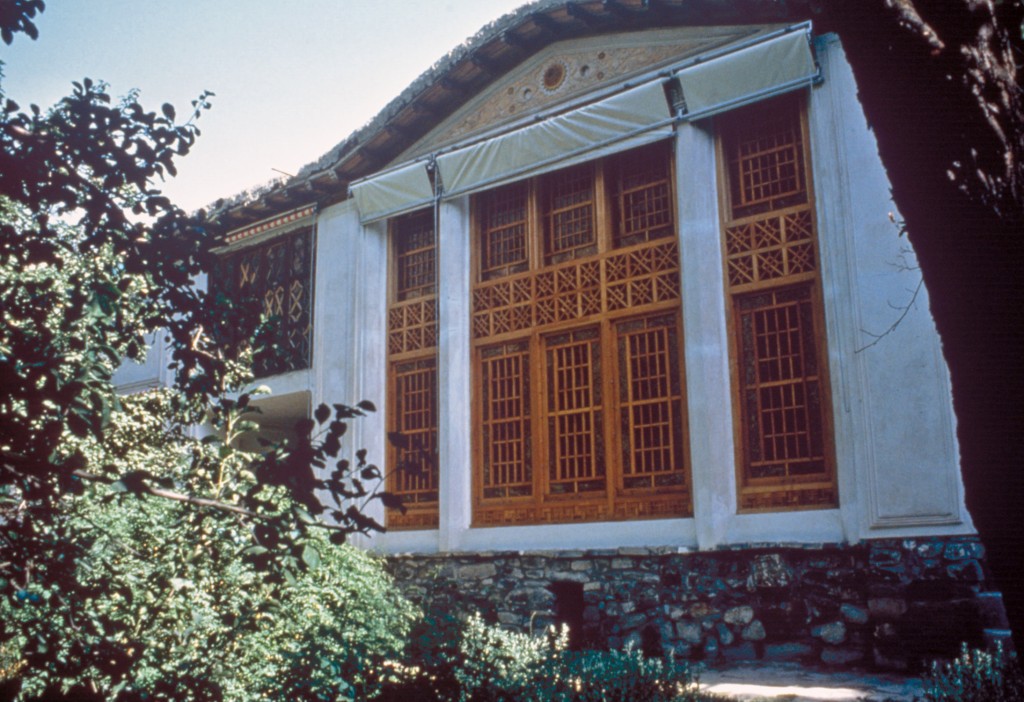
Bahá’u'lláh’s childhood home

Bahá’u’lláh was the scion of one of the great aristocratic families of Persia. The family traced its ancestry to the last Sassanian King, Yazdegerd III, who reigned before the Muslim conquest of Persia. Opulence and privilege were his lot, respect and adoration his birth-right. His summer months were usually spent in the countryside outside the capital Tehran in the district of Núr. He had a great love for nature and spent much of his time outdoors roaming in the meadows and woodlands that belonged to his father. Sometimes he ventured out on foot, other times on horseback. The indoors were no less princely. Mírzá Buzurg, a vizier at the Sháh’s court, had built a stately mansion in Takúr. The mansion was erected in the best traditions of Persian masonry and carpentry. The palatial halls would merit only the most valuable carpets and the high walls showcased the vizier’s own masterful calligraphy. “Buzurg”, or “great”, was the title given by the Sháh to Mírzá Abbás-i-Núrí in recognition of his skill as a calligrapher. The scent of rose water filled the rooms and the warble of nightingales entered the halls through oriental windows and arched doorways. Silver samovars lovingly supplied exquisite porcelain teacups with afternoon tea and fresh mint leaves added to the aroma. The tea leaves came directly from the nearby estates. A dedicated staff of servants did all the work, including the preparation of saffron rice with tender lamb garnished with local herbs. Fruits of the season, rock melons, grapes, pomegranates and cherries, were ever-ready for a royal bite in the embrace of hand-crafted bowls representing the finest Persian pottery. Master-gardeners tended to the vizier’s rose gardens with motherly care and attention. Mírzá Buzurg was still a rich man and his properties included a number of country estates as well as a complex of houses in Tehran. In addition to his ministerial duties in Tehran, Mírzá Buzurg was the appointed governor of Burujird and Lorestan provinces.

The boons of wealth and power however held little sway over Husayn-‘Alí. Precociously insightful, he was early to see beyond their seeming luster. Once he was taken to see a puppet show in Tehran. The play was called Sháh Sultán Salím. Princes, dignitaries and notables from the capital attended the occasion, as much for entertainment as for making an appearance. Bahá’u’lláh was sitting in one of the upper rooms of the building, observing the scene. A tent was pitched in the courtyard and soon small puppet-like figures appeared. One of them, a town crier, raised the call: “His Majesty is coming! Arrange the seats at once!” The play was a ridiculous imperial fanfare, a delightful feast to the senses. The puppets vividly portrayed a menagerie of characters — proud princes with hats and sashes, footmen wielding battle axes, executioners carrying bastinadoes and a haughty king marching along with great pomp and circumstance. The show began with a scene of a royal entourage appearing at a venue of execution. Thieves were decapitated with blood-like liquid pouring out, trumpets were sounded, and shortly wars were waged and a pall of smoke enveloped the whole tent. An evil rebellion was quelled and cannons boomed at the final battle, establishing the heroic king triumphant over his nefarious enemies.

The vizier’s son watched the play with great amazement. When the play had ended and the curtain was lifted, the lone puppeteer emerged from behind the tent carrying a box under his arm. Young Bahá’u’lláh asked the man about the contents of the box. The puppeteer described to the child how the impressive and lavish display he saw is now contained within the little box under his arm. The sight of that box made a piercing impression on young Bahá’u’lláh. All the trappings of this world suddenly seemed to him like that same spectacle. “Erelong these outward trappings, these visible treasures, these earthly vanities, these arrayed armies, these adorned vestures, these proud and overweening souls, all shall pass into the confines of the grave, as though into that box”, he recalled the puppet show some half a century later as he lay in exile in far-off Adrianople (Edirne).

Historical map of Bahá’u'lláh’s exile

His pampered and privileged youth was now but a distant whiff from the past. He had been brought to Rumelia from the Ottoman Capital in a carriage used for baggage, and housed, with his family, in the dead of winter in a summer house unfit for residency. Neither he nor his wife and children had the necessary raiments to protect themselves from the freezing cold. After accepting the Báb as a Messenger of God, and publically proclaiming his cause at the age of twenty-seven, his inherited properties were confiscated, his possessions looted and his body thrown into the infamous Black Pit. But his fate in exile and imprisonment was sealed after thousands of Bábis and other Persians began flocking to him and to seek his wisdom as ”Him Whom God Shall Make Manifest” prophesied by the Báb. He had announced his own Messengership humbly. First to his family and thereafter to his immediate companions at the time when he was held in house arrest in Baghdad. But the news began to spread from mouth to mouth, and to attract curiosity and animosity in equal measure. Now in Adrianople, at fifty-one, he had already endured 16 years of banishment and incarceration in various parts of the Ottoman Empire. Yet even as he lay robbed, ridiculed and rejected, his mind remembered the triviality that is earthly glory, and his heart rejoiced in the eventual end of all earthly sorrow.

“In the eyes of those possessed of insight all this conflict, contention and vainglory hath ever been, and will ever be, like unto the play and pastimes of children.”

“Should prosperity befall thee, rejoice not, and should abasement come upon thee, grieve not, for both shall pass away and be no more.”

- Bahá’u'lláh

November the 12th, 2012, marks the 195th anniversary of the birth of Bahá’u'lláh

The Báb

posted by Sam

“His life is one of the most magnificent examples of courage which it has been the privilege of mankind to behold…” – A.L.M. Nicolas

What would call for a musketry of 750 riflemen to riddle a mild-mannered young man of thirty-one, a kindly demeanour and a peaceful purpose to a pulp of flesh and bone? What would cause a youth of only fifteen to beg the soldiers for the honour of being martyred with him? Yet so it came to pass. The youth Anís, and his young Master who held him in his embrace, were shot by three volleys of bullets, each volley fired by a file of 250 soldiers. The scene of this gorey spectacle was Tabríz, Persia, and the year was 1850. Over 10,000 spectators had gathered to observe the scene. The young man was known for his delicate appearance and his melodious voice. These were his last words as he serenely addressed the cheering crowds:

“O wayward generation! Had ye believed in me, ye would have followed the example of this youth, who ranks above most of you, and willingly sacrificed your lives in my path. The Day shall come when you will have recognized me, and I shall have ceased to be with you.”


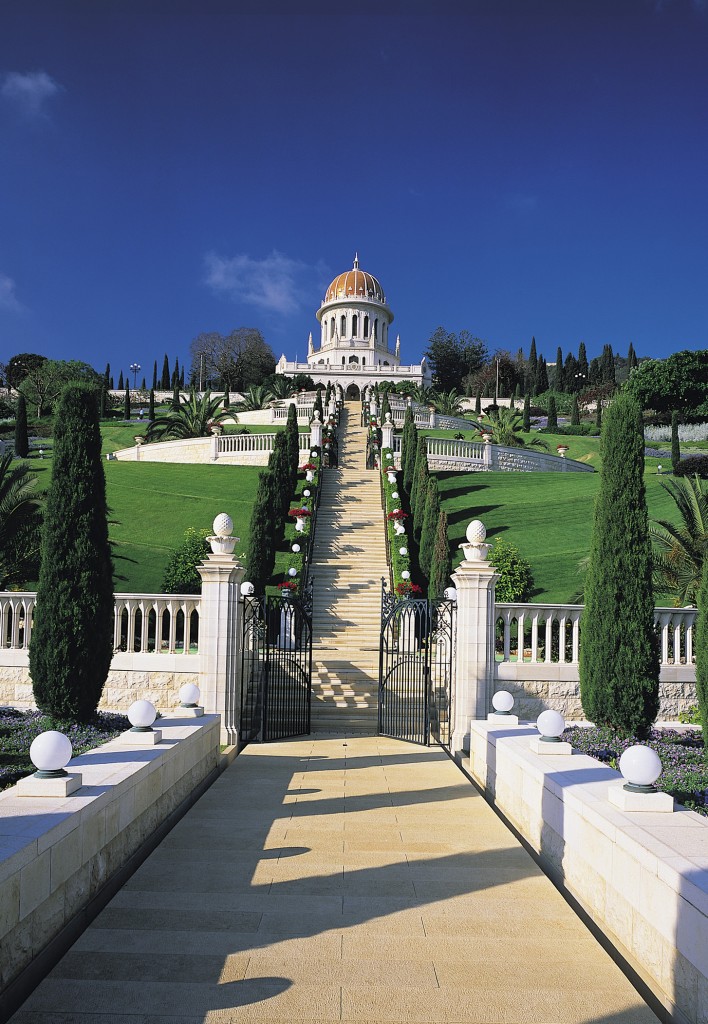
The Shrine of the Báb in Haifa, Israel


The young man came from Shiráz, Persia. His father had died when he was but an infant and it fell on his uncle to care for the boy. After being sent back from a religious school for knowing too much, the boy took up his uncle’s trade as a merchant. He was well-known for his exceptional humility, fervour in prayer, quiet disposition and exemplary honesty in his business dealings. A siyyid, a lineal descendant of the Prophet Muhammad, he wore the characteristic green turban. A fervent messianic expectation of the promised Mahdi had reached the city with the arrival of 18 young theological students from Karbila, Iraq, who had espoused the millenarian Shaykhi school. On 23 May 1844, at the age of twenty-five, this Siyyid shared what he regarded a precious secret to the first of these youth arriving in the city. The clandestine interview took place in the Siyyid’s house in the dead of night. Mullá Husayn, his guest, was a student of scriptural prophecies and a Shaykhi who had recently been awarded the prestigious title of a ‘mujtahid’. Upon his arrival to Shiráz, Mullá Husayn had been seen by the Shirázi merchant in the city’s outskirts. The visitor was warmly welcomed to lodge at his house for the night. While serving his guest tea from a silver samovar, the host, almost casually, related that he is none other than the Promised One of all ages foretold by all the Prophets of old, the one they had come to find. Mullá Husayn later wrote that the love and kindness of his youthful host was such that had he no other claim to greatness, his virtue alone would have sufficed to convince him.

The Shirázi youth revealed to Mullá Husayn and the rest of his initial 18 disciples that his sole purpose, as a Messenger of God, was to prepare the way for the imminent appearance of an even greater Messenger –“Him Whom God shall make manifest.” But he also cautioned that to embrace his cause was to put oneself in mortal peril. He warned that his public announcement was destined to result in violent persecution, nation-gripping bloodshed and, eventually, his own martyrdom at the hands of the Persian priestly elite. A bold claim to Messengership in succession to Muhammad, him who was deemed the ‘final prophet’, would undoubtedly be met with violent persecution by the orthodox Shí’áh clerics of Persia. Thousands of adherents, from all walks of life, were to flock to his Cause in a short period of time, despite a near-certain prospect of violent persecution, torture and death. A score of unbiased and notable first-hand observers of Qajáric Persia in the 19th century, not the least of which were Lord Curzon of Kedleston and Comte de Gobineau, would attest in their voluminous accounts to the two decades of violent turmoil in Persia following the peaceful revelation of this merchant. His declaration, quite foreseeably, caused alarm amongst the Orthodox Shí’íte clergy. But the brutal torture and persecution of his followers was prompted neither by fairness nor necessity.

At that fateful night in Shiráz, the intuitive learning, the flawless appearance, the powerful words and the heartfelt courtesy of this Shirázi Siyyid stirred Mullá Husayn to his depths. Fully aware of the mortal perils ahead, he spontaneously arose to proclaim the young merchant’s bold claim and forthwith dispatched, under the Siyyid’s instructions, on horseback to the capital Tehran. As to his mission to the capital, the Siyyid offered Mullá Husayn only these veiled words:

“A secret lies hidden in that city. When made manifest, it shall turn the earth into paradise.”

This gentle Siyyid was the Báb (“the Gate”). His is a true story.

Previous Posts

Why Suffer? - Part II
Verily God hath made adversity a morning dew upon His green pasture. - Bahá'u'lláh Now, there's a revolutionary idea. That the human spirit is a pasture. A pasture of our Maker none other. And that suffering is the dew that keeps it green, alive and growing. This is not the o

posted 9:30:54pm Feb. 21, 2013 | read full post »

O God, What Art Thou?
  "Thou art what Thou art."  - Bahá'u'lláh   Let's put it in the record right off the bat. I haven't got the faintest idea about God! I admit knowing nothing of the Unknowable. Yet somehow my heart rests in deep satisfaction born of my utter cluelessness. The cluelessness

posted 2:13:26pm Dec. 12, 2012 | read full post »

Silk and Satin - The Birth of Bahá'u'lláh
"...were all the sorrows of the world to be crowded into my heart they would, I feel, all vanish, when in the presence of Bahá'u'lláh. It is as if I had entered Paradise." - Prince Zaynu'l-'Abidín Khan The calmness and serenity of the infant was such as to amaze the mother. Khadijih Khanum co

posted 6:52:12pm Nov. 05, 2012 | read full post »

The Báb
"His life is one of the most magnificent examples of courage which it has been the privilege of mankind to behold..." - A.L.M. Nicolas What would call for a musketry of 750 riflemen to riddle a mild-mannered young man of thirty-one, a kindly demeanour and a peaceful purpose to a pulp of flesh a

posted 12:52:31pm Oct. 19, 2012 | read full post »

Why Suffer?
"Why do we suffer?" is one of the most human of queries. Without fail, we tend to ask the question in the 1st person: "Why me?"  But what about the 3rd? "Why they?" Why is it always the greedy varlet that winds up blessed with superb health and abundant wealth, and the meek tiller of a barren

posted 1:26:20pm Oct. 02, 2012 | read full post »


Report as Inappropriate

You are reporting this content because it violates the Terms of Service.

All reported content is logged for investigation.