The Power of Positive Doing

The Power of Positive Doing

Street Dharma: Teaching Meditation to the Homeless

posted by BJ Gallagher

Tulku Tsori Rinpoche and Kiley Jon Clark assist a homeless woman

A few months ago, I met a man named Kiley Jon Clark who teaches meditation to the homeless in San Antonio, Texas. My curiosity piqued, I asked him to tell me more about what he calls HMP Street Dharma (HMP = Homeless Meditation Practitioners).

What’s the purpose of meditation?

“In Tibetan, the word for meditation means, ‘To become familiar.’ We are trying to become familiar with ourselves – with how our minds work. It all starts with being here, in the present moment.

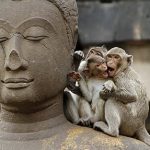
“It can be very unsettling when you realize just how frantic your mind really is. Just try it. Stop, sit down, stay in the present moment, and think of nothing but your own breathing. You may find, like Buddhist elders have said, that the mind is like a crazy monkey swinging from thought to thought and from past to future. Our brains do not know how to relax.”

But how can the homeless meditate if they are in a critical situation like homelessness?

“Our main aim of working with the homeless is just being with them. It is about common everyday interactions. And those who ask for meditation instruction will gladly get it.

“Like most of us, the homeless have been listening to the same negative thoughts in their heads for years. ‘I’m so stupid.’ ‘I’m such a mess.’ ‘I can’t do this anymore.’ ‘I wish I were dead.’ Everyone has this negative mental chatter going on all the time and we don’t even recognize it.

“But once the ‘monkey mind’ is revealed through meditation – once we start being present with our thoughts as the observer of them – old thought patterns get broken and things begin to change in our lives. This is as true for the homeless as it is for anyone else. Whether or not you have a roof over your head has nothing to do with quieting your mind, getting to know yourself, and being fully awake.”

What does your work entail?

“We go to the streets to the chronically homeless and also teach at a facility called ‘Haven for Hope.’ Working this way provides freedom to just be ourselves and make friends. Interestingly, this is what both Jesus and Buddha did. Although they both held services and preached, they spent the majority of their lives simply being the message of love and compassion. They lived with the poor – both Buddha and Jesus sat with, talked with, listened to, ate with, and shared the suffering and grief of the people.”

What’s your own personal story? How did you come to be doing this work?

“My story is a long one, way too much to tell here. But the short version is, I was raised in an alcoholic home and became one myself. I’ve dealt with clinical depression, divorce, death of loved ones, and jail. But, in 2006, I met a Tibetan Lama at the San Antonio Airport, of all places. His name is Lama Tulku Tsori Rinpoche and he runs a monastery for Tibetan refugee children in Mainpat, India.

“Meeting this Lama changed the whole course of my life. He has been my guiding light and inspiration.”

If you were going to be a meditation teacher, why teach the homeless? Why not upscale people who want to meditate?

“Neglect is something most children of alcoholics feel, so I think my childhood made me especially sensitive to the loneliness and suffering of others. Among other things, the homeless also suffer from personal neglect – when you have lost everything, it is easy to lose yourself, too.

“As a Buddhist, my life should reflect my beliefs. Most people’s lives are usually driven by unfulfilling desires and cravings for money, status, material goods, sensual pleasures – things we think will make us happy, but don’t. Instead, why not be completely motivated by compassion, generosity, loving-kindness, and wisdom? Can you think of a better alternative?”

Can non-Buddhists be involved in this outreach?

“If you would like to become a homeless outreach worker, Buddhist or not, feel free to contact us. We will be living, learning, and practicing together. Or, if you’d like to support our work with contributions, we gratefully accept. The need here is enormous, so we welcome your help and support.”

What about dangers you might face … any antagonism from the homeless?

“In my experience, there is very little violence among the homeless community. They often have fights among themselves, but rarely, if ever, is that violence directed at people outside their peer group.”

Can you give me an example of how meditation has helped a homeless person?

“When we were doing the meditation group inside the emergency shelter, there was a man named Dino. He was reclusive and angry when he first started coming to group. Little by little, he started opening up. He would share a little more about his life and what he was feeling every week in the group.

“After several months of these weekly meditation groups, he was a very different person. Dino told us that he would use these meditation techniques to keep his mind tranquil and calm throughout the long nights at the shelter. He often spoke about his daughter, from whom he was estranged. We gave him a Tonglen practice to help with this. It was a visualization of taking in the negative energy between him and his daughter, and releasing it back as light, love, and healing.

“One day, Dino came up and gave me a big hug. He said that he had called his daughter after years of not speaking to her. They both cried and talked for hours. She sent him a bus ticket, and as far as I know, he is living with her somewhere in Oregon.”

It’s been fascinating talking with you, Kiley. Any final words you’d like to add?

“The Tibetans have a proverb: ‘If you want to be sad, think only of yourself. If you want to be happy, think only of others.’ I would add to that my own words: ‘Better than a thousand years of bowing to The Buddha is one day lived as a BOW (Buddhist Outreach Worker).’”

If you would like to support HMP Street Dharma, go to www.ytdr.org and make a donation for ‘Homeless Meditation.’ To contact Kiley Jon Clark directly, email hmpstreetdharma@gmail.com.

Byron Katie: “Who Would You Be Without Your Story?”

posted by BJ Gallagher

Stories. We all have them: “My father was a critical perfectionist and I was never good enough to please him.” “My mother was jealous and competed with me.” “My father is an alcoholic.” “My mother beat me.” “My children don’t respect me.” “My ex is a jerk.” “I’m too fat.” “I was a bad mother.” “I’m not living up to my potential.” “My boss is a tyrant.” “My spouse nags and doesn’t show any love and affection.” “I don’t have enough money.” “My lover rejected me and I’ll never love again.” “I’m stupid.” And more …

We have myriad stories, opinions, and thoughts about our families, our friends and coworkers, and most importantly, about ourselves. And the vast majority of our stories seem to be negative: we are victims; we hate our bodies; we resent our loved ones when they don’t do what we want them to. We lug our baggage around with us everywhere we go: resentments, fears, regrets, anxieties, old wounds, losses, and regrets, as well as new worries of potential harms and hurts. Our stressful thoughts are too numerous to list them all.

A few weeks ago, I loaded all my own psychic baggage into the car and drove up the California coast to spend a weekend with Byron Katie at the Esalen Institute in Big Sur. I had heard good things about her, so thought I would go find out more about this process she calls The Work.

The titles of her book intrigued me: “Loving What Is” and “I Need Your Love … Is That True?” And I chuckled with I saw her title, “Who Would You Be Without Your Story?” My answer: “I haven’t a clue.”

Katie didn’t explain her process when she started the workshop Friday evening – she just jumped right into doing The Work. I had a hard time following, as what she was saying didn’t fit into the well-worn grooves in my mind. I kept trying to hang her new information on some branch of old information on the tree of knowledge in my head, so it would make sense – but I couldn’t find a branch to hang it on. And that’s Katie’s whole point: The usual ways we think about things don’t work very well, so let’s find a new way to think – a way that leads us to the truth of our lives.

In other words, there is what happens in life – and then there is the story you tell about what happened. It is your stories, thoughts, and beliefs that cause you to suffer – if you want to get rid of the suffering, question your thoughts and beliefs.

It seems so simple … but like many simple things in life, it’s not always easy. We’ve been living in our stories for so long that we don’t know how to consider the possibility that they’re just that – stories. We have believed these stories for so many years that they have come to define who we are – or who we think we are. We don’t stop to question our stories because they seem so real, so true, so absolutely irrefutable. You and I cling to our stories as our identities.

What Katie offers is a gentle, loving, process of questioning thoughts and beliefs. She invites you to be curious about everything: your relationships with family members, your ideas about illness and death, your feelings about your body, your worries about money, your anger at people who have hurt you, even your political allegiances. There are no sacred cows in The Work – nothing is off-limits. In short, Katie offers a simple process for inquiring into the true nature of reality – and especially into the things that feel distressing and upsetting.

The Work consists of four questions:

1. Is it true?
2. Can you absolutely know that it’s true?
3. How do you react, what happens, when you believe that thought?
4. Who would you be without the thought?

After answering the four questions, you go back through each one again and experiment with turnarounds: (1) State the opposite of your thought; (2) State the thought as if the positions between you and your problem person were reversed; (3) State the thought toward yourself, as if it is you that you are having the problem with. Turnaround help you consider alternative perspectives to consider whether they reveal a truth you’ve been missing.

On my desk is a paperweight that says, “There are no mean people … only people with tight shoes.” Hmmm … perhaps thoughts are like shoes: some are comfortable, pleasant, and fit well, but many are uncomfortable, painful, and ill-fitting. Maybe there are no mean people … only people with tight, painful thoughts.

Katie’s process of trying on new thoughts is akin to trying on new shoes … “Try these thoughts. Do they hurt, or do they feel better?” “OK, now try these; how do they feel?” “How about one more; does this seem true? Is this thought more accurate?” You’re essentially trying on different ways of thinking about your life events – and the people involved – to see if the painful perspective you’ve been holding on to could be jettisoned in favor of a truer viewpoint, one that feels good. By walking a mile with new and different thoughts, you may find a new spring in your step, a new joy in your heart.

Instead of lamenting the past or worrying about the future, Katie offers a way to live fully in the present by loving what is – by greeting each and every life event with curiosity and openness, instead of fear and anxiety.

My weekend with Byron Katie reminded me of a wise saying I heard many years ago: “The mind is a dangerous place – don’t go in there alone.” These days I’m taking Katie and her four questions with me whenever I go spelunking in my mental caverns.

Perhaps the thing I liked best about Katie is that she didn’t evangelize or try to sell anybody anything. She simply showed up, did The Work with us, and enjoyed herself. I can see that The Work grows by attraction, not promotion.

I also liked the fact that Katie gives much of The Work away. She wants it to be free to anyone who seeks freedom from suffering, so her worksheets, articles, and many video clips can be downloaded free from her web site. She travels the world, going wherever people ask for her help, often doing The Work for free or very low cost. Her pro bono work in prisons is especially remarkable. I found her generosity and compassion as appealing as her simple methods.

So, how was my weekend at Esalen with Byron Katie? A simple placard I bought in a Big Sur gift shop pretty much says it all: “You cannot prevent the birds of sorrow from flying over your head, but you can prevent them from building nests in your hair.”

Buddha, Books, Bombs, and Bush

posted by BJ Gallagher

September 11 was supposed to be an auspicious day for Franz Metcalf and me: It was the day of our first author event for our new book, What Would Buddha Do at Work? The book had just been published and we were excited to help people find freedom from suffering in the workplace using the Buddha’s teachings. Our author event was scheduled at a Barnes and Noble in the Bay Area. Franz had gone up to San Francisco a few days earlier to visit his folks, and I started driving up from LA before dawn on that fateful Tuesday.

An hour or so into my trip, once I got over the mountains and into the central valley, I turned on the car radio to check the news. Within a few seconds, I was listening to the horrific drama unfolding 3000 miles away. I could scarcely believe what I was hearing. I grabbed my cell phone and called my boyfriend, even though I didn’t think he’d be awake yet. But he was. I started to cry.

Next, I called our publicist. “What should I do?” I asked her. She was crying, too. “Should I turn around and go home or should I keep driving north?”

“I don’t know,” she said. “Let me call the bookstore when they open. I’ll talk to the manager and call you back.”

I kept driving; I kept crying; and I kept calling people. I didn’t want to be alone.

I called Franz in San Francisco. “What should I do?” I asked him. “Should I keep coming north or should I turn around and go home?” In the face of what was happening, a book signing seemed like the stupidest thing in the world.

“I don’t have a clue.” Franz replied.

I called my son. I didn’t have anything to say; I just wanted to hear his voice.

And that’s the way the morning went: driving, crying, calling the publicist, calling the bookstore, calling Franz, calling family, and more crying.

When we finally got hold of the bookstore manager, he said, “There are half a dozen people in the store, so let’s go ahead as planned.”

But of course, it wasn’t anything like we had planned. Franz and I gathered with the handful of people who had come to hear us. We held up our book and told them, “We wrote this book about Buddha’s teachings at work.” Then we set the book aside and spent the next two hours discussing Buddha’s teachings about violence, suffering, loss, and death. We wondered: What advice would Buddha give President George Bush? What words of wisdom would Buddha share with world leaders in a situation like this?

That first author event turned out to be auspicious, just not in the way we had planned. The tragedy of the day gave us an opportunity to live what we had been writing about: bringing Buddha’s teachings to bear on our own work of teaching and helping people alleviate their own suffering.

A few days later, Franz and I wrote a letter to President Bush, urging him to refrain from the lust for revenge that had our nation in its grip. We were as eloquent and persuasive as we knew how to be, hoping against hope that he might ask himself, “What would Jesus do?” since we knew he would never ask, “What would Buddha do?”
Mr. President,

For all who place their ultimate focus in the invisible world, it may be true that there is no slayer and no slain, no birth, no death, and no pain because no separate persons to feel pain. But since the attacks of September 11th, for many of us all these things feel real—too real—this is where we live, this reality of death and people who want to cause it. And we will continue to live in this reality, so the question for us is: What kind of country and world do we want to live in?

No responsible and compassionate person condones the actions of the terrorists who brought death from the sky to our country. But death from the sky is a common event in many countries around the world. And we as Americans must acknowledge that we have brought death from the sky ourselves to many of those lands. We have now been brought within the sphere of a worldwide disease from which we have previously been immune. It may be we cannot now choose to live without a touch of terror; this is now our lot, just as it is for the rest of the world. But we truly cannot choose to live without freedom.

This choice, for freedom or for war, will create the world we will live in.The plague of violence and retribution we have seen for so long in the Middle East is now ours to accept or reject in our own lives. We must reject it. We have borne the blast of terror, but the terrorists have not truly achieved their goals unless they draw us into their sphere, down to their level. The devil always gives us a choice, doesn’t he? Well, this is our choice. If we choose retribution, we enter a cycle of revenge that will outlive us. On this bitter path we will first lose our peace of mind, then our safety, next our tolerance of others, and finally our freedom, the very essence of what we must preserve. From the moment we enter this war, we have already lost it.

We beg you, Mr. President, do not make this terrible error. What will be the legacy of George W. Bush? What will be our legacy to the world? Let it be this: not taking the wide road, but the narrow path. Following, as our greatest Republican president did, “the better angels of our nature.” It is your choice to command the powers of peace to defeat a foe that the powers of war can never overcome. We all want you to stand strong but for God’s sake and humanity’s, stand for peace. We are the authors of a recent book applying Buddhist wisdom to our lives at work. Your work is now the central work of the world. Please take Buddha’s advice:

“He insulted me, he beat me, robbed me!” Think this way and hatred never ends.

“He insulted me, he beat me, robbed me!” Give this up and in you hatred ends.

Not by hate is hate defeated; hate is quenched by love. This is eternal law.

Dhammapada 3-5
Walk the path of wisdom and compassion with Buddha; walk the path of non-violence with Gandhi and Martin Luther King Jr.; walk the path of love with Jesus. Then let the world follow you. We will.

Sincerely, 

Franz Metcalf and BJ Gallagher

Coauthors of What Would Buddha do at Work? (Berrett-Koehler; 2001)


We sent our letter to the White House and we submitted it to The Los Angeles Times, who declined to publish it. Later, a Times editor told me, “It’s probably just as well we didn’t publish it. You and Franz would have gotten hate mail—maybe even death threats.” No one wanted to hear a message of love conquering hate – everyone was blinded by their pain and rage.

We don’t know if President Bush ever read our letter since we didn’t receive a reply. So we thought we’d share it with you now, in the hope that ten years of hating Muslims, two bloody wars, and over a million lives lost have changed public perspective on how to respond to terrorism. Whether you are Buddhist, Christian, Muslim, Jewish, Hindu, Sikh, Shinto, or spiritual but not religious – for the love of all that is holy – choose peace, not war; choose love, not hate.

Being Buddha at Work: 108 Ancient Truths on Change, Stress, Money and Success

Steve Jobs: Best Dad in the Whole World

posted by BJ Gallagher

I met Steve Jobs about 20 years ago when a Silicon Valley headhunter called me regarding a job opportunity at NeXT, the new computer company Jobs had founded after he left Apple in the ’80s. NeXT was growing and Jobs wanted to hire a director of executive development. Needless to say, I was intrigued and excited by the possibility of working with the living legend.

The interview process took many weeks. I made frequent trips to Redwood City to run the gantlet of interviews with NeXT managers and executives, any one of whom could have vetoed me. Each time I passed muster, I proceeded to the next round of interviews. The lengthy selection process was a roller coaster adventure, with more than the usual highs and lows of job interviewing. The process even included an audition: I was required to teach a management seminar for Jobs and his entire executive team (no pressure).

A couple weeks after the seminar, I was invited back for a final, one-on-one interview with Jobs. We talked about his vision for NeXT, his thoughts about leadership and building a successful company, his insights into his competitors. He asked me many questions and I had a chance to ask him a few, as well. Interested in getting the measure of the man, I included personal questions along with queries about the position and the company.

“How do you want to be remembered when you die?” I asked.

“I don’t care if anybody remembers me,” he sniffed dismissively.

Huh! I wasn’t expecting that answer. After hesitating for a second, I tried a different tack. “OK, then, what do you want the people who love you to remember about you?”

Now it was Jobs’ turn to hesitate. He thought for a couple seconds, then replied, “I want them to remember me as the best dad in the whole world.”

Until then, I had admired and respected Steve Jobs … but now I loved him. I loved his humanity; I loved his commitment to his kids, present and future. And I loved his willingness to be open and intimate, if only for a brief moment.

I didn’t get the gig at NeXT … but I did get the opportunity to compete, test my skills, and see how I measured up against the other candidate. I gave it my best shot and came away happy far having come “this close” to working for Jobs.

Some months after my Great NeXT Adventure, I left my corporate management job to become a successful consultant, author and speaker. Jobs made his way back to Apple and ultimately bought NeXT. We both lived happily ever after – just not together.

I’ve never met Jobs’ kids, so I don’t know whether or not he is the best dad in the world. But as the father of the Mac, iMac, iPod, iTunes, iPhone, iPad, and many more hi-tech offspring, he’s definitely the coolest.

God bless you, Steve Jobs. You and your family are in my prayers.

Previous Posts

Street Dharma: Teaching Meditation to the Homeless
A few months ago, I met a man named Kiley Jon Clark who teaches meditation to the homeless in San Antonio, Texas. My curiosity piqued, I asked him to tel

posted 4:30:12pm Nov. 04, 2011 | read full post »

Byron Katie: "Who Would You Be Without Your Story?"
Stories. We all have them: "My father was a critical perfectionist and I was never good enough to please him." "My mother was jealous and competed with me." "My father is an alcoholic." "My mother beat me." "My children don't respect me." "My ex is a jerk." "I'm too fat." "I was a bad mother." "I'm

posted 5:10:04am Oct. 15, 2011 | read full post »

Buddha, Books, Bombs, and Bush
September 11 was supposed to be an auspicious day for Franz Metcalf and me: It was the day of our first author event for our new book, What Would Buddha Do at Work? The book had just been published and we were excited to help people find freedom from suffering in the workplace using the Buddha’s t

posted 3:37:02pm Sep. 09, 2011 | read full post »

Steve Jobs: Best Dad in the Whole World
I met Steve Jobs about 20 years ago when a Silicon Valley headhunter called me regarding a job opportunity at NeXT, the new computer company Jobs had founded after he left Apple in the '80s. NeXT was growing and Jobs wanted to hire a director of executive development. Needless to say, I was intrigue

posted 12:21:52am Aug. 25, 2011 | read full post »

Marie Lawson Fiala: The Healing Power of Prayer and a Mother's Love
“There’s no place on the map called ‘Safe,’” a wise therapist friend told me many years ago, and her words came back to me as I read Marie Lawson Fiala’s new book, Letters from a Distant Shore. Her story reminds us how uncertain and unpredictable life is – despite the mighty effort we

posted 3:09:27pm Aug. 22, 2011 | read full post »


About Beliefnet

Our mission is to help people like you find, and walk, a spiritual path that will bring comfort, hope, clarity, strength, and happiness. More about Beliefnet.

Help

Media Kit

Subscribe

Legal

Copyright © Beliefnet, Inc. and/or its licensors. All rights reserved. Use of this site is subject to Terms of Service and to our Privacy Policy. Constructed by Beliefnet.

Advertisement

Report as Inappropriate

You are reporting this content because it violates the Terms of Service.

All reported content is logged for investigation.