The New Christians

The Orthodoxy of Down Syndrome

Friday January 9, 2009

Categories: Theology
Garret asks a good question in regards to Who Decides Orthodoxy?

Tony,

Thanks for asking good questions and getting us to think. I deeply appreciate it.

Maybe another part could be added on to your statement discussion and consensus on

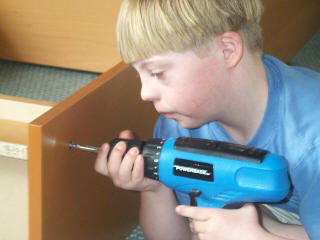
Drill.jpg

orthopraxis... and using new media mobilize communities to common places of action. And this is being spoken on behalf of my brother with Down's Syndrome, who has little use for intellectual debates on the internet, but a deep need for actions that shape will shape his and his communities theology.

I am not meaning to diminish the importance of the intellectual discussion of theology but I do want it to become dualistic and thus neglect my brother. I also realize that this question is being spoken from a certain theological perspective but one that I think is important to this discussion as it proceeds.

I am on my way out to go to work but just wanted to add an opinion before I was out.

Thanks Tony. 
Since I'm probably as philosophically as theologically bent, I've often struggled with the more conservative conceptions of orthodoxy because they surely tend to overestimate the ability of many human beings to articulate complex theological ideas.  Jesus ("Come, follow me") and Paul ("if you confess with your mouth, 'Jesus is Lord,' and believe in your heart that God raised him from the dead, you will be saved") both had thresholds of belief to which, I assume, most developmentally challenged persons could rise.

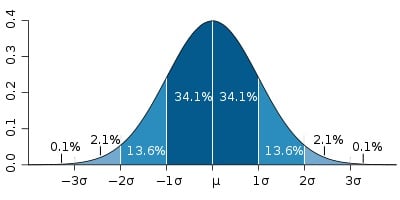
To the argument that we can't "lower the bar" of belief to chose exceptions in humanity who have the misfortune of a chromosomal abnormality or a tragic brain injury, my counter is that we're all somewhere on the intellectual spectrum. Take, for instance, intelligence quotient.  Some human beings have very high IQs, and some have very low IQS.  But most of us fall somewhere in the middle.

Definitions of orthodoxy, or "Christian belief," it seems to me, should be attainable by every -- or nearly every -- human being, not just those of us within the two standard
bell curve.jpg

deviations of the center of the bell curve of intelligence quotient.  In other words, the threshold of belief would not be attainable by someone who is comatose.  But it should be attainable by someone who has some verbal ability -- or even some ability to communicate thoughts.

Some might want to draw the line for the requirements of orthodoxy somewhere within the range of more cognitive function, but because I fiercely believe that developmentally challenged persons are fully human, I draw the line at a place where those persons are included.


(Photo of boy from Wikipedia, GNU Free Documentation License)


Advertisement
Comments
Rick Ellis
January 9, 2009 10:54 PM

Reading through this I am reminded of Henri Houwen and his work with the handicapped at Daybreak the L’Arche community in Toronto. Here was a man who had won acclaim as a university professor at Norte Dame, Yale Divinity and Harvard Divinity but found his greatest reward working and living with the "poor in spirit."

One writer said this after spending time with Nouwen and his handicapped friend Bill:

It might be one of the greatest ironies of the spiritual life that the more we seriously explore the mysteries of God, the more we realize how little we will ever know. In fact, true progress in the spiritual life is not measured by greater knowledge and clarity, but by a deepening sense of awe and wonder. We know we are making progress in the spiritual life when we have a growing sense of wonder and a diminishing sense of certainty.

Andrew Martin
January 10, 2009 8:03 AM
http://late-emerger.blogspot.com/

I'm not sure what line you're trying to draw. My own estimate of orthodoxy can only be a measure of the extent to which someone else agrees with me. I don't see that as a boundary, but a spectrum, a continuum. Some people seem to be on mats that overlap with mine, within this great tent of faith that we share; other people's mats seem to be at some distance.

Looked at another way, there are lots of lines: those with whom I'll break bread; those whom I'd be happy to teach my (hypothetical) kids; those whom I think it would be beneficial to have stand up and teach in the (church) community, and so on. Some of those have to be codified, for the sake of good order; many do not.

The bible gives us lots of clues about how God draws lines, but they all seem to stem from the mix of faith and practice. So, I'd rather want to judge orthodoxy hand-in-hand with orthopraxy: if the fruit of someone's belief is love, joy, peace, patience, kindness, and the rest, then I suspect that they are in touch with at least some part of the truth.

Appalachian Prof
January 10, 2009 2:23 PM

"To the argument that we can't "lower the bar" of belief to chose exceptions in humanity who have the misfortune of a chromosomal abnormality or a tragic brain injury, my counter is that we're all somewhere on the intellectual spectrum."

Are there actually people who argue this? Is their god (deliberate small "g" here) a bureaucratic jerk? An Ivy League admissions officer?

LutheranChik
January 10, 2009 2:25 PM
http://lutheranchiklworddiary.blogspot.com

One of my coreligionists likes to point out, like the good Lutheran he is, that salvation is not about "earning points by doing stuff." That includes thinking "right enough" thoughts, or feeling "right enough" feelings, about God.

None of us can think or emote or act our way into God's grace. God's grace is God's gift to us. I would like to think that the God you believe in, like the God I believe in, has grace and mercy enough for all of us, including those with medical challenges that prevent them from "doing theology" on a level we deem acceptable.

Patricia Tice
January 12, 2009 10:07 AM

Unfortunately, if there is any specific challenge that keeps people from God, Jesus seemed to indicate the challenge was for the wise, the rich and the entitled. Their independence disqualifies them until they are willing to give it up and that's no easy task.

The question of who can get in or not from God's point of view seems pretty clear according to Jesus--kids first, the weak, the dependent, the meek and the "poor in spirit".

It's our own social constructs that become limited by our own (humanly limited) orthodoxy. Jesus was remarkably inclusive on invitation and remarkably exclusive on his long term associations, but with a very different set of criteria than we have for those choices.

He had the luxury of seeing into people's hearts, or at least the drive to do so (depending on your understanding of Christ's incarnate omniscience). Steve Brown often talks about a close friend of his who is on the exact opposite of the political spectrum (whose name escapes me) and the criteria for their friendship and association is his friend's heart for God and their heart for each other. They still don't agree on many things. They don't need to. They love God and would both be considered within a range of traditional Christian orthodoxy (both are, in fact, orthodox Christians in their core beliefs--not something else).

Agreement in essentials. Grace in ALL else.

Read All Comments

Post a Comment

By submitting these comments, I agree to the beliefnet.com terms of service, rules of conduct and privacy policy (the "agreements"). I understand and agree that any content I post is licensed to beliefnet.com and may be used by beliefnet.com in accordance with the agreements.


Please type the text you see in the box below to verify your post and help us prevent spam. You have a limited time to type - you may wish to compose your comment in a separate document and paste it here upon completion.

Type the characters you see in the picture above.

Advertisement

Search This Blog

About The New Christians

Tony Jones is the author of many books, including The New Christians: Dispatches from the Emergent Frontier and The Sacred Way: Spiritual Practices for Everyday Life. He is a leader in the emergent church movement and a renowned expert on postmodern theology and the American church landscape.


Find out more about Tony, his books, and his speaking schedule at his website.

feed icon Subscribe

RSS Feed

Receive updates from The New Christians
Tony on Twitter:
My Amazon Favorites:


Social Networks:
Facebook
LinkedIn
Flickr
YouTube
Vimeo
Pandora

Calendar

Advertisement

Advertisement


About Beliefnet

Our mission is to help people like you find, and walk, a spiritual path that will bring comfort, hope, clarity, strength, and happiness. More about Beliefnet.

Legal

Copyright © Beliefnet, Inc. and/or its licensors. All rights reserved. Use of this site is subject to Terms of Service and to our Privacy Policy. Constructed by Beliefnet.

Advertisement

Report as Inappropriate

You are reporting this content because it violates the Terms of Service.

All reported content is logged for investigation.