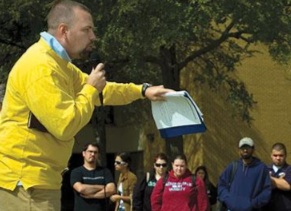
Today I'm following (here and here) the live blogging of the conference on preaching at Mars Hill with Rob Bell, Pete Rollins, and Shane Hipps. In the midst of the comments I have heard is one potent question and I'd love to hear your response -- we'd like to hear from both preachers and "listeners":What is the purpose of a sermon?
Other questions come to mind: What do you expect from a sermon as a listener? What do you expect as a preacher? How do you measure if the sermon is a good one?

Add to Newsvine
Add to StumbleUpon


Angusj and RJS: at our church, we have a sermon discussion group that meets on Sundays after the first sermon during which time we discuss the message, what we each got out of it and practical applications. The teaching pastor even dialogues with a men's group the Wednesday before he preaches about the direction that he's going in. So far, we have found these discussions to be very fruitful.
John (#36):
Awesome idea about a group to discuss the text before preparing the teaching. I just might implement that (we'd have to use email as we all, unfortunately, live spread all over town).
I'm in a Barbara Brown Taylor course right now (one of the best preachers on the planet) . . . I think she might say that preaching is a moment in which words are used by the preacher to connect the audience to their deep humanity and the mystery of God. It is the space in which we give our sisters and brothers the eyes to see the world and each other as God sees.
I like that. Preaching preparation is a science but the delivery is pure art, baby.
I sort of backed into my answer to this question, waking up one day and realizing it was what I was after in my sermons. In the words of Richard Hays, I'm striving for a "conversion of the imagination". I'm trying to get people to reimagine who they are as people, as the people of God, as people in Christ, as participants in new creation, etc.
My second answer is that every person is different, and different preachers will be effective at different types of sermons with different purposes. I wouldn't want to see any one purpose (or even one cluster of purposes) become THE answer to the question.
peelingdragonskin.wordpress.com
RJS- Total agreement with your comments about dialogue. As others have noted, there are opportunities for dialogue in small group settings- not necessarily with the preacher present.
Your desire for dialogue makes you a model listener. It shows that you are engaging with the ideas. I think we need to encourage all listeners to listen so that it makes a difference. I find that dialogue is very helpful to me to make the message applicable and practical to me. To take it from abstraction to personal application. A good sermon should help us engage with and dialogue with the text.
BTW, when Tim Keller first planted Redeemer, he had Q and A after many/most of his sermons. I am sure that had something to do with the success.
Post a Comment
By submitting these comments, I agree to the beliefnet.com terms of service, rules of conduct and privacy policy (the "agreements"). I understand and agree that any content I post is licensed to beliefnet.com and may be used by beliefnet.com in accordance with the agreements.